
In the manufacturing sector, output is expected to decline by about 70 per cent as only food-processing, and drugs and pharma industries are allowed to operate while other segments, such as engineering and metals, have shut operations.

An obscure US-based firm with just 19 employees, USD 15 million in revenue and hosting just a one-page website, wants to invest USD 500 billion in equity into India's National Infrastructure Pipeline (NIP).

Market leaders saw good traction for new cars, including the electric ones.
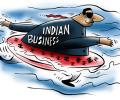
Combined profit before tax of 81 firms down 37.5% y-o-y, worst show in at least 3 years.

Indian IT services companies are likely to post a 9-12 per cent revenue growth in USD terms in FY22, helped by the strong demand for digital deals, a report said on Tuesday. However, the same will not translate into profits, because higher salaries will result in the operating profit margins for the same set of companies to come at 23 per cent from 24.2 per cent in FY21, domestic rating agency Icra said. The IT sector is one of the few sectors that have not been deeply impacted by the pandemic.

The country's largest carmaker Maruti Suzuki India (MSI) on Wednesday reported a consolidated net profit of Rs 475 crore for the first quarter ended June 30. The auto major had posted a consolidated net loss of Rs 268 crore in the April-June quarter of 2020-21. It noted that during the first quarter its sales and production were adversely impacted due to the second wave of the COVID-19 pandemic.
Apart from air travel, Flipkart would also be able to offer train bookings through Cleartrip.
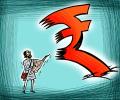
Dividend distribution tax in FY20 would only be applicable after deducting Rs 70 received from the foreign subsidiary, meaning 20.56 per cent DDT would be paid only on Rs 30.
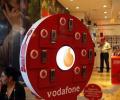
Vodafone Idea, the country's third largest telecom operator, on Wednesday reported a staggering Rs 73,878 crore of net loss in fiscal ended March 2020 -- the highest ever by any Indian firm -- after it provisioned for Supreme Court-mandated statutory dues. The firm, which has to pay Rs 51,400 crore dues after the apex court ordered the non-telecom revenues to be included in calculating statutory dues, said the liability has "cast significant doubt on the company's ability to continue as a going concern".

We will find it difficult to exceed an average of 5 per cent growth in the medium term, warns Shankar Acharya, the former chief economic adviser.
American banking major Citibank on Thursday announced that it will exit from the consumer banking business in India as part of a global strategy. The business comprises credit cards, retail banking, home loans and wealth management.

The onslaught of Chinese mobile brands is virtually obliterating Indian brands, especially in terms of value. According to industry estimates based on excise and Custom duty trends, the value share of Indian brands (across smartphones and feature phones, operator phone sales - which is mostly Jio phones - and the value of phones smuggled into the country) has dropped to a mere 1.2 per cent in January-October 2021 compared to 25.4 per cent in the calendar year 2015. In the same period, the Chinese have established their domination, hitting a value share of 64.5 per cent, up from 17.8 per cent.

With 15 models and a market share of close to 50 per cent, it rules the Indian market, selling almost 1.5 million units every year, rolling out one model every ten seconds.

Near-term prospects hinge on the progress of the second wave of Covid-19. A lockdown will dent prospects as 60 per cent of revenues come from the dine-in segment.
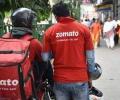
Food delivery company Zomato's Rs 9,375-crore initial public offering (IPO) will open for subscription on July 14, said investment banking sources on Wednesday. The company initially was looking to raise Rs 7,500 crore through the offering. Investment banking sources said the issue size has been increased because of the robust demand from investors.

Equity inflows worth $3.7 billion came from the sunny Caribbean jurisdiction in 2019-20, a 267 per cent increase from the $1 billion registered in 2018-19 making it India's 10th largest source of FDI.

Budget-makers in North Block are looking to maintain this fiscal status quo, in spite of tax revenues nowhere close to where the government wants and in spite of possible higher expenditure commitments.

Despite Covid downturn, CEO salaries went up by an average of 19% in FY21.
Beyond the fourth quarter of 2019, the report does not see space for further cuts primarily as headline inflation is likely to pick up and cross the 4 per cent target by the end of the year, and output gaps are also estimated to close.

SBI is expected to mop up almost $202 million via the share sale.

Industry players said they were indeed seeing a serious fall in capacity usage, though some sectors were seeming to prevent further fall in the overall capacity utilisation.

Automobile exports from India recovered in the first quarter with all vehicle segments, including passenger vehicles and two-wheelers, witnessing growth following an improvement in the pandemic situation across various international markets. As per the latest SIAM data, total vehicle exports during the April-June quarter this fiscal stood at 14,19,430 units as compared with 436,500 units in the same period of 2020-21 which saw massive disruptions due to the COVID lockdowns across the country, hampering sales as well overseas shipments. SIAM director general Rajesh Menon told PTI that while two-wheeler shipments were better than previous three years, passenger vehicles, three-wheelers and commercial vehicles export numbers were yet to catch up with numbers in the first quarter of 2018-19 fiscal.

The combined fertiliser, food and petroleum subsidy budgeted estimate for FY19 is Rs 2.64 trillion, while the revised estimate is Rs 2.66 trillion. If the carrying forward to FY20 does not happen, the revised estimates for the major subsidies could actually cross Rs 3 trillion for the first time ever.

The used car market is now 1.2 times the size of the new car market.
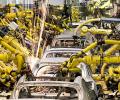
The sharp increase in commodity prices on account of the Russia-Ukraine war has put automakers in a fix. After the frequent price hikes in the current fiscal, manufacturers fear that any more price increases may further dent the already weak demand in certain segments. "We have taken several hikes and cannot immediately do it again. "We will have to closely watch the situation and act accordingly," said an official at an auto firm, declining to be identified. Even for companies like Tata Motors Passenger Vehicles, which has had a strong volume run and a robust order book, passing on the entire costs has been tough.

'The target for next year is unlikely to be more than that of this year. The more you divest in any cycle, the less your potential pipeline for the next,' said an official. 'The first two issues we want to tackle and complete in FY20 are Air India and Hotel Ashok.'

While the Indian Institute of Technology (IIT) Kanpur may have attracted among the highest donations by an individual (former student and IndiGo Airlines co-founder Rakesh Gangwal) at Rs 100 crore last week, IITs have largely seen such contributions rise over recent years, despite the Covid pandemic. According to Mahesh Panchagnula, dean, Alumni and Corporate Relations, IIT Madras, in the last five years, the premier institute has raised more than Rs 135 crore under the endowment category of education alone. Despite the pandemic, there has been an increasing trend in endowment funding received at IIT Madras, with an average increase of about 20 per cent year-on-year across the last five years.

According to the Icra report, earnings before interest, tax, depreciation and amortisation margin of its sample declined by 44 basis points on a YoY basis and 23 basis points on a quarter-on-quarter basis to 16.6 per cent.
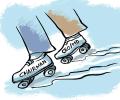
Profitability and cash reserves have halved since the global financial crisis.
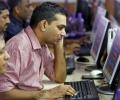
While margins contracted by 30 basis points on y-o-y basis, they fell a sharper 120 basis points on a sequential basis to 16.8 per cent. Profitability was impacted adversely due to subdued demand, tepid realisations in commodity sectors, and negative operating leverage.

RIL, however, remains miles ahead of TCS in other financial parameters such as total revenue, operating profit, net worth, assets, and market capitalisation.

One thing is for sure: It smacks of the regulator's lack of confidence in the bank's board, points out Tamal Bandyopadhyay.

India's first unicorn Zomato will make its stock market debut on Friday, marking a historic moment for the domestic capital market. As per initial schedule, Zomato's listing was to take place on July 27. However, investment banks managed to complete the share allotment and listing formalities ahead of the deadline. Under the Sebi framework, the timeline between IPO closing and listing has to be six working days. Zomato's IPO had closed on July 16.

LVB had faced some serious flak in terms of bad loans, earnings and credit rating downgrades, since 2016.
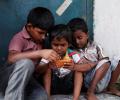
Telecom operators say the reason for the low increase in ARPU in the two metros could be linked to the massive reverse migration of labour.
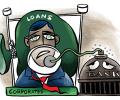
According to ICRA, even in a high-growth scenario, wherein the second half of FY20 sees the incremental bank credit rise to Rs 6.5-7 trn, there will still be a 40-45% year-on-year decline.

Many banks' profits will take a hit and a few of them could even end up being in the red because of treasury losses, triggered by a sudden spike in government bond yields in the rising interest rate cycle, notes Tamal Bandyopadhyay.

To counter the pandemic, air transport was suspended from March 25 till May 24 which rendered zero traffic at AAI airports. Even after resumption of flights, traffic is yet to pick up at airports due to quarantine measures implemented by states and an overall fear of flying.

It came on the back of tepid dispatches in the March quarter as consumer sentiment took a knocking, owing to uncertainty ahead of the general election.

From spending a little less than three hours on making voice calls, Indians are spending well over 5 hours. So, while people make more calls, they are spending less than ever, reports Romita Majumdar.
 © 2026 Rediff.com - Advertise with us - Disclaimer - Privacy Policy - Sitemap - Feedback - About us - Terms of use - Grievances