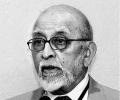
M R Srinivasan focused on the peaceful use of nuclear power at a time when the popular view among the 'hawks' was that India should build a nuclear arsenal as a deterrent.
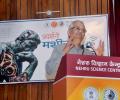
'Why should we disclose classified information to satisfy those who doubt our Hydrogen Bomb capability?'
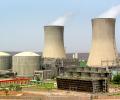
'Chinese are going bang, bang, bang building 30-35 reactors.' 'We should announce a programme of 50 new reactors and show that we mean business on the ground and not just announcements.'

Had it not been for the global concern with respect to 'climate change', the nuclear states with a large stockpile of weapons would not have allowed other countries to adopt nuclear energy, said Dr Anil Kakodkar, member of the Atomic Energy Commission.
The chairman of India's Atomic Energy Commission makes a case for nuclear energy saying all other forms of power gerenration will not be able to meet the country's staggering demand.
Dr Anil Kakodkar, chairman of India's Atomic Energy Commission and his agency was the 600-pound gorilla in the room that vetoed the compromise language on the stalled bilateral civilian nuclear cooperation accord, known as the 123 Agreement.

The event took off with an introductory speech by Dr Ajit Ranade appreciating the achievements of IIT Bombay. Among the other speakers were Dr Anil Kakodkar, chairman of the board of governors, IIT-B, Infosys chief Nandan Nilekani and Prof. R K Shevgaonkar, deputy director of finance and external affairs and the co-chairman of the IITBAA.
"India is capable of indigenously building the most viable commercial nuclear reactors for producing 220 MW and 540 MW power. Small reactors are the best bet to export," he told media persons at the Koodamkulam Nuclear power plant site near Tirunelveli replying to a question on feasibility of exporting nuclear reactors to countries like Egypt.
"If we remain dependent on foreign technologies, we can never become world leaders and we cannot survive the global competition unless we achieve global leadership at least in some areas where we have strength," Kakodkar said at the convocation of Pt Ravi Shankar Shukla University in Raipur.
India has offered to place 14 of the 22 thermal power reactors under IAEA safeguards in a phased manner between 2006-14, Dr Kakodkar told a media conference, adding the agreement would not affect the country's strategic programme in any respect.
He will largely play a behind-the-scenes role and will sit in on the high-level meetings between the US and Indian teams so as to ensure that India's strategic and nuclear establishment's interests are not compromised
The total nuclear power generated in the country would now increase to 3310 MW.
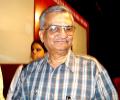
Dr Kakodkar's strategic stubbornness ultimately got India what it wanted though the negotiations with the US went to the wire, notes Shivanand Kanavi.
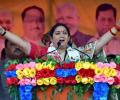
Being made a member of the Cabinet Committee on Political Affairs makes her an important player in BJP politics, observes Rashme Sehgal.
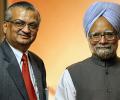
'Dr Singh, visibly relieved, said, 'Yesterday night I couldn't sleep. I stayed awake, praying throughout. You have saved the country'.' A fascinating excerpt from former atomic energy chief Dr Anil Kakodkar's memoir Fire And Fury: Transforming India's Strategic Identity.

'There has definitely been a breakthrough in the nuclear logjam. It is good to see nuclear energy back on the rails,' says Dr Anil Kakodkar, former chairman, Atomic Energy Commission.

"I am an academic and I have always made it clear that my ultimate home is in the realm of ideas," Rajan said in a letter to staff.

Were the May 1988 nuclear tests a success? 20 years after Pokharan, a look back at those decisive atomic tests through the eyes of someone who knew.
 © 2026 Rediff.com - Advertise with us - Disclaimer - Privacy Policy - Sitemap - Feedback - About us - Terms of use - Grievances