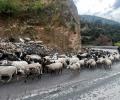
The edited sheep contains no foreign DNA, distinguishing it from transgenic organisms and paving the way for regulatory approval under India's evolving biotech policy framework.
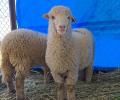
Researchers at the Sher-e-Kashmir University of Agricultural Sciences and Technology have produced India's first gene-edited sheep, marking a historic milestone in the field of animal biotechnology.

From tackling visa woes to admission counselling, rediffGURU Dr Karan Gupta helps you choose the right course and country to study abroad.

This test uses an indigenously developed, cutting-edge CRISPR technology for detection of the genomic sequence of SARS-CoV-2 virus, CSIR said in a statement.
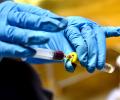
The research found that the device accurately detected a set of positive samples in under 5 minutes.

Named after Satyajit Ray's famed detective, the Feluda test, which is priced at Rs 500 and can deliver a result in 45 minutes, is able to differentiate SARS-CoV-2 from other coronaviruses even if genetic variations between them are minute.

Charpentier, 51, and Doudna, 56, are just the sixth and seventh women to win the Nobel Prize in chemistry, according to France 24.
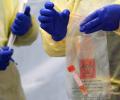
The test named the "SARS-CoV-2 DETECTR" is easy to implement and to interpret, and requires no specialised equipment, said researchers from the University of California, San Francisco in the US.
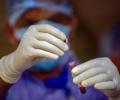
Named after 'Feluda', the detective character in legendary filmmaker Satyajit Ray's stories, the test has been developed by Debojyoti Chakraborty and Souvik Maiti as a simpler way of detecting SARS-coV2 presence in clinical samples, IGIB Director Anurag Agarwal said.
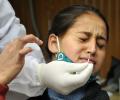
The ICMR Advisory on Purposive Testing Strategy for COVID-19 also said individuals undertaking inter-state domestic travels do not need to get tested either.

The ministry of civil aviation on Wednesday said only two per cent of the passengers coming from countries that are not in the 'at-risk' list will be subject to random sampling for coronavirus and such passengers will be permitted to leave the airport after giving the samples.
'This health emergency has brought a lot of people together with the common purpose of getting Feluda to play detective as quickly as possible.' 'As a scientist, if we can make a small difference in people's lives, we are happy'

The world is on the threshold of a new era of cooperation in which individuals, business and nations more readily join forces, thanks to the coronavirus pandemic and only a global effort can help get back to normality from the health crisis, according to Tata Sons chairman N Chandrasekaran. In his New Year address to over 7.5 lakh employees of the consumer products to aerospace conglomerate, Chandrasekaran said the pandemic has rewritten the rules and there has been a shift in priorities with greater focus on safety and resilience, and a transition from 'just in time' toward 'just in case' -- changes that "offer a glimpse of the new economy that will emerge from the old".

While there is a shortage of testing kits, manpower and capacities, India does not have other scalable testing options.

'Whoever owns the best chip industry will be the Saudi Arabia of the era of data,' predicts Rajeev Srinivasan.

Science is a young person's game. An award to a young scientist could free up that person to do productive work, or help win more grants by enhancing reputation, argues Devangshu Datta.

Prime Minister Narendra Modi was among the 11 candidates shortlisted by Time for its annual honour.

Modi won the online readers' poll conducted by Time magazine for Person of the Year 2016, the second time he emerged winner of the reader's choice poll.

The real issue in India is not between Make or Made/Create in India or basic or applied research. We need both. The solution is to create an eco-system where new ideas can flourish and convert themselves into new technologies and products, says Colonel Anil A Athale (retd).

'There is no tried and true recipe for creating Silicon Valleys.' 'Attracting and creating a mass of truly dynamic entrepreneurs is at the core and among the hardest and most necessary ingredients.' 'In the US, close to 60% of the top valued tech companies were started by immigrants who found the start-up climate to be superior to where they came from.' 'India would clearly benefit from attracting back its talented Diaspora, but it also needs to hold onto those entrepreneurs.'
 © 2026 Rediff.com - Investor Information - Advertise with us - Disclaimer - Privacy Policy - Sitemap - Feedback - About us - Terms of use - Grievances