
Inflation in fruits was 8.93 per cent.

Central and state government employees would be entitled to five per cent additional dearness allowance of basic pay and 50 per cent DA from July 1, 2006 following proportionate increase in price index since January this year.

The Karnataka government is also expected to follow suit and withdraw its decision to raise the variable DA.
The consumer price index was estimated as being up 3.5 per cent in March from a year ago, the biggest increase in 15 years. On June 6, 2007, the European Central Bank raised its key interest rate from 3.75 pe cent to 4.00 per cent, the highest level in almost four years. In terms of economic freedom, old Europe still lags behind. The Heritage Foundation has the three largest economies, Germany, France, and Italy, ranked 19th, 45th, and 60th respectively in the world.

The fifth meeting of Monetary Policy Committee maintained the repo rate, at which it lends to the banks, at 6.25 per cent and the reverse repo, at which it borrows, will be 6 per cent.

The Reserve Bank of India on Thursday raised its inflation projection to 5.1-4.7 per cent for the second half of the current fiscal on the back of spike in prices of vegetables such as onion and tomatoes.

Consumer prices rose an annual 5.11 per cent (2012 base) in January.

India's consumer inflation should ease in the next two months, and will fall to 8 per cent by the end of the year, says RBI Governor Raghuram Rajan.
High oil prices are expected to push up inflation to 3.9 per cent in the next three months, hardening interest rates, economic think-tank IEG has said.
The Value Added Tax system has no adverse impact on consumer prices, and revenue earnings under the new regime have shot up by 15.3 per cent during the first quarter of the current fiscal, Finance Minister P Chidambaram told the Rajya Sabha on Tuesda

India's industrial production contracted by 3.6 per cent in February, official data showed on Monday. According to the Index of Industrial Production (IIP) data released by the National Statistical Office (NSO), manufacturing sector output declined by 3.7 per cent in February 2021. Retail inflation rose to 5.52 per cent in March, mainly on account of higher food prices, government data showed on Monday. The consumer price index (CPI) based retail inflation stood at 5.03 per cent in February.

Minutes of the MPC meeting show Das felt economy needs more monetary stimulus as inflation outlook remains uncertain.

Among top losers that dragged down key indices were Infosys, TCS, Reliance, SBI, Tata Steel and ITC, falling up to 2.15 per cent.
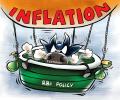
With pricing power of producers unlikely to strengthen and commodities ex-crude oil likely to remain sluggish in the immediate term, the core-WPI inflation may remain sub-zero in the rest of this calendar year.

Fruits, vegetables and eggs continued to witness deflationary trend during January this year, with their prices declining 4.18 per cent, 13.32 per cent and 2.44 per cent, respectively.
India's year-on-year inflation rate as measured by the consumer price index rose to 3.43 per cent in January from 3.2 in December, a government statement said on Wednesday.

Crisil Research expects retail inflation to rise 60 basis points to 4 per cent this fiscal from 3.4 per cent in 2018-19.

RBI watchers are going to be on tenterhooks for the next 3 weeks.

RBI's likely focus will shift back towards the resolution of non-performing loans in the banking system for reviving credit demand

The Reserve Bank of India, which mainly factors in retail inflation to decide its monetary policy, has been tasked by the government to ensure the rate of price rise remains around 4 per cent.

Finance Minister Arun Jaitley on Saturday said that retail inflation is expected to remain close to 5 per cent

Retail inflation during the first month of the current fiscal stood at 2.9 per cent, down from 4.6 per cent a year ago. Food inflation based on Consumer Food Price Index declined to a low of 0.1 per cent during the financial year 2018-19, the survey said.

It would also be the last policy of Rajan

The Consumer Price Index hit the lowest in six months in March at 4.83 per cent.

India's factory output climbed 22.4 per cent in March, benefiting from the base effect of the lockdown-marred month a year back as well as a turnaround in the manufacturing sector, while retail inflation slipped to a three-month low of 4.29 per cent in April. The high positive annual growth in the index of industrial production (IIP) in March 2021 came on back of a contraction of (-)0.9 per cent and (-)3.4 per cent in January and February 2021 respectively, according to the data released by the National Statistical Office (NSO) on Wednesday. This turnaround was led by recovery in the mining, manufacturing and electricity sectors.

The Seventh Pay Commission had decided to choose the CPI-IW as the index for adjusting inflation for central government employees.

'If you see the composition of items which are causing this spike in prices, most of them have little to do with the kharif harvest, except for pulses and vegetables to some extent.' 'I don't know on what basis the government is claiming that food prices will moderate in the weeks to come.'

Although there is headroom for further monetary policy action, at this juncture it is important to keep our arsenal dry and use it judiciously: RBI's Das.

Retail inflation rose marginally to 9.84 per cent in September, mainly due to a hike in food prices, particularly of vegetables.

After a delayed start, the monsoon is advancing steadily.

A pick-up in farmer income could have a cascading impact on the rural economy, though agriculture is becoming a smaller part of India's overall rural incomes.
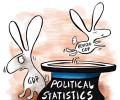
It is also likely to assume a deflator of around 4 per cent. That could take the nominal GDP outlook for FY21 to around 10 per cent. It is this nominal GDP forecast on the basis of which the finance ministry is calculating key Budget targets like the fiscal deficit as a percentage of GDP and tax revenue growth for the coming year.

'Decide on an asset allocation you are comfortable with and stick to it for the long term.'
Wholesale fuel prices in May fell 10.51 per cent year-on-year.
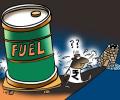
Inflation in food articles, fuel and power contracted in July.

Declining vegetable prices brought down the retail inflation to a 15-month low of 4.59 per cent in December and within the comfort zone of the Reserve Bank, government data showed on Tuesday. It is for the first time during the current fiscal that the Consumer Price Index (CPI) based inflation print is below 6 per cent or in the RBI's target range of 2 to 6 per cent. The central bank factors in the CPI-based inflation while arriving at its monetary policy. The inflation in December 2020 came down from 6.93 per cent in November, mainly on account of 10.41 per cent decline in vegetable prices over the year-ago period.

In spite of Governor Raghuram Rajan's repeated concerns about inflation, many think there may still be a loosening of stance.
Since March 2020, WPI food inflation rate continued to fall but the CPI-food inflation rose, signaling a breakdown in supply chain from the mandis to the final household.
 © 2026 Rediff.com - Investor Information - Advertise with us - Disclaimer - Privacy Policy - Sitemap - Feedback - About us - Terms of use - Grievances