
Expensive food and clothing pushed up the Consumer Price Index (CPI) by 1.18 per cent in August vis-a-vis the previous month, but experts said too much should not be read into the numbers, as the data on retail prices is yet to stabilise.

India's industrial production grew by 1 per cent in December, official data showed on Friday. According to the Index of Industrial Production (IIP) data, the manufacturing sector output grew by 1.6 per cent in December 2020.

The CPI, based on retail prices, stood at 108.8 points in June.
The Reserve Bank of India (RBI), in its quarterly monetary and macroeconomic review, has expressed concerns on the existing high levels of inflation rate when based on the consumer price index (CPI).
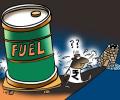
A rise in petrol and diesel consumption can help the government cut cesses on the fuels by Rs 4.5 a litre without impacting revenue collections of FY21, and help cool off the pressure on inflation, domestic rating agency ICRA said on Friday. Petrol consumption is estimated to increase 14 per cent in 2021-22 and diesel by 10 per cent on the lower base, rise in mobility and economic recovery, ICRA said. The rating agency added that it will result in an additional Rs 40,000 crore in revenue for the government through higher collections of the cess.

The RBI targets inflation at 6 percent by January 2016 and 4 percent for 2017/18.

Consumer price-based index of products consumed by agricultural labourers rose to 17.21 per cent in December compared to 15.65 per cent in previous month, a Labour Bureau statement said on Wednesday. However, inflation measured by wholesale prices was 7.31 per cent in December.

However, the hike in salary for government officials may take some time as the Centre had earlier this year decided to put a freeze on any hike in the DA of its employees till July, 2021, owing to the Covid-19 pandemic.
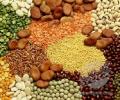
Finance Minister Pranab Mukherjee attributed the 4.78 per cent spurt in inflation in November to rising prices of food articles. "Inflation has risen high mainly because prices of food articles have gone up," Mukherjee said.

If you invest for the shorter-term now, you will be able to roll over to higher rates when the interest-rate cycle turns, advises Sarbajeet K Sen.
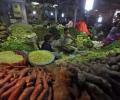
Items such as cereals and products, meat and fish, oils and fats became cheaper

The repo rate has been left unchanged at 4 per cent, Governor Shaktikanta Das said while announcing the decisions taken by the central bank's MPC.
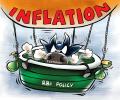
The RBI, which mainly factors in CPI for arriving at its bi-monthly monetary policy, has been mandated by the government to ensure that inflation remains at 4 per cent, with deviation of 2 per cent on either side.

India's economy is unlikely to see double-digit growth and may grow between 8 per cent and 9 per cent this fiscal year (2021-22, or FY22), against the estimated 11.5 per cent, according to leading economists and rating agencies. The downward revision of growth projections to as low as 10 per cent is mostly on account of stringency in restrictions by states, relatively slow vaccination pace, and the possibility of a third wave of the pandemic. However, they say the impact will not be as severe as the first wave, and expect the first quarter to see positive growth.

Spiralling prices pinched the pocket of consumer as edible oil, fuel and many other commodities turned dearer this year amid pandemic-induced disruptions but the inflationary pressure is anticipated to ease, though marginally, in the coming months. As consumers, at retail as well as wholesale levels, are willy-nilly learning to live with the new normal of curbs to contain the spread of coronavirus infections, experts are of the view that elevated inflation is likely to stay longer. After dealing with the devastating blows from the second COVID wave, especially during the April-June period, the economy is well on the revival path but the emergence of Omicron might unsettle the recovery trajectory in the short term.

Milk and its products too were less expensive with inflation print of 4.21 per cent, cereals and products at 2.10 per cent, meat & fish at 3.31 per cent while for eggs the prices grew at a slower pace of 8.51 per cent.

The rate of price rise in the vegetable segment almost doubled to 7.47 per cent as against 3.92 per cent in September.

Inflation in food articles during June stood at 2.04 per cent, as against 1.13 per cent in May.

The Reserve Bank's growth projection for next financial year is lower than 8-8.5 per cent projected by the finance ministry in the recent Economic Survey which was tabled in Parliament on January 31. Unveiling the bi-monthly policy, RBI governor Shaktikanta Das said, "Recovery in domestic economic activity is yet to be broad-based, as private consumption and contact-intensive services remain below pre-pandemic levels."

Prospects of China hiking interest rates increased as inflation rose to 3.1 per cent in May, surpassing the government target of 3 per cent.
Do you agree? Do you believe smaller cities are the hardest hit as far as inflation is concerned? Or do you feel this is one of those baseless economic exercises which will hold no water?
South India relatively insulated from the increase in prices.

Prices have continued to move up in Delhi's markets, wholesale and retail, on supply worries and spoilage due to record cold weather.
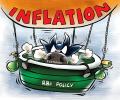
Inflation breached the upper end of the RBI's comfort level of 4 per cent plus-minus two percentage points.
Das said that global economic activity has remained fragile and the surge in COVID-19 cases has subdued early signs of revival.

As India looks to mend its Covid-battered economy, one thing that will grab the attention of all concerned is the path that both wholesale and retail inflation will follow. Even the Reserve Bank of India in its latest policy statement said, "Going forward, the inflation trajectory is likely to be shaped by uncertainties impinging on the upside and the downside.
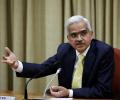
The Reserve Bank remains laser-focused to bring back retail inflation to 4 per cent over a period of time in a non-disruptive manner, Governor Shaktikanta Das stressed while voting for status quo in interest rates, as per minutes of the October policy meeting released on Friday. The central bank has been mandated by the government to ensure the Consumer Price Index (CPI) based inflation is at 4 per cent, with a band of 2 per cent on either side. The retail inflation, which was above 6 per cent during May and June, has started moving down and stood at 4.35 per cent in September.

'While the country has been hit hard from a strong second wave of Covid, we believe the markets are willing to look through that.'
The poor performance of capital goods - a bellwether for future growth - has alarmed most analysts
Concerned over the state of the world economy and depreciation of the US dollar, Chinese Premier Wen Jiabao on Tuesday said 2008 would be the "most difficult" for the country's economy as it faced the potential risk of economic fluctuations.

A Kotak research report expects RBI to cuts rates by 50 basis points in the first half of 2019. RBI will announce its sixth bi-monthly monetary policy on February 7.
The Ministry of Statistics and Programme Implementation (MOSPI) is in talks with the Department of Posts to take the help of its staff in collecting sample data for the proposed Consumer Price Index for Rural India (CPI-R). The data for the index would be collected from 1,000 villages, Chief Statistician of India Pronab Sen said on the sidelines of a national seminar on the results of the 61st round of the National Sample Survey.
China's inflation rate rose to 8.5 per cent in April, bouncing back to hover near 12-year highs, bringing more pressure on government to tame rising prices, identified by it as the "biggest concern".The Consumer Price Index (CPI), main gauge of inflation, rose 8.5 per cent from 8.3 per cent in March and remained close to a nearly 12-year monthly high of 8.7 per cent recorded in February, the National Bureau of Statistics said.
Is the general increase in price rise affecting you? has your monthly budget gone for a toss? How are you coping with increase in prices of essential goods of daily use? Share your views with us.
6 per cent increase in DA for Central govt employees

Pushed by rising prices of essential kitchen items, the retail inflation rose to an eight-month high of 7.34 per cent in September, making the RBI's task to push growth by reducing the interest rate even more difficult in coming the days. The Consumer Price Index (CPI)-based inflation was 6.69 per cent in August and 3.99 per cent in September 2019. Inflation has been hovering above 4 per cent since October 2019.
Chief economic adviser to the finance ministry Arvind Virmani on Wednesday said the retail price-based inflation, which is ruling above the wholesale price index, will come down with a lag but would not fall as much as the rate of rise in wholesale prices is falling.

As per commerce and industry ministry data, food inflation fell to 4.91 per cent in March from 7.79 per cent in the previous month.

The inflation in the food basket spiked to 7.89 per cent in October 2019 as against 5.11 per cent the preceding month.

The industrial production grew by two per cent in September, mainly on account of better performance by power and mining sectors.
 © 2026 Rediff.com - Investor Information - Advertise with us - Disclaimer - Privacy Policy - Sitemap - Feedback - About us - Terms of use - Grievances