
Total liabilities of the government increased to Rs 107.04 lakh crore at end-September 2020 from Rs 101.3 lakh crore at end-June 2020, official data on public debt showed on Wednesday. This represented a quarter-on-quarter increase of 5.6 per cent in Q2 FY21. Public debt accounted for 91.1 per cent of total outstanding liabilities at end-September 2020, as per the latest quarterly report on public debt management.

Do not go for riskier options like co-operative bank only for the higher return. Even if you go for them, park only a small portion of your capital there, say Tinesh Bhasin and Sanjay Kumar Singh.

SBI's ownership should give confidence to depositors and lenders about the bank's solvency.

Record liquidity infusion by the central bank in the banking system during the financial year 2020-21 amid sluggish economic activity resulted in banks investing more in safe government papers than in extending loans, data from Reserve Bank of India (RBI) showed. This trend has not been seen in nearly two decades, barring 2016 - the year of demonetisation.

Flush with liquidity, banks are eager to lend. And, therein lies the problem, warns Tamal Bandyopadhyay.

Finance Minister Nirmala Sitharaman presents her fourth Budget in Lok Sabha on Tuesday.

After removing three PSBs - BoI, Mahabank and OBC from the framework, RBI, on Tuesday, took out three commercial banks - Allahabad, Corporation and Dhanlaxmi from the said list.

The central bank's tough new rules spell major changes in the competitive landscape for financial services audits.

The Indian financial system's asset quality improved despite the pandemic, but it could be due to special dispensations by the regulator, and banks would likely see increased stress on their books once the schemes expire. According to the annual trend and progress report of the Reserve Bank of India (RBI) released on Tuesday, the data available for this financial year so far indicate that banks' bad debts have moderated while provision coverage ratios (PCRs), capital buffers as well as profitability indicators have improved relative to pre-pandemic levels.
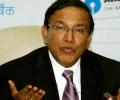
On October 31, Chaudhuri was arrested from his Delhi home by the Jaisalmer police for his alleged role in crippled Rs 200 crore Garh Rajwada hotel project in the city which was sold for Rs 25 crore to Alchemist ARC in March 2014. The project was financed by the bank in 2007.

Private equity (PE) is set to play a bigger role in banks. Of 21 recommendations accepted by the Reserve Bank of India (RBI) out of 31 made by its Internal Working Group (IWG), its stance on non-promoter holdings in private banks is seen with excitement, though it doesn't refer to PEs explicitly. On non-promoter holdings in these banks, the RBI said this will be capped at 10 per cent of the paid-up voting equity share capital in the case "of natural persons and non-financial institutions and entities"; and "at 15 per cent for all categories of financial institutions, entities, supranational institutions, public sector undertaking, or the government." While this is a modification of the IWG's stance for the non-promoter holding in banks at up to 15 per cent, it does open up a huge window for PEs, all the same. This is because, while the RBI has remained silent on the eligibility of industrial houses for bank licences, fresh high-quality capital in large amounts can only come from PEs.

The government on Wednesday said that all urban cooperative banks and multi-state cooperative banks will come under the supervision of the Reserve Bank of India, a development aimed at providing comfort to depositors and prevent repeat of PMC Bank like scams. The President of India will promulgate an ordinance to this effect, Information and Broadcasting Minister Prakash Javadekar told reporters after the meeting of the Union Cabinet.

The Industrial and Commercial bank of China (ICBC) is the world's largest bank in terms of market capitalisation, profitability and customer deposits.

On November 12, 2021, the Reserve Bank of India (RBI) decided to ring in uniformity in asset classification and income recognition across all lending institutions. Shadow banks, or non-banking financial companies (NBFCs), like commercial banks, are to test non-performing assets (NPAs) on a daily basis and upgrade them to "standard assets" only when interest and principal arrears are settled by borrowers. This is going to create all manner of headaches for shadow banks and their clientele. Says Y S Chakravarti, managing director and chief executive officer (CEO), Shriram City Union Finance: "NPA levels will go up, especially of small borrowers.

'RBI was focusing on public sector banks perhaps thinking that private sector banks are managed efficiently while PSU banks are not.' 'Now, RBI has to focus on private sector banks too.'

The Reserve Bank on Friday accepted most of the recommendations of its working group on corporate ownership of private sector banks, by allowing unrestrained promoter shareholding in the first five years of operations and hiking the same to 26 per cent after 15 years from the extant 15 per cent and also the new capital requirements. The move will benefit leading banks like Kotak Mahindra Bank and IndusInd Bank, among others, which have been seeking more time from the regulator to divest their stakes for many years now. Accepting 21 of the 33 recommendations of the internal working group, the central bank said the remaining suggestions are under its consideration.

The government plans to bring down its stake to 26 per cent in these two banks, which are yet to be identified. This may not come in the way of getting investors for these banks, provided the government is willing to step back rather than run them the way it had been doing for over five decades since these banks were nationalised, points out Tamal Bandyopadhyay.

The International Monetary Fund has said that it would be prudent to gain sufficient experience by implementing a comprehensive framework before deciding on the entry of 'mixed groups and conglomerates' into commercial banking.

Bankers need to take a call on whether they will allow technology firms to run banks or banks themselves will turn into tech firms, says Tamal Bandyopadhyay.
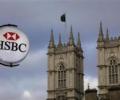
The deal fell as the transaction deadline expired. RBS said that it will wind-down its banking operations in the country.
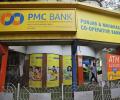
the three investors that have submitted their final bids are not commercial banks. Among the three, one is a non-banking financial company. Another distinctive feature of the revival is that PMC may lose its cooperative bank characteristic after its reconstruction.

The Islamic banking growth story continues to be positive, growing 50 per cent faster than the overall banking sector.

Asked about his fleet of luxury cars and other references to his lavish lifestyle as the counsel for the banks cross-examined him, the Reliance Communications chief dismissed them as "speculative" media stories.
Consumer activist Jehangir B Gai explains a RBI circular that says the customer is not liable for unauthorised transactions that occur due to contributory fraud, negligence, or deficiency on the bank's part.

While it is okay to hunt for banks that offer higher rates, the safety aspect is equally important.

New-generation private sector banks such as ICICI, HDFC, Axis, Kotak etcetera owe their existence to the recommendations of the first Narasimham Committee.
It said banks' asset quality will deteriorate across the corporate, small and medium enterprises and retail segments, leading to pressure on profitability and capital.

India should not be left behind. It should join the seven central banks which are studying feasibility and safeguards necessary to eliminate risks, particularly from hacking, advises former foreign secretary Shyam Saran.

Banks are in the process of getting a board-approved restructuring framework in line with the RBI's framework and eligibility defined by the central bank.

Challenges abound but innovation is key for new banks inorder to survive.

Penalty must act as a deterrent. If it is too low, it could encourage the regulated entities to lap up penalty instead of complying with the norms, suggests Tamal Bandyopadhyay.
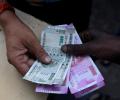
However, in the first quarter when the country was under a lockdown, net financial savings rose to 21 per cent of gross domestic product (GDP), according to the data released in the RBI's monthly bulletin.
A media report in the run up to the board meet had mentioned the names of Sashidhar Jagdishan, Kaizad Bharucha and Sunil Garg as the ones who had made the cut. Jagdishan and Bharucha are internal candidates, while Garg is working with American banking major Citigroup.

Amid increasing popularity of virtual currencies in various parts of the world, the Reserve Bank of India (RBI) on Monday said it is open to exploring the possibility of a digital version of fiat currency. Host of private digital currencies, virtual currencies and cryptocurrencies have gained popularity in recent years, though Indian authorities continue to remain sceptical about them. "In India, the regulators and governments have been sceptical about these currencies and are apprehensive about the associated risks. "Nevertheless, the RBI is exploring the possibility as to whether there is a need for a digital version of fiat currency and in case there is, then how to operationalise it," the RBI said in its booklet on 'Payment Systems in India -- Journey in the Second Decade of the Millennium'.

A day after the RBI put in public domain a draft scheme of merger of Lakshmi Vilas Bank (LVB) with subsidiary of Singapore-based DBS, public sector banks' officer union AIBOC on Wednesday said the amalgamation is not in the national interest and demanded the consolidation with any PSB. The proposed amalgamation of the cash-strapped LVB with DBS Bank India seems to be a ploy to provide entry of foreign banks into the country in a big way, All India Bank Officers' Confederation (AIBOC) president Sunil Kumar said. The Indian banking sector provides huge opportunity for growth, so the foreign banks have been looking at inorganic route to expand their presence for long, he said.

The focus of the meeting will be on enabling businesses and households to avail of the revival framework on the basis of viability, necessary steps like finalising bank policies and identifying borrowers, and discussing issues that require addressing for smooth and speedy implementation.
The annual earnings of a non-executive chairman of a PSB is capped at Rs 10 lakh, inclusive of fees for attending board meetings. This is way below the compensation of the chairman of any private bank, reveals Tamal Bandyopadhyay.

At present, the EPFO is mandated to invest 20-45 per cent of its incremental funds - of around Rs 1.5 trillion - in debt-related instruments.

The company is set to be India's first microlender to become a bank
The amount of loans to small and marginal farmers that commercial banks, cooperatives and regional rural banks have been asked to waive is likely to be slightly over Rs 23,000 crore (Rs 230 billion), less than half that estimated by Finance Minister P Chidambaram in his Budget speech. The share of this due to commercial banks is probably around Rs 6,000 crore (Rs 60 billion) the total overdue from all farmers to commercial banks is around Rs 10,000 crore (Rs 100 billion).
 © 2026 Rediff.com - Investor Information - Advertise with us - Disclaimer - Privacy Policy - Sitemap - Feedback - About us - Terms of use - Grievances