
The Supreme Court has permitted the NIA to file its charge sheet upon completion of the investigation into the incident in West Bengal where judicial officers were illegally confined by a mob.
The Supreme Court has directed all states and Union territories to provide comprehensive information on acid attack cases, including case status, victim details, and rehabilitation measures.
The Supreme Court of India is hearing petitions related to discrimination against women at religious places, including the Sabarimala temple in Kerala, and the scope of religious freedom practised by multiple faiths.

The Supreme Court has criticised the Ghaziabad police's investigation into the rape and murder of a four-year-old girl, summoning senior officials and demanding a court-monitored probe.

The Supreme Court of India has dismissed the use of information from 'WhatsApp University' as evidence in a case concerning religious freedom and discrimination against women at religious sites, including the Sabarimala Temple.

'Because, if someone remains an undertrial prisoner for five or seven years and is finally proven innocent, how will you compensate for the time lost?'

Chief Justice of India lays the foundation for an Integrated Judicial Court Complex in Assam's Kamrup district, facing protests from the Gauhati High Court Bar Association (GHCBA) over the relocation of the High Court.

The Supreme Court has deferred the hearing on a PIL alleging large-scale banking fraud involving the Anil Dhirubhai Ambani Group and its firms to May 8.

The Supreme Court of India has ruled that a minor child cannot be forced to carry a pregnancy to term, urging the government to amend laws to allow rape survivors to terminate unwanted pregnancies beyond 20 weeks.

Chief Justice of India Bhushan Ramkrishna Gavai retired, reflecting on his career, commitment to the Constitution, and social justice.
Justice Yashwant Varma of the Allahabad High Court has resigned amid impeachment proceedings sparked by the discovery of burnt currency at his residence, raising questions about judicial conduct and accountability.
The Supreme Court has stated that roads cannot be blocked for religious activities and that while religious denominations have autonomy in worship, the government can interfere if secular activities are affected.
The Centre has asked the Supreme Court to reconsider its judgements decriminalising adultery and same-sex relationships, arguing they were based on a subjective application of 'constitutional morality'.

The Supreme Court has stated it will not make structural changes to religious practices at the Bankey Bihari temple in Vrindavan, hearing a petition challenging administrative decisions affecting traditions.

The Supreme Court has referred Christian Michel James' plea for release in the AgustaWestland VVIP chopper scam case to another bench. The Delhi High Court previously dismissed his petition, but James continues to challenge his detention and the India-UAE extradition treaty.
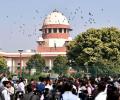
A woman lawyer was escorted out of the Chief Justice of India's courtroom after disrupting proceedings by persistently raising an unlisted case despite directions to stop by the bench.

Justice Surya Kant, on his first day as Chief Justice of India, established a new procedural norm requiring written requests for urgent case listings, with oral requests reserved for extraordinary circumstances. He also addressed various cases, including those related to extrajudicial killings and the removal of a lawyer from a government post.

The Supreme Court questioned the chief priest of the Sabarimala Ayyappa Temple regarding the constitutionality of preventing believers from touching the deity, during hearings on discrimination against women at religious sites.
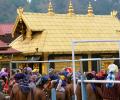
The Travancore Devaswom Board (TDB), managing the Sabarimala temple, argued in the Supreme Court that religious beliefs should be judged subjectively by the community, as the court hears petitions related to discrimination against women at religious places.
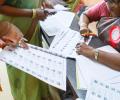
The Supreme Court has declined to intervene in a petition concerning the deletion of names from voter lists in West Bengal, directing the petitioners to seek redressal through established appellate tribunals.

The Supreme Court has deferred the hearing on the CBI's petition challenging the suspension of Kuldeep Singh Sengar's life imprisonment in the 2017 Unnao rape case.

The Centre has supported the restriction on women of menstruating age entering Kerala's Sabarimala temple, arguing that the Supreme Court's 2018 judgement assumes male superiority.

The Supreme Court has criticised the Gurugram Police and a magistrate for their handling of a four-year-old rape victim's case, demanding the presence of key officers and investigation records in court.
The Supreme Court is hearing petitions related to discrimination against women at religious places, including the Sabarimala temple. A nine-judge bench is examining the scope of religious freedom and the exclusion of women based on age and menstrual status.
The Supreme Court has criticised the Gurugram Police's handling of a three-year-old rape victim's case, citing an 'insensitive' approach and ordering key officials to appear before the court with all investigation records.

Chief Justice of India considers shifting Supreme Court hearings to virtual mode due to severe air pollution in Delhi after experiencing its effects firsthand.
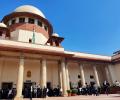
The Supreme Court, in a 2:1 majority, has recalled its previous judgment prohibiting the Centre from granting retrospective environmental clearances to projects violating environmental norms, paving the way for reconsideration of the issue.

The Supreme Court has referred activist Teesta Setalvad's application for the release of her passport to a three-judge bench, in a case related to alleged fabrication of documents in the 2002 Gujarat riots.

The Supreme Court of India has directed all high courts to establish timelines for trial courts to expedite the conclusion of acid attack cases across the country, emphasising the need for a more proactive approach and adequate compensation for victims.

The Supreme Court dismissed a petition related to the preliminary investigation report on the Air India plane crash in Ahmedabad, questioning the petitioner's motives and agenda.

Outgoing Chief Justice of India BR Gavai defends the Supreme Court's verdict on governors' powers, emphasizing the principle of separation of powers and judicial independence.

The Supreme Court of India has asserted its jurisdiction to determine what constitutes a superstitious practice within a religion, during a hearing on petitions related to discrimination against women at religious sites.
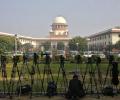
A nine-judge Supreme Court bench has commenced hearing on petitions related to discrimination against women at religious places, including the Sabarimala temple, and the scope of religious freedom across faiths.

The Centre has informed the Supreme Court that the restriction on women of menstruating age entering Kerala's Sabarimala temple is a matter of religious faith and denominational autonomy, falling outside the purview of judicial review. Solicitor General Tushar Mehta argued that courts should not apply 'secular standards of reason' to religious practices.
The Supreme Court of India has agreed to examine a constitutional challenge regarding gender discrimination within Parsi personal law, specifically focusing on whether a Parsi woman loses her religious identity upon marrying outside the community.
The Supreme Court has urged political leaders to promote fraternity while declining to entertain a PIL seeking guidelines on political speeches, emphasizing the need for objectivity and even-handedness in addressing concerns about hate speech and constitutional values.
The Supreme Court of India has stated that the time has come for a Uniform Civil Code (UCC), while hearing a plea challenging the Shariat law of 1937. The court suggested that the legislature should address the issue of discrimination against Muslim women.
Three academics involved in drafting a controversial NCERT textbook chapter on corruption in the judiciary have approached the Supreme Court to defend their work, stating it was a collective effort and not the view of any single individual.

The Supreme Court has ordered a 'fair, dispassionate, transparent, and time-bound' investigation by the CBI and ED into the Anil Dhirubhai Ambani Group, addressing concerns over alleged large-scale banking fraud and demanding accountability.

Justice Ujjal Bhuyan, who is sharing the bench, differed with the course of action adopted against the errant lawyer, and said, "I have my own views on this, he is the CJI, it is not a matter of joke!"
 © 2026 Rediff.com - Advertise with us - Disclaimer - Privacy Policy - Sitemap - Feedback - About us - Terms of use - Grievances