
'Dr Santhanam's crossing over to the side of the sceptics will be a serious challenge to the scientific establishment.'
The decision to provide Z grade security was taken by the Karnataka government following specific threats to ISRO scientists by the Lashkar-e-Tayiba and Dawaood Ibrahim.

Two months after India's maiden Chandrayaan-I mission discovered traces of water on moon, the National Aeronautics and Space Agency on Saturday said it has found 'significant amounts' of water ice on its surface, a finding that could trigger a hunt for life in outer space and boost hopes for a permanent lunar base.
52-year-old Stewart D Nozette, a National Aeronautics and Space Administration scientist and Maryland resident, was taken into custody by the Federal Bureau of Investigation last week on charges of espionage for Israel. Federal prosecutors charged that Nozette had sought to sell the top US secrets for US $ 2 million.
In a landmark discovery, India's maiden moon mission Chandrayaan-I has found evidence of water on the lunar surface, a finding that could trigger a serious hunt for life in outer space.

The Indian Space Research Organisation on Wednesday placed in orbit seven satellites including Oceansat-2 within a span of 20 minutes, its first successful mission after the abrupt end of the ambitious Chandrayaan-I project.
The Bharatiya Janaat Party's 'lotus' bloomed for the first time in south India in 2008 but the saffron party had little time to celebrate as Karnataka was rocked by serial bomb blasts in capital Bangalore and attacks on churches that drew flak in the country and abroad.

A highly respected scientist with 35 years of experience in ISRO, 60-year-old Radhakrishnan has played a key role in many of the country's space projects, including Chandrayaan-I.

ISRO is focusing on more launches including that of a communication satellite from French Guiana next month.
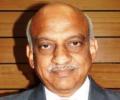
Alur Seelin Kiran Kumar was on Monday appointed as the new Indian Space Research Organisation chief. Kumar succeeds K Radhakrishnan, who retired on December 31, 2014, as the eighth chief of the prestigious space dispensation.
Stanishev's engagements this week include a visit to the campus of Infosys Technologies Limited.

Indian Space Research Organisation chief Madhavan Nair on Saturday virtually admitted that the Chandrayaan-I moon mission could be over, saying it is a 'pretty difficult' situation. "At the moment, we have suspended the mission. Calling it off would depend on what has failed. We are trying to analyse what has gone wrong and we will take a look at it on Sunday," he said.Asked if there was any hope of the mission surviving, he said he can't confirm anything at the moment.
The Indian Space Research Organisation is gearing up to turn on several probes, a day after the box carrying the Moon Impact Probe, armed with the tricolour, crash-landed on the lunar surface to mark India's presence on the moon.Scientists at ISRO told rediff.com that the groundwork to detach eight other payloads from Chandrayaan-1, in order to conduct further studies on the moon, was underway.
A "small" fuel spill mishap when the Polar rocket with the Chandrayaan-I spacecraft atop was being fuelled created a near "scare" during the final countdown for the launch of India's maiden unmanned moon mission, ISRO Chief Madhavan Nair said.
The final 52-hour countdown for the October 22 launch of the country's first moon mission, Chandrayaan-I, began early on Monday morning at the Satish Dhawan Space Centre at Sriharikota in Andhra Pradesh.
"The mission has economic and strategic value," Kalam told media persons on the sidelines of a function in New Delhi when asked to comment on the ambitious mission. He, however, refused to elaborate on it further. The lunar spacecraft Chandrayaan-I, India's first space mission beyond the earth's orbit, is scheduled for blast off on October 22 from the Sriharikota spaceport.
The successful landing of the Moon Impact Probe on the lunar surface has not only boosted the confidence of ISRO to undertake inter-planetary travel in future, but also conveyed a firm message to the world that India means business in the field of space, ISRO chief G Madhavan Nair said in Bengaluru on Friday.
In the next 25 years, we are looking at a maritime force that is truly a large blue water navy and an air force that is in reality an aerospace force.
Former President A P J Abdul Kalam lauded ISRO scientists for successfully launching the PSLV-C9 to put 10 satellites in orbit. "Though I have envisioned India to become a superpower by 2020, the attitude and the confidence of the youth, to conquer everything in the right spirit, would make the country a global leader and superpower within five years," Kalam said.
Buoyed by the success of Chandrayaan-I, space scientists now plan to conquer new frontiers by sending a robot on moon in 2012 and a spacecraft to Mars the following year which will also see an Indian astronaut in space.

India became the fourth country to make its mark on the moon when Chandrayaan-I's MIP landed on the moon's surface on Friday, at approximately 8.30 pm IST.The MIP, proudly bearing the Indian tricolour, crash landed on the moon's surface after being detached by Chandrayaan-1.The Indian Space Research Organisation's command room has confirmed that it has received its first signal from the MIP.
The Sensex recorded its second-worst fall since January this year and the biggest single-day percentage fall of 11 per cent in the last 16 years. It has been an October that can be best forgotten. In the last three weeks, the Sensex has shed a third of its value.
Even as the rain kept the country on tenterhooks with regard to the launch of the Chandrayaan, good news has come from the Met department which says that the weather may not play spoilsport after all.
In what may well be the first step towards establishing the first "human colony" on the moon, the Indian Space Research Organisation is examining the possibility of establishing a robotic set-up or unmanned mission on the moon.
"We are targeting the end of June. We will try to make it in the first week of July," a senior scientist associated with the Rs 386 crore moon mission told PTI in Bangalore on Monday on condition of anonymity.
Besides the two US payloads, Chandrayaan-I will carry five Indian instruments, three developed by the European Space Agency (ESA) and one from the Bulgarian Space Laboratory.
For all the jokes that have been going around for decades that when American astronaut Neil Armstrong set foot on the moon, an Indian was already there, seriously, the hype about an Indian on the moon may be still be a ways off, according to the Chairman of the Indian Space Research Organization G Madhavan Nair.
In the year gone by, Indian Space Research Organisation achieved self-reliance in launch vehicle technology with the successful ground testing of the Cryogenic Upper Stage, a key component in putting heavier payloads in orbit.
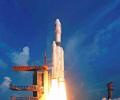
The rocket can put satellites weighing upto four tonnes in space, double the weight that the current GSLV-Mark-II can lift.
two US scientific instruments will be on board India's mission to the Moon 'Chandrayaan-1'.

Except Pakistan, seven SAARC countries are a part of the project.

ISRO Chairman K Sivan said there might by a postponement if the weather was not conducive.

'Space is dangerous and there will be many failed attempts as we try to use mankind's ingenuity to take the next evolutionary step.'
European instruments would be included on board India's mission to the moon, Chandrayaan-1, to be launched by India's Polar Satellite Launch Vehicle.

He attacked the dispensation over issues such as the state of the economy, the situation in Kashmir, the National Register of Citizens in Assam and action by probe agencies against opposition leaders.
The Indian spacecraft may carry a UK component as one of the payload, British High Commissioner Michael Arthur said.
"We have short listed scientific experiments from researchers in five countries the US, UK, Sweden, Bulgaria and Germany."
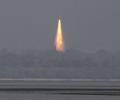
Enthused over its successful launch of GSLV D5 with GSAT-14 communication satellite from Satish Dhawan Space Centre in Sriharikota on Sunday, the Indian Space Research Organisation is planning a series of GSLV launches and an experimental launch of the advanced version GSLV Mark III soon from the spaceport.

India, with its demonstrated capabilities of undertaking low cost high value inter-planetary travel, offers great opportunities for NASA to work with.
 © 2026 Rediff.com - Investor Information - Advertise with us - Disclaimer - Privacy Policy - Sitemap - Feedback - About us - Terms of use - Grievances