
'Instead of one or two families controlling 10% to 15% of GDP, it has to be broad based. Then, the resilience of the economy also will be higher.' 'Then, if something happens to one business, it will not hurt the economy badly.'

Chhonzin Angmo became the first visually-impaired woman from India to plant the Tricolour on Earth's highest mountain.

In a first step towards succession plan, Chennai-based fast-moving consumer goods (FMCG) major CavinKare on Monday announced the restructuring of its businesses and also roped in the generation next giving charges of separate business verticals. Announcing the restructuring on Monday, CK Ranganathan, chairman and managing director of CavinKare indicated that the business will be split into mainly four different streams - FMCG, ecommerce, retail and research and development.

By splitting its business into separate verticals with dedicated portfolio heads, CavinKare looks to improve distribution and facilitate more launches in the future

Homegrown personal care products company CavinKare, which replaced FMCG major Hindustan Lever as the top shampoo marketer, is once again increasing focus on its hair care portfolio.

It also marks the culmination of the revamp exercise that the brand undertook 18 months back, spearheaded by Nellaiappan Thiruambalam, who was appointed as director and CEO of the personal care and foods division in April 2013.

Fast-moving consumer goods (FMCG) sales in rural areas witnessed a sequential recovery in the latter half of December, according to data by retail intelligence firm Bizom. Also, demand witnessed in the previous month compared to November was higher from tier-3 cities than mega cities. Overall demand from rural areas declined 0.2 per cent on a month-on-month basis in December while it was down 17 per cent in November, according to Bizom's data.

Demand for fast-moving consumer goods (FMCG) fell in April owing to lower stocking by kiranas, according to the data from Bizom. Kiranas stocked lower quantities in April as they resorted to heavy stocking in March. Sales in value terms were down 8.4 per cent in the month as against the same period last year while on a month-on-month basis, they declined 17 per cent.

However, the government's draft policy on e-commerce companies has forced consumer companies to also adapt to the changes. For Dabur India, e-commerce channel continues to be a key driver of growth in urban India. The contribution of online sales to its entire portfolio is at six per cent compared to 1.5 per cent before the pandemic.

'Enterprises have become more demanding in terms of their productivity expectation from their employees.'
Expect fast-moving consumer goods makers (FMCG) to raise prices again next month owing to raw materials, transport, labour and packaging material costs remaining high or becoming even costlier. Whether it is packaged wheat flour and basmati rice or biscuits and shampoos, these products will become 2-10 per cent more expensive. Adani Wilmar will hike the price of its packaged wheat flour by 5-8 per cent and of its basmati rice by 8-10 per cent next month.

Consumer companies have started taking orders via phone calls and are also pushing retailers to order through their B2B applications.

Unlike many other B-schools, IIM Ahmedabad follows a cluster system of final placements process where sectors are invited in cohorts at regular intervals.

A few days ago, Reliance Retail surprised the market by acquiring the Campa brand from Delhi-based Pure Drinks Ltd for Rs 22 crore. A successful cola brand in the eighties, especially in North India, Campa Cola thrived when Coke exited India in the late seventies. When the Atlanta-based major returned and PepsiCo set base in India, it went down fighting.

Many are testing hybrid models including getting small batches to work, rotating staff every week, introducing shifts and allowing certain functions to operate from office in small numbers.
The CavinKare Ability Awards for Achievers with Disability celebrate the spirit of those who have risen above their disabilities, displayed exemplary courage and triumphed in their chosen fields.

Cigarettes to hotel major ITC entered the consumer products business in 2007. In three years, it has managed to corner a two per cent market share.
CavinKare, which has successfully competed with multinationals, including Hindustan Unilever, in the sachet segment to retain leadership in key southern markets, will now have to prove its acumen in the bottled shampoo segment, which is increasingly getting competitive after new marketing strategies were adopted by ITC and other players.
The firms record robust 10-15% growth till September. However, despite the enhanced outlays for A&B, companies are looking at adopting cost -cutting measures.
C K Ranganathan, CMD , CavinKare talks to Business Standard about the recently held Employability Fair, the Ability awards and his relationship with the Ability Foundation
South-based CavinKare announced plans to expand its salon brand, Green Trends, from the current 35 to 70 by the end of 2007 and 140 by end-2008.

While demand for hair care products is increasing in both rural and urban markets, urban consumers have proven to be more extravagant, reports T E Narasimhan.

When you say, Make in India, it means, Indians will work for you, but we should create our own brands and create a market for them internationally. Only then, money will come back to India.

As advertising reaches a cacophonous pitch, as it does every year around this time, brands say they are finding newer and more effective ways to reach their audiences.

Through this transaction, Amazon has managed to acquire around a 3.6 per cent stake in the Future group.

The top five most trusted brands are Samsung Mobiles, Sony, LG, Nokia and Tata.

Despite slowdown, smaller firms attract growth capital.

The latest updates from the Tamil industry.

National brands prefer the acquisition route since the southern market is culturally different, reports T E Narasimhan from Chennai.

'When Pinnacle Trust bought the stake of Supreme Energy, it included a liability of Rs 640 million. The purchase was at a fair market value (prevailing price) of Rs 8.80 per share,' Deepak Kochhar said in a telephonic conversation with Business Standard.

Jaipuria has not specified the amount he is looking to raise, but says this is the right time to tap the capital markets.

Armed with deep customer knowledge, low operational overheads, new funding opportunities and help from online marketplaces, the local brand is turning David to every Goliath that steps into its neighbourhood, says T E Narasimhan.
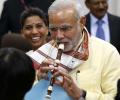
C K Ranganathan, CMD of the $12.50 billion CavinKare, in an interview with Shobha Warrier/Rediff.com, says though he sees signs of improvement everywhere, the Modi government has a long way to go to make the country business friendly

How Shivani Gupta bounced back from a major accident is sure to inspire you.
 © 2026 Rediff.com - Investor Information - Advertise with us - Disclaimer - Privacy Policy - Sitemap - Feedback - About us - Terms of use - Grievances