
The Ministry in a draft Cabinet note proposed accepting in toto the Rangarajan Committee recommendation of pricing domestically produced natural gas at an average of international hub prices and cost of imported LNG instead of present mechanism of market discovery.

Arvind Kejriwal and Prashant Bhushan have successfully managed to blow the lid off the 'crony capitalism' that is flourishing in the country today, and in the process delivered a crushing blow to the UPA government. Sheela Bhatt analyses
The state-run power utility NTPC Ltd has signed an agreement to buy gas from GAIL India for 10 years at a delivered price of close to $8 per million British thermal unit.

Oil Ministry is likely to announce the new rates sometime this week.
The OilMin is likely to announce the price for next six months soon.

The government had in October 2007 set a sale price of $4.20 per million British thermal unit based on the price discovered by RIL from key customers.
Locally produced gas in India will now cost at least 8 per cent less.
The Cabinet Committee on Economic Affairs on Thursday steeply increased the price of gas, hitting the aam-aadmi, also gave a meagre hike to the minimum support price of food-grains, adversely affecting farmers, reports Sheela Bhatt.

The price would increase from $4.2/mbtu to $10/mbtu if Rangarajan formula is accepted.
Reliance gets $4.215 per mmBtu for the gas it produces from KG-D6 fields off the Andhra coast. The price is fixed for the first five years of production. KG-D6 gas production began on April 2 and is slated to rise to 80 mmscmd by year-end, nearly doubling the nation's gas output.

The Petroleum Ministry has proposed a 33 per cent hike in the price of natural gas produced by ONGC and Oil India and gradually increase it to $4.20 per mmBtu set for gas from Reliance Industries' KG-D6 fields.

Based on the panel's formula, the base price of domestic natural gas comes to around $7.4 per million British thermal unit (mBtu), but the pricing formula proposed by RIL, officials say, translates the price into $13-14 an mBtu.

RIL on June 15 wrote to Oil Ministry proposing to price natural gas it produces from the Krishna Godavari basin block in Bay of Bengal at a rate equivalent to price India pays for importing liquefied natural gas, official sources said.

Reliance Industries has made drastic changes in gas supply contracts that will jack up its KG-D6 gas price by 10 per cent over and above the new rate of $8.3 coming into effect from next month.

The current price is among the lowest in Asia Pacific.
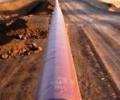
The Cabinet Committee on Economic Affairs may this week decide to price all domestically produced natural gas as per a formula suggested by a panel headed by Prime Minister's economic advisor C Rangarajan.
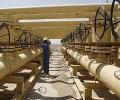
The approval is required to put through gas sales agreements with customers, which in turn are required to finalise Gas Transportation Agreements with transmission companies.

After Moily took over as oil minister, the central government agreed to link prices with global indices.

Both the countries have increased prices of gas recently.
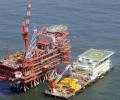
RIL estimates output from KG-D6 could reach up to 60 mscmd in the next five years, when all satellite fields are brought into production.

Currently, gas imported in its liquefied form costs $5.7 per million British thermal units as against $1.82 per mmBtu for fuel produced from state-owned Oil and Natural Gas Corporation's fields and $4.2 per mmBtu for gas from Reliance Industries' KG-D6 field.

The petroleum ministry has said Reliance Industries Ltd (RIL) is not right in seeking an out-of-turn rise in the price of natural gas produced from the KG-D6 fields and asserted the $4.205 per million British thermal unit (mBtu) rate will prevail unless pricing formula is changed.

Last week, RIL and urea companies failed to settle the key terms of gas supply from April 1 upon expiry of the five-year contracts that priced gas from the eastern offshore KG-D6 fields at $4.205 per million British thermal units.

The government may for the first time in about five years raise price of natural gas produced by state-owned firms like Oil and Natural Gas Corporation after the finance ministry and the Planning Commission backed the proposal for a 30 per cent hike.
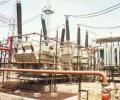
NTPC is fighting a case in the Bombay high court to get gas from RIL at a committed price of $2.34 per mmBtu.

Reliance Industries has said that developing smaller gas fields in the KG-D6 block is economically unviable at the current price of $4.20 per mmBtu and it may seek a rate of at least $6 per mmBtu in 2014, when the fields are put into production.

Oil ministry had previously proposed a 30 per cent hike in price of gas produced by Oil and Natural Gas Corporation and Oil India Ltd to $2.3 per mmBtu but finance ministry wants these rates to be brought on par with RIL, sources in the know of the development said.

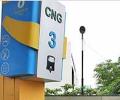
The reduction in natural gas prices would mean lower raw material cost for compressed natural gas (CNG) and natural gas piped to households (PNG).
Reliance Industries Ltd on Thursday told the Delhi High Court that the Delhi government's decision to probe the Centre's policy on gas pricing was a "peculiar" and "absurd" situation.
In a major relief to Mukesh Ambani-led Reliance Industries Ltd, the Bombay High Court Friday allowed the sale of gas from the Krishna-Godavari basin at $4.20 per million British thermal unit (mBtu) and reserved final judgment on a case brought by Anil Ambani-run Reliance Natural Resources Ltd.

As the world's third-largest oil importer and consumer, India is running out of options as the relentless surge in international oil prices make it imperative to pass them on to consumers, officials said on Monday. India imports 85 per cent of its crude oil needs and about half of its natural gas requirement. While the imported crude oil is turned into fuels such as petrol and diesel, gas is used as CNG in automobiles and fuel in factories.
RIL has raised the marketing margin to $0.15 per million British thermal unit from $0.12 per mmBtu earlier, a source said. The rate, which would be charged over the $4.20 per million British thermal unit base gas price, is however lower than the $0.18 per mmBtu margin charged by state-run GAIL. The increase, he said, was due to the additional risk of 'ship-or-pay,' an obligation under which the company would be obliged to transport the committed volumes or pay for the gas.
In the 38-page report, across 10 chapters, RIL explained how it entered the exploration and production business; the history of the New Exploration and Licensing Policy and the introduction of production-sharing contracts.
About two dozen discoveries of the state-owned ONGC, Reliance Industries and the Gujarat State Petroleum Corp (GSPC) in KG Basin alone are languishing for want of right price.
Mittal said his steel plants were getting gas at no less than $6 per million British thermal unit (mBtu), much lower than the $4.33 per mBtu price proposed by RIL.
Could get $8.4 per mmBtu from April 2014 by furnishing bank guarantee that would be encashed if D1, D3 gas hoarding proved
Companies to hold rates in Delhi until new government is formed.
ONGC has been making an annual loss of about Rs 700 crore (Rs 7 billion) on sale of gas at administered prices and hoped the government will soon decide on hiking the fuel price. the present price of Rs 3.2 per cubic meters that ONGC gets for gas produced from fields given to it on nomination basis, was not sustainable. Price of about 80% of gas produced by ONGC is regulated by the Govt. PetroMin had recommended 16% increase in price of gas produced by ONGC and Oil India.
Indications emerged on Friday on the possibility of India and Iran reviving an LNG deal struck last year, with Tehran offering a new price and New Delhi saying it was willing to raise its offer slightly.
Tehran is seeking at least 7.2 dollars per mBtu price for gas it wants to sell to India and Pakistan through the over 7 billion dollar pipeline while New Delhi is willing to pay no more than 4.2 dollars per mBtu for gas delivered at its border.
 © 2026 Rediff.com - Advertise with us - Disclaimer - Privacy Policy - Sitemap - Feedback - About us - Terms of use - Grievances