
Venture capitalists and private equity players have slowed investments in Indian start-ups.

Fairwork focuses on five principles of fair gig work: Fair pay, fair conditions, fair contracts, fair management, and fair representation.

The country's top three venture debt firms -- Alteria Capital, Innoven Capital, and Trifecta Capital -- combined deployed about $300 million (Rs 2,200 crore) in start-ups such as BigBasket, Cure.fit, Ninjacart, Dunzo and Lendingkart till April end, according to the government's Investindia website.

Online grocers like Bigbasket and localbanya witness surge in sales.
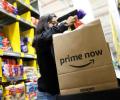
What is aggravating the situation is that e-commerce firms are facing huge shortage of delivery personnel. They have not been able to bring back their staff to work, despite offering higher pay and Covid-related insurance packages.

The groups plan to take on well-entrenched players like Amazon, Flipkart, and Paytm by merging their offline businesses with e-commerce initiatives.

'One good thing that has come out of all this is that it shown people that online ordering is the way forward.'

However, many of these firms were facing an uphill task of convincing the people on the ground to return to work, as many are apprehensive of their safety.
The department for promotion of industry and internal trade has rejected Walmart-backed Flipkart's proposal seeking approval for entry to the food retail sector, citing a regulatory issue, an official said on Monday. The government permits 100 per cent foreign direct investment in food retail for food produced and manufactured in India.

Reliance Retail has bought a 25.8 per cent stake in Dunzo, India's leading quick commerce player, for $200 million (around Rs 1,488 crore) as it looks to expand its presence in online grocery delivery business. Dunzo has raised $240 million (about Rs 1,787 crore) in its latest funding round that was led by Reliance Retail Ventures Ltd (RRVL) - the retail arm of Reliance Industries, the two firms said in a statement. Existing investors Lightbox, Lightrock, 3L Capital and Alteria Capital also participated in the funding round.

The move is significant since it signals the growing importance of foods in Marico's overall strategy. It also comes six months after Marico stepped into honey, a Rs 1,500-crore category dominated by players such as Dabur.

According to experts, this will have major impact on new investments by Chinese players in companies, such as Paytm, Ola, BigBasket, Byju's, Dream11, MakeMyTrip, and Swiggy, when they go for follow-up funding. Chinese investors, such as Alibaba, Tencent, and Xiaomi, are active in the Indian start-up space, and have collectively invested billions of dollars.

Globally, the viability of on-demand businesses is being questioned

In 2020-2021, the amount of foreign direct investment into India from China and Hong Kong plummeted to just $200 million -- its lowest in the recent past. In the first half of 2021-2022, FDI investments through these two nations stood at just $36 million.
Walmart, the world's largest retailer, is tripling its sourcing from India to about $10 billion a year by 2027, said Judith McKenna, president, and chief executive officer of Walmart International, the segment which includes the company's operations outside the US. "To achieve this, we are growing our sourcing team in India," said McKenna, during a fireside chat with YourStory founder Shradha Sharma at Converge@Walmart, the flagship event of Walmart Global Tech India. "Walmart has a 20-year history of sourcing from India and already exports more than $3 billion worth of Made-in-India goods each year to 14 markets worldwide." McKenna said the company has expertise in processes such as international standards and demand forecasting that businesses need to get ready to export.

The group began to outperform the broader market only with the onset of the pandemic in March 2020 while earlier it was largely keeping pace with the Sensex. The group's market cap is up 164.4 per cent since the end of March 2020 against a 105 per cent rally in the Sensex.

What entrepreneurs do not look is that for one success story like Snapchat, there are hundreds that fail.

Domino's India data that included sensitive customer information such as their names, phone numbers, and credit card details has allegedly been breached and put on sale on the dark web. According to tweets by Israel-based Co-Founder and Chief Technology Officer of cybercrime intelligence firm Hudson Rock, Alon Gal, the data is worth 13 terabytes (TB). He tweeted on Sunday that the data includes as many as 180 million order details, including 1 million credit card details. The data, said Gal, was up for sale on the dark web. The threat actor, he said, was asking for $550,000 for the data.
E-commerce companies are seeing an increase in demand for products such as fresh fruits and vegetables, milk, flour, rice, and lentils, and personal hygiene items like sanitisers and soaps and household cleaning products. Other products include instant noodles, baby food and Ayurvedic items. "There is even a huge spike in pet food," said a person.

India is currently home to 52 unicorn startups and one of the fastest-growing startup ecosystems.

There is a lot of police action on the ground and even inter-state movement has been stopped, because of which deliveries of essential items via platforms, such as Flipkart, Amazon, Grofers, and Milkbasket, aren't happening. Food-delivery firms -- Swiggy and Zomato -- are facing similar challenges, according to the sources.

After BigBasket, another online grocery retailer, MyGrahak, is scouting for private equity (PE) investment to fund its expansion plans.

Most firms operating in the space claim that they have seen at least a two-fold rise in orders as compared to other times.
Sources said a merger could benefit both as Grofers' private labels business would be a draw for Zomato, as well as its experience in the online grocery delivery space.

Bug bounty hunters or independent ethical hackers are certified cybersecurity professionals or security researchers who crawl the web, scanning the systems for gaps through which hackers can sneak in and alert the companies, says Shivani Shinde.

'The competition between the two is definitely going to be of great interest to the Indian market.'
Over the last 12 months, thanks to bold bets by venture capital firms like Sequoia, SoftBank Vision Fund, and foreign strategic investors like Naspers, pipeline of start-ups with potential to achieve $1 bn in valuation is at an all-time high.
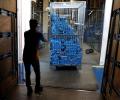
The companies have asked for digital curfew passes as e-retailers feel if more lockdowns are ordered after April 14, it is extremely difficult and time-consuming process to acquire the passes from local authorities.

Over the past week, several unusual partnerships among start-ups, traditional businesses and hospitals have been announced, and several more are likely to materialise soon. The trend could see increased importance of gig workers, who are taking considerable risk to deliver goods to people in the time of a pandemic.

'It is unclear whether clothing or home items qualify as essential items. A lot of professionals are working from home, and they need electronics for their productivity. Does this qualify as essential?'

Start-ups such as Max Wholesale, Jumbotail and ShopKirana are helping them place orders, maintain inventory, optimise delivery routes and make payments, all digitally.

$47.6 bn capital invested across 921 deals in India in 2020, despite pandemic.

Flipkart Supermart is already live in Bengaluru, Chennai, Hyderabad and Delhi

Google is going ahead with a policy revision mandating 30% charge on in-app purchases across all apps on Play Store. This has left developers' community worried about tighter squeeze on their earnings, says Yuvraj Malik.

Ramping up e-commerce operations and going beyond its current strongholds are key challenges for the grocery chain in its battle with Mukesh Ambani's retail behemoth.

After multiple attempts at selling itself, including to larger e-commerce player Snapdeal, ShopClues has found a buyer in Singapore-based e-commerce platform Qoo10 in an all-stock deal.

To make the service a hassle-free everyday option, Daily will allow users to schedule their meals in advance or opt for a daily, weekly or monthly subscription.

Footfalls will invariably come down to a trickle even after lockdown restrictions go away, and the only way to prevent someone else from poaching your consumer is to go down to the consumer herself. Consumers will prefer products and services to be delivered to their doorstep, hygienically and safely.
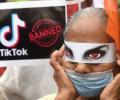
The ban in India would hit Chinese internet companies that were making headway in the world's fastest-growing mobile market.

According to experts, the banning of the apps has created negative sentiments and reduced the confidence among the Chinese investors to invest in India.
 © 2026 Rediff.com - Investor Information - Advertise with us - Disclaimer - Privacy Policy - Sitemap - Feedback - About us - Terms of use - Grievances