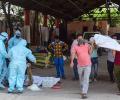
The ministry dismissed as "without any basis and unfounded" media reports that have used the term "Indian variant" for the B.1.617 mutant strain, which the WHO recently said was a "variant of global concern".
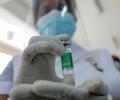
Anurag Agrawal, the Director of the Institute of Genomics and Integrative Biology, said the study on effectiveness of the available vaccines on the B.1.617 variant of SARS-CoV2 suggests that post vaccination, the infections are milder.
The B.1.617 variant of SARS-CoV2, also being called a 'double mutant' or the 'Indian strain', has been found prevalent largely in Maharashtra and Delhi that have been severely hit by a devastating second wave of the pandemic.

WHO has declared B.1.617 as a "variant of concern" and the update noted that this variant has "increased transmissibility", disease severity is "under investigation", risk of reinfection is "under investigation, possible modest reduction in neutralization activity (B.1.617.1)".
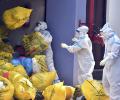
The coronavirus variant B.1.617 first identified in India last year has been classified as a "variant of global concern", with some preliminary studies showing that it spreads more easily, a senior WHO official had said on Monday.
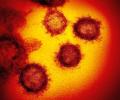
The WHO said that studies have highlighted that the spread of the second wave has been much faster than the first in India.

The WHO's move came nearly three weeks after India objected to the B.1.617 mutant of the novel coronavirus being termed an 'Indian Variant' in media reports with the Union Health Ministry pointing out that the UN's top health organ has not used the word 'Indian' for this strain in its document.
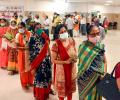
There are at least seven major variants of coronavirus, including B.1.617 and B.1.351 (Beta), in Varanasi and its adjoining areas, according to a study conducted by the Banaras Hindu University and the Centre for Cellular and Molecular Biology (CCMB).

According to the NCDC, 415 cases of the UK strain of coronavirus were found in genomes sequenced in Delhi, followed by 23 cases of the South African strain.
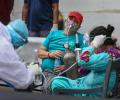
The B-1617 variant of the coronavirus, first identified in India, has been classified as a variant of concern at the global level by the World Health Organisation (WHO).
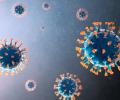
The B.1.617 variant was first detected in India and was divided in three lineages -- B.1.617.1, B.1.617.2 and B.1.617.3.

Senior virologist Shahid Jameel on Sunday resigned as the chairman of scientific advisory group of Indian SARS-CoV-2 Genomics Consortium, a forum set up by union government in December last year for laboratory and epidemiological surveillance of circulating strains of COVID-19 in India.

"A recent risk assessment of the situation in India conducted by WHO found that resurgence and acceleration of COVID-19 transmission in India had several potential contributing factors, including increase in the proportion of cases of SARS-CoV-2 variants with potentially increased transmissibility; several religious and political mass gathering events which increased social mixing; and, under use of and reduced adherence to public health and social measures. The exact contributions of these each of these factors on increased transmission in India are not well understood," it said.
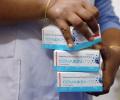
This apart, to further increase capacities, Bharat Biotech has partnered with Indian Immunologicals (IIL) to manufacture the drug substance for Covaxin. The technology transfer process is underway and IIL has the 'capabilities and expertise' to manufacture the inactivated viral vaccines at commercial scale.
The government has asked social media companies to immediately remove any content from their platform that uses or refers to the term 'Indian variant' of coronavirus, to curb misinformation around COVID-19, sources said Friday.
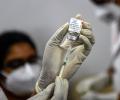
The NIH said results of two studies of blood serum from people who had received Covaxin suggest that the vaccine generates antibodies that effectively neutralise the B.1.1.7 (Alpha) and B.1.617 (Delta) variants of SARS-CoV-2, first identified in the United Kingdom and India, respectively.
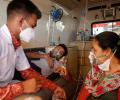
The double mutant variant, also known as B.1.617, is mostly dominating Maharashtra (761), West Bengal (124), Delhi (107) and Gujarat (102).

Soumya Swaminathan called on governments to boost exercises on reporting actual numbers.
The new lineage called B.1.618 is distinct from the B.1.617, also known as the 'double mutant' virus that contains two mutations, E484Q and L245R, and is believed to be behind the powerful second COVID-19 wave sweeping through India.

David Quarrey, 55, a 10 Downing Street aide, had tested negative in his pre-travel test but tested positive a week after his return when the National Health Service flagged that someone on his flight had been traced as COVID-positive, The Sunday Times reports.

Most coronavirus infections are not severe and do not need hospitalisation, the office of the Principal Scientific Adviser said on Friday, prescribing home-care tips for patients.

Gujarat reported 2,165 cases, Maharashtra 1,188, Uttar Pradesh 663, Madhya Pradesh 590, Haryana 339 and Andhra Pradesh 248 cases.
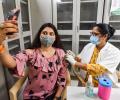
Vaccines Covishield and Covaxin work against SARS-CoV-2 variants Alpha, Beta, Gamma and Delta, while effectiveness tests against the Delta Plus variant is ongoing, the government said.

To build one's political and ideological arguments on the dead bodies piling up outside our crematoriums is despicable and breaches the basic tenet of human civility, argues Vivek Gumaste.

However, experts in the fields of genome sequencing and cell science have observed that such a small sample size cannot be considered as an indication of the spread of the mutated virus.
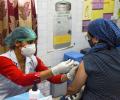
The CoWIN portal will be made available in Hindi and 14 regional languages by next week, while 17 more laboratories will be added to the INSACOG network to monitor the variants of COVID-19, the health ministry said on Monday.

Unless public health is prioritised over swift re-opening, the chances are that a third wave will hit India sooner than we would like.

What do we know about India's devastating second wave, and can we assign responsibility for it?

'In the second wave, probably due to the mutants, probably due to COVID-19-inappropriate behaviour, we are seeing it coming in the younger population, say from ages 30 to 50.' 'Also, we've seen that sometimes they deteriorate pretty rapidly and therefore we may need to keep a closer watch on the symptoms and on the oxygen levels at home.'
 © 2026 Rediff.com - Investor Information - Advertise with us - Disclaimer - Privacy Policy - Sitemap - Feedback - About us - Terms of use - Grievances