Having control over both digital media and NGOs, it was easy for the US to topple the government and destabilise Nepal -- to undercut Chinese influence and pressure India, argues Lieutenant General Prakash Katoch (retd).
The armies of India and Pakistan on Thursday held a brigade commander-level flag meeting along the Line of Control (LoC) in Jammu and Kashmir's Poonch district to discuss issues related to border management.
In a statement on Thursday, the Indian Army said that the ceasefire on the LoC is intact.

The two sides had started coordinated patrols in the first week of the month after completing disengagement in both Demchok and Depsang in the last week of October.
The talks are following up the outcome of the 19th round of Corps Commander-level talks held between the two sides on August 13-14 at the Chushul Moldo border meeting point.

He also criticised the government over an advertisement published in some prominent newspapers listing the steps taken for the welfare of the Maratha community.

Prime Minister Modi on Saturday left for Egypt after concluding his state visit during which he held wide-ranging talks with President Joe Biden and addressed the joint session of the US Congress.

China on Tuesday announced that its Defence Minister General Li Shangfu will visit India this week to attend the meeting of SCO defence ministers from April 27 during which he is expected to hold talks with his Indian counterpart Rajnath Singh on ending the prolonged eastern Ladakh standoff which has severely strained bilateral ties.

China on Wednesday said it was opposed to the joint Indo-US military exercises being held near the Line of Actual Control (LAC), asserting that it violates the spirit of the two border agreements signed between New Delhi and Beijing.
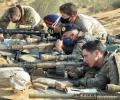
The 18th edition of exercise Yudh Abhyas is scheduled to take place from October 14 to 31, sources in the defence and military establishment said on Wednesday.

The armies of India and the US on Tuesday began an over two-week mega military exercise at a military facility in Uttarakhand with the aim of exchanging best practices and tactics in sync with growing defence ties between the two countries.
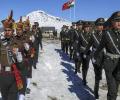
The 16th round of military talks between India and China on the lingering border standoff in eastern Ladakh will be held on July 17 on the Indian side of the Line of Actual Control (LAC) in the region, official sources said on Friday.

Military experts said the aim of constructing the bridge in the Khurnak area could be to ensure that the Chinese People's Liberation Army is able to quickly mobilise its troops in the region.

On Monday China said it has "effectively managed and controlled" frictions in certain border areas.

Corps Commander-level meeting between armies of India and China was held in Chushul on Tuesday, to resolve the ongoing dispute over Chinese aggression along the Line of Actual Control (LAC) in Eastern Ladakh area, said Indian Army Sources.

After having successfully disengaged with China in the Pangong lake area, Armies of India and China are likely to hold talks again this week to discuss further disengagement from Gogra heights and Depsang plains, said sources.
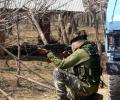
General Officer Commanding (GoC) of the Army's Srinagar-based 15 Corps or Chinar Corps, Lt Gen D P Pandey, said there have been some infiltration attempts, but unlike previous years they have not been 'adequately supported' by ceasefire violations.

"Our patience is a sign of our self-confidence, but no one should make the mistake of testing it," Gen Naravane said.
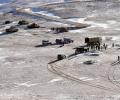
Both countries have reached a mutual agreement for disengagement of troops from the most contentious area of North and South Pangong Lake.

The drone christened 'Bharat' has been developed by DRDO's Terminal Ballistics Research Laboratory (TBRL), Chandigarh. It has been made to operate in high-altitude areas and can also adapt to extreme climates. It is also known to be agile.
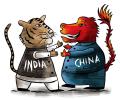
India and China achieved a major milestone this year when their bilateral trade crossed the landmark figure of $100 billion but it did not generate any fanfare in both capitals as the two Asian giants are going through a "particularly bad patch" in their relations due to a set of actions by Beijing in violation of agreements that led to the military standoff in eastern Ladakh. Starting with a modest $1.83 billion in 2001, the bilateral trade crossed $100 billion-mark in the first 11 months this year, a significant milestone for which the two countries carried out campaigns to boost trade and build it as a major stakeholder to improve the relations between two nations, whose ties otherwise remained frosty over the festering boundary dispute and strategic rivalry. According to last month's data from China's General Administration of Customs (GAC), the India-China bilateral trade totalled $114.263 billion, up 46.4 per cent year-on-year from January to November 2021.
"The meeting thus did not result in resolution of the remaining areas," the Army said in a statement.

Giving an account of India's overall military modernisation, Lt Gen Pande also said that an in-principle approval has been given to new combat formations called the Integrated Battle Groups (IBGs) which can mobilise fast with a more effective approach.
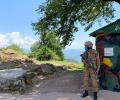
India and Pakistan have agreed to strictly observe all agreements on ceasefire along the Line of Control (LoC) and other sectors, according to a joint statement on Thursday.

There is a possibility of more talks at the military and diplomatic levels. India has always been in favour of peace. So, we hope a solution will be found out through talks, Singh said
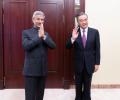
External affairs minister S Jaishankar has told his Chinese counterpart Wang Yi that the two sides should work for an early resolution of the remaining issues along the LAC in eastern Ladakh to restore peace and tranquility in the border areas as this has been an essential basis for progress in Sino-India ties.

The Army said it was also highlighted that completion of disengagement in other areas would pave the way for the two sides to consider de-escalation of forces and ensure full restoration of peace and tranquillity and enable progress in bilateral relations.
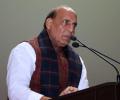
Monday's clash was the biggest confrontation between the two militaries after their 1967 clashes in Nathu La when India lost around 80 soldiers while over 300 Chinese Army personnel were killed in the confrontation.

China has not yet talked about the number of casualties suffered by the People's Liberation Army during the clash.
The ministry of external affairs said both sides suffered casualties that could have been avoided had the agreement arrived at earlier at the higher level been scrupulously followed by the Chinese side.

The habitats have been provided with proper heating facilities as the region receives up to 40 feet of snow after November every year while temperatures fall up to minus 40 degree Celsius in the winter months.
Asked about the reports of the troops on both sides disengaging and moving back to their previous positions, Chinese foreign ministry spokesperson Hua Chunying told a media briefing in Beijing that both sides are taking steps to ease the situation along the borders.

The sources said Singh will carry out a comprehensive review of the security situation in the region with Gen Naravane, Northern Army Commander Lt Gen Yogesh Kumar Joshi, Commander of the 14 Corps Lt Gen Harinder Singh and other senior army officials.
Speaking on condition of anonymity, the official asserted that US President Donald Trump, during his presidency, has really strengthened all aspects of the US-India security and defence cooperation to build a comprehensive, enduring and mutually beneficial defence partnership.
The comments by External Affairs Ministry Spokesperson Anurag Srivastava came at a media briefing when asked about the fresh comments by the Chinese foreign ministry blaming India again for the border situation in eastern Ladakh.

He said there were no signs of an "overt collusion" between China and Pakistan during the Ladakh standoff but India also caters to a long term strategy for not a two, but a two-and-half front war. With the half front, he was referring to the internal security.
As tensions between the armies of India and China at the LAC show no sign of ebbing, both sides have significantly ramped up the presence of their troops.
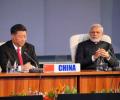
'Under General Secretary of the Chinese Communist Party (CCP) Xi Jinping, Beijing has stepped up its aggressive foreign policy toward New Delhi. Since 2013, China has engaged in five major altercations with India along the Line of Actual Control (LAC),' said a brief issued by US-China Economic and Security Review Commission.
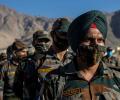
Calling the 'events' along the Line of Actual Control (LAC) very disturbing, the external affairs minister said they have raised some very 'basic concerns'. When asked whether it will be a long-haul or a breakthrough is expected soon, Jaishankar said: "I would not go into prediction zone at all whether it is going to be easy or not, and what will be the timelines and so on."
The Indian side also told the Chinese delegation that the talks on disengagement should include Depsang as well as all face-off sites, insisting that it should be a simultaneous process and not a selective one.
 © 2026 Rediff.com - Investor Information - Advertise with us - Disclaimer - Privacy Policy - Sitemap - Feedback - About us - Terms of use - Grievances