
The Supreme Court of India will examine the age limits for surrogate mothers and other provisions of the Surrogacy Regulation Act and Assisted Reproductive Technology (Regulation) Act on February 11. The court has asked the government to file its written submissions on the matter. The laws set age limits for intended parents and surrogate mothers, restricting commercial surrogacy and emphasizing altruistic surrogacy. The court is also considering alternative mechanisms for compensating surrogate mothers and has proposed a designated authority for disbursing payments instead of intended couples.

The Supreme Court of India has ruled that foreign nationals facing criminal charges cannot be allowed to leave the country. The court emphasized the need to ensure the presence of foreigners during criminal proceedings and outlined procedures for enforcing this restriction. The ruling clarifies legal provisions related to foreigners' movements in India, particularly during bail applications.

The observation came while setting aside an order of the Rajasthan high court which had quashed the FIR against a teacher who was accused of sexually molesting a 16-year-old girl at school in Rajasthan's Sawai Madhopur district.
The Supreme Court of India censured the Assam government for keeping persons declared foreigners in detention centers indefinitely and not deporting them. The court questioned the state's explanation for not sending nationality verification forms to the Ministry of External Affairs, stating that detainees should be deported immediately once identified as foreigners. The court directed the Assam government to initiate the deportation process of 63 declared foreign nationals whose nationality was known and file a status report in two weeks. The court also directed the Centre to provide details of those deported and how it plans to deal with detainees whose nationality is unknown.

The Supreme Court of India has ruled that the offence of abetment of suicide should not be invoked mechanically against individuals, emphasizing that the provision should not be used to soothe the feelings of grieving families. The court stressed that the conduct of the accused and the deceased, their interactions, and conversations preceding the death should be examined practically and not divorced from real-life contexts. The judgment came after a plea challenging an order of the Madhya Pradesh High Court that refused to discharge a man from charges under Section 306 of the Indian Penal Code (IPC) related to a suicide case. The Supreme Court emphasized that to prove abetment of suicide, there must be evidence of active instigation or acts facilitating the suicide. In this case, the court found that the appellant's actions, including seeking repayment of a loan, did not constitute instigation to suicide.

"Are you waiting for some muhurat," the Supreme Court remarked on Tuesday as it came down heavily on the Assam government for keeping people declared as foreigners in detention centres indefinitely rather than deporting them.

In a significant order, the Supreme Court has restrained the Enforcement Directorate from accessing and copying content from electronic devices seized during searches against Santiago Martin, also known as the 'lottery king', his relatives, and employees.
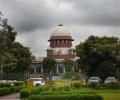
Commencing hearing on pleas challenging the constitutionality of the Places of Worship Act, 1991, the Supreme Court asked the Centre to reply to cross-pleas against or seeking implementation of statute.
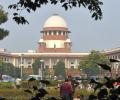
The Supreme Court of India has sought the Indian government's response to a petition filed by a Muslim woman seeking to be governed by the Indian succession law instead of Shariat. The woman, Safiya P.M., argues that she does not believe in Shariat and wants to be governed by secular law, including the Indian Succession Act of 1925. The court has asked the government to file a counter affidavit within four weeks.

The Supreme Court on Tuesday imposed a cost of Rs 50,000 on the Centre for filing an appeal against an order of the Armed Forces Tribunal, which granted a liberalised pension to the widow of a soldier who died during a counter-terrorism patrol in Jammu and Kashmir.

Citizens' voices cannot be throttled by a threat of destroying their properties and 'bulldozer justice' is simply unacceptable under the rule of law, the Supreme Court has said.

A bench of Justices Abhay S Oka and Augustine George Masih, however, refused to interfere with the September 26 order of the apex court granting bail to Balaji on a plea filed by one of the complainants seeking its cancellation.
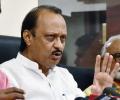
The Supreme Court on Thursday directed Maharashtra Deputy Chief Minister Ajit Pawar to use the 'clock' symbol in its publicity material in the upcoming Maharashtra assembly elections with a disclaimer that the matter was sub judice before it.

The Supreme Court of India has ruled that informing an accused of the grounds for their arrest is not a formality but a mandatory constitutional requirement. The court declared the arrest of Vihaan Kumar, who was accused of financial fraud, as unconstitutional and ordered his immediate release. The ruling emphasizes the importance of procedural safeguards in criminal law and highlights the fundamental rights of arrested individuals. The court also expressed disapproval of the police's treatment of Kumar, including handcuffing and chaining him while he was in the hospital.

Equating 'bulldozer justice' with a lawless state of affairs where might is right, the Supreme Court on Wednesday laid down pan-India guidelines and said no property should be demolished without a prior show cause notice and the affected must be given 15 days to respond.

The US Supreme Court has upheld a law requiring TikTok's China-based parent company to divest from the app, paving the way for the popular platform to be banned from the US starting Sunday. The court's decision was unanimous, with the justices citing national security concerns related to TikTok's data collection practices and relationship with a foreign adversary. While existing users may still access the app, new users will be unable to download it and updates will no longer be available. The decision comes as the Biden administration prepares to hand over the reins to the incoming Trump administration, which is expected to review the situation before making a final determination on TikTok's fate.

The Supreme Court declined to hear a public interest litigation (PIL) seeking directions to the Election Commission and state election bodies to address purported duplication and multiple entries in voter lists. The court suggested the petitioner approach high courts with specific grievances and file representations with appropriate authorities.

The Supreme Court of India expressed deep concern over the rising drug abuse problem in the country, highlighting the impact on youth and the need for urgent intervention. The court emphasized the need for rehabilitation rather than demonization of drug users and called for open discussions to address the issue. The judgment came while granting bail to a man accused in a heroin smuggling case. The court cited a 2019 report that indicated a significant number of people in India use opioids, cannabis, and other substances, with alarming trends in opioid dependence.

The petition filed by advocate Srinivasan has also sought a direction to poll panel to take effective steps to restrain political parties from making promises of freebies during the pre-election period.

A court in Budaun will decide on December 24 whether to proceed with a hearing in the Jama Masjid Shamsi versus Neelkanth temple case. The dispute arose in 2022 when a Hindu group claimed the temple existed at the mosque site and sought permission to worship. The Supreme Court recently restrained all courts from entertaining and passing any orders on lawsuits seeking surveys of religious places under the Places of Worship (Special Provisions) Act, 1991. The Muslim side argues that the lower court should not proceed with the hearing as it cannot pass any orders, while the Hindu side maintains the Supreme Court order does not stop the hearing. The court will now decide whether to continue the proceedings.
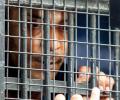
On a day when both the West Bengal government and the Central Bureau of Investigation (CBI) moved the Calcutta high court for admission of their appeals seeking capital punishment for RG Kar hospital rape-murder convict Sanjay Roy, a counsel for the victim's parents claimed that the family does not want death penalty for him.

A bench of Justices Abhay S Oka and Pankaj Mithal said the agency cannot cast aspersions on the entire judiciary in West Bengal.

The apex court said when a particular structure is chosen all of a sudden for demolition and the rest of similarly situated structures in the same vicinity are not even being touched, "mala fide may loom large".

The Bharti Kisan Union (Krantikari) has criticized the Punjab government for issuing arrest warrants against 25 farmers and adding an attempt to murder charge in the FIR related to the 2022 prime minister security breach incident. The union claims the farmers were protesting peacefully and had no knowledge of the prime minister's route. They argue the government is acting under pressure from the central government.

The BJP won the Chandigarh mayoral election on Thursday, defeating the AAP-Congress alliance. Harpreet Kaur Babla of the BJP was elected as the new mayor, while the AAP-Congress alliance won the posts of senior deputy mayor and deputy mayor. The victory of the BJP candidate indicated that cross-voting took place during polling. The Supreme Court had previously overturned the result of the 2023 mayoral poll, which had seen the BJP candidate win despite allegations of tampering with ballots. The court had ordered prosecution of the returning officer for the poll, Anil Masih, a BJP leader, for his "misdemeanour." The court had also declared defeated AAP-Congress alliance candidate Kuldeep Kumar as the new city mayor. This latest victory is a significant win for the BJP in the city and represents a setback for the AAP-Congress alliance.
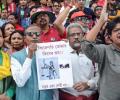
The West Bengal government has sought permission from the Calcutta High Court to appeal against the Sealdah court order that sentenced Sanjay Roy to life imprisonment until death in the RG Kar hospital doctor's rape and murder case. The state government is seeking the death penalty for Roy, the sole convict in the case, and has expressed dissatisfaction with the Sealdah court's verdict, which did not consider the crime "rarest of the rare." The court also ordered Roy to pay a Rs 50,000 fine and directed the state government to pay compensation of Rs 17 lakh to the family of the deceased doctor.

Tata Steel is in the process of filing a curative petition in the Supreme Court in connection with the apex court ruling which said that states have the power to levy cess on mining and mineral-use activities. The petition by the steel manufacturing firm is aimed at seeking remedy to the order, passed by a 9-judge Constitution Bench of the Supreme Court on July 25. However, Tata Steel's managing director and chief executive officer T V Narendran told Business Standard that there was no demand note on the firm.

The Supreme Court of India has directed the President to consider the mercy petition of Balwant Singh Rajoana, a death row convict in the 1995 assassination case of former Punjab Chief Minister Beant Singh. The court gave the President two weeks to decide on the plea. Rajoana was sentenced to death in July 2007 for his role in the bombing that killed Beant Singh and 16 others. The Shiromani Gurdwara Parbandhak Committee (SGPC) filed a mercy petition on his behalf in 2012.

The Supreme Court of India has ordered the Union government to grant a permanent commission to a woman officer in the Army Dental Corps who was denied benefits given to similarly placed officers. The court ruled that the woman officer was wrongly excluded from consideration and that the principle of "what is sauce for the goose ought to be sauce for the gander" applies in this case. The court directed the government to implement the order within four weeks and to extend all consequential benefits, including seniority, promotion, and monetary benefits, to the officer.

The top court said the NCPCR was empowered to conduct enquiry and take action in accordance with law under the Commission for Protection of Child Rights (CPCR) Act, 2005.
The Supreme Court of India has laid down guidelines for courts when ordering DNA tests to ascertain paternity. The court emphasized the need to balance the interests of all parties involved, including the child, parents, and other stakeholders. It also recognized the potential for infringement of privacy and the social stigma associated with illegitimate children. The court stressed that DNA tests should only be ordered when existing evidence is insufficient and when such tests are in the best interests of all parties involved.

In a move that can further alienate Telangana leaders, activists and students, the Andhra Pradesh government filed an appeal in the Supreme Court on Thursday against the high court order to remove the central forces from Osmania University campus.
The Supreme Court on Tuesday said it will lay down guidelines for all citizens and not for any particular community on the issue of demolition of properties.

He will take oath on November 11, a day after incumbent Justice DY Chandrachud demits office on attaining the age of 65.
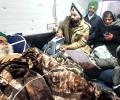
The Supreme Court on Saturday gave the Punjab government time till December 31 to persuade farmer leader Jagjit Singh Dallewal, who has been fasting for over a month, to shift to hospital.
The bench noted the high court did take note of this fact but explained it away by observing that since the other woman was a widow, "the make-up articles could not have belonged to her as there was no need for her to put on make-up, being a widow".

A bench of Justices Hrishikesh Roy and SVN Bhatti noted that a separate bench of the apex court had junked the plea filed by AAP leader Sanjay Singh on April 8 in the same case, who is a co-accused in the case.
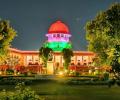
The report, according to the sources, states that the HC did not get the note of the Supreme Court collegium on the issue even after six months.
It will be court's opinion versus the legislative power to enact law, the Supreme Court on Wednesday said as it posted the pleas challenging the appointment of the chief election commissioner and election commissioners under the 2023 law on February 4.

The Bangladesh Supreme Court has stayed a High Court verdict that declared 'Joy Bangla' as the country's national slogan, effectively reversing the decision. The government, which had moved to suspend the High Court's ruling, argued that the national slogan is a matter of policy and not subject to judicial interference. This decision comes amid political turmoil in the country, with the recent change of government and a focus on revising national symbols and holidays.
 © 2026 Rediff.com - Investor Information - Advertise with us - Disclaimer - Privacy Policy - Sitemap - Feedback - About us - Terms of use - Grievances