
'Large firms and their interests can dominate the narrative, even as smaller stakeholders and retail investors struggle to be heard.' 'Regulators therefore require deep subject-matter expertise to assess representations, recognise underlying incentives, incorporate the perspectives of less-visible stakeholders, and guard against bias or capture,' notes Ananth Narayan.

'Periods of vacancy, which have become more common in recent years, can affect the pace of decision-making.'

The Securities and Exchange Board of India (Sebi) has planned a slew of further relaxations to facilitate easier registrations of foreign portfolio investors (FPIs), including a common know-your-client (KYC) and smoother documentation through India digital signature.

The Securities and Exchange Board of India (Sebi) has barred Dewan Housing Finance Corporation Ltd's (DHFL) former promoters Kapil and Dheeraj Wadhawan for five years from the securities market for alleged diversion of funds. They have also been barred from holding any key position in a listed company.

Joginder Tuteja looks at the month's releases in theatres.

The Bombay High Court on Tuesday stayed for four weeks a special court's order directing FIR against ex-Sebi chairperson Madhabi Puri Buch and five other officials for alleged stock market fraud and regulatory violations, noting the order was passed mechanically.

The Storyteller has a lot to like and admire about it, observes Mayur Sanap.

'We want to hide it (by saying) we are too busy in our lives, we have other things to attend to, we have families.' 'But they all had families, including Jyotiba or Mahatma Gandhi, or anybody who challenged the system.'

Under its new chairman Tuhin Kanta Pandey, the Securities and Exchange Board of India (Sebi) has gravitated towards greater transparency and ease of doing business, setting an objective of "effective and optimum" regulation. On Monday, during its first board meeting under Pandey, the regulator has decided to constitute a high-level committee (HLC) to review conflicts of interest and unveiled initiatives to simplify regulatory processes.

A special court in Mumbai has directed the Anti-Corruption Bureau (ACB) to register a first information report (FIR) against former Securities and Exchange Board of India (SEBI) chairperson Madhabi Puri Buch and five other officials in connection with alleged stock market fraud and regulatory violations.

Around Rs 1 trillion, or a fifth of the investments made by alternative investment funds (AIFs) are questionable in terms of the intent behind the investments and are under the scanner for circumvention of regulations, said Ananth Narayan, whole-time member of Securities and Exchange Board of India (Sebi). AIFs are pooled investment vehicles that invest in a variety of assets including real estate, startups, unlisted companies, and derivative strategies in the listed space.

Markets regulator Securities and Exchange Board of India (Sebi) is stepping up efforts to ease the onboarding of foreign portfolio investors (FPIs) and has constituted a cell for consultations with offshore investors and custodians, said whole-time member Ananth Narayan. Sebi is also working to make regulations more "light-touch" for FPIs that invest exclusively in government securities or are sovereign funds. The regulator is trying to make the registration process easier for such FPIs, the Sebi official said at the CII Financing 3.0 Summit in Mumbai.

Markets regulator Securities and Exchange Board of India (Sebi's) measures to curb speculative activity in the Rs 450-trillion-a-day futures and options (F&O) market is not a case of "throwing the baby out with the bathwater," whole-time member (WTM) Ananth Narayan said on Friday. "As a regulator, we are conscious that we must not throw the baby out with the bathwater. "When it comes to frenzied trading in options nearing expiry, however, it is difficult to see any baby in this bathwater," he said while delivering his address at the 21st FICCI Annual Capital Markets Conference.

Investor confidence in unlisted shares was shaken after recent developments that saw online drugstore PharmEasy issuing new shares in a rights issue at a 90 per cent discount to its previous valuations and Reliance Retail's move to buy back and cancel shares held by public investors. Both stocks were, at one time, very popular in the unlisted market, with canny investors cornering them with the objective of benefiting from their listing. "Since investors have suffered losses on both counts, they will be careful when it comes to dealing in shares of unlisted companies," observes a broker dealing in unlisted shares, adding that there will be some rationality to the pricing.

'If someone were to ask you if you want to die tomorrow, no matter what problems you are grappling with, you would be hesitant, right?'

The governor made it clear that the RBI is aware of what's happening and acts accordingly, but doesn't make a noise about that, points out Tamal Bandyopadhyay.

'Yellow Bus is a heart-breaking story based on a real incident and will strike a chord with mothers across the world.'
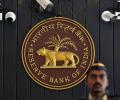
The Reserve Bank of India (RBI) is precariously balancing two opposing objectives - maintaining easy financial condition in the domestic market, while ensuring external stability - and economists have started taking note. They say India is going through the classic trilemma of the 'Impossible Trinity'. The RBI cannot have an independent monetary policy (setting domestic interest rates) in an environment of an open capital account and flexible exchange rates. What is even more complicated for the central bank now is that financial market stability overlays all the other three objectives.

If there was one event that made the month of August stand out, it was a strengthening of the dollar index to levels last seen only 20 years ago, as the Federal Reserve dispelled all doubts about its intention to continue raising interest rates. Predictably, most currencies suffered against the US unit, with the bulk of the losers belonging to the emerging markets pack. Amid the volatility, the rupee, however, has displayed significant resilience and fared much better than most of its peer currencies.

Anamika borrows heavy inspiration from Daphne du Maurier's novel, Rebecca, which was brilliantly adapted into a Oscar-winning mystery by Alfred Hitchcock and hauntingly interpreted under Biren Nag's direction in the Waheeda Rehman-Biswajeet B/W classic, Kohra.

This is a key reason for the finance ministry's objection to fixing the tenure at 100 years, as it is pushing PSBs to be self-dependent and raise funds from the market, reports Hamsini Karthik.

A good story and great performances make this an engrossing film to watch.

'The concern that the bad bank may create a moral hazard for the system is extremely valid.'


Anil Rego, CEO, Right Horizons, answers your personal income tax queries

Retail sales of cars are back to January 2018 levels in August 2021. Two-wheeler retail sales are 22 per cent lower, nearly four years down the line.

'This will have a multiplier effect in generating more jobs.'

'There will be political opposition, and this monetisation will require continued political will.'

High inflation print is the price that the Reserve Bank of India (RBI) will have to pay to nurse a fragile growth back, say economists. Wholesale Price Index-based inflation rose to a record high of 12.94 per cent in May, aided by low base effect, but also because of higher fuel and commodity prices. Retail inflation, too, surprised by rising to 6.30 per cent, while the core inflation, which is the non-food and non-fuel component, rose to an 83-month high of 6.55 per cent. These numbers are much above RBI's upper limit of 6 per cent inflation target, but there is very little that the RBI can do at this moment.

The minimum size of each bid would be $10 million and in multiples of $1 million thereafter.



The Reserve Bank of India (RBI) booked massive gains on its foreign currency sales and needed to provide much lesser for its reserves in 2020-21 (FY21), helping it to carve out a significant Rs 99,122-crore dividend for the government, revealed the RBI's annual report for FY21. By doing so, the central bank's risk buffers have reduced to the bare minimum, which may restrict some of RBI's scale of operations, and would likely hamper dividend payout for financial year 2021-22, said analysts. The annual accounts are for nine months ended March 31, 2021 since the RBI changed its accounting year from July-June to April-March from FY21.


Vinod Mirani gives us his weekly verdict.

Vinod Mirani gives us his weekly verdict.

'Simplicity was very much a hallmark of the Kerala lifestyle those days.'

The hits and misses of the week.

In May 2014, FIIs were net buyers by Rs 20,225 crore (Rs 202.25 billion).
Growth impulses, while improving, remain fragile, and a rate hike will be disruptive to interest costs.
 © 2026 Rediff.com - Investor Information - Advertise with us - Disclaimer - Privacy Policy - Sitemap - Feedback - About us - Terms of use - Grievances