The downward surprise in Q2 stemmed from a stronger-than-anticipated drag from gross fixed capital formation and marginal weakness in private final consumption expenditure. In Q3, projection errors emanated mainly from a steep unanticipated contraction in gross fixed capital formation, which was the deepest in the new series of GDP.

The sharpest contraction of the American economy in a decade is expected to get worse in the second quarter. White House senior economic adviser Kevin Hassett said that they expected second-quarter negative GDP growth between minus 15 and minus 20 per cent.

Chief Economic Adviser K V Subramanian on Monday said the overall impact of the second wave of COVID-19 on the country's economy is not likely to be large but cautioned about an uncertainty surrounding the pandemic going ahead. He further said that given the circumstances due to the pandemic, it is difficult to forecast if the country would achieve a double digit growth in the current fiscal. The Economic Survey 2020-21 released in January this year had projected GDP growth of 11 per cent during the current financial year ending March 2022.

'Given that the economy is going through a slowdown, further downward revisions of the 2019-2020 growth estimates cannot be ruled out,' notes A K Bhattacharya.

According to the first advance estimates of crop production for 2007-08 report that was released on Wednesday, India can expect record production in maize, oybean, cotton and sugarcane crops.

Agriculturally important UP, MP, Haryana, Maharashtra, and Punjab received 20-30% shortfall in rain
India's gross domestic product (GDP) growth during 2006-07 is estimated at 9.2 per cent as compared to 9 per cent during the previous year, advanced estimates of national income released by the Central Statistical Organisation say.
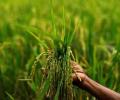
Riding high on the hopes of a normal monsoon, the agriculture ministry aims to increase foodgrain production by 6.35 million tonnes to a record 298.3 million tonnes in the 2020-21 crop year. The foodgrain output in the 2019-20 crop year (July-June) is estimated at an all-time high 291.95 million tonnes, as per the second advance estimates released by the ministry in February.

On the revenue front, the finance ministry was expecting higher proceeds from non-tax revenue.

NSO has pegged economic growth at 5 per cent in 2019-20 in its second advance estimates.

Accounting for the first Advance Estimates for 2017-18, an additional planned borrowing of Rs 200 billion, the fiscal deficit could come in at 3.35 per cent of GDP.

Businesses are still taking time to adjust in the new tax regime, which would weigh on growth rates for the financial year closing today.
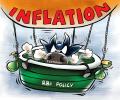
Inflation breached the upper end of the RBI's comfort level of 4 per cent plus-minus two percentage points.
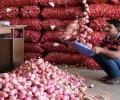
Onion is currently trading between Rs 70 and Rs 80 in retail markets across the country.

The economy has shown sharp resilience in the past and has also bounced back in good time. We could hence expect a similar trajectory next year, observes Madan Sabnavis, chief economist, CARE Ratings.
The economy is expected to grow 4.9 percent in 2013/14, marginally lower than the finance ministry's estimate of a 5 percent growth, dragged down by a contraction in the manufacturing sector, a government statement said on Friday.

Economists have said if a stimulus is needed it should be different from what was provided in 2008-09, when the economy faced the ripple effects of a global meltdown following the Lehman Brothers collapse.
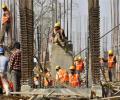
The First Advance Estimates of National Income, 2016-17 did not reflect the impact of demonetisation, effected on November 9 and are based on sectoral data for only seven months to October.

The NCEAR has indicated some improvement in the fourth quarter of the current financial year.
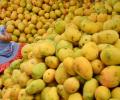
Export of mango, especially alphonso, to European countries has been negligible this season; shipments to the Gulf fell 40-50 per cent.
The economy is poised to grow by 8.1 per cent this fiscal powered by a 9.1 per cent rise in farm output, according to the advanced estimates of Central Statistical Organisation.

The Finance Ministry on Friday said the CSO has underestimated GDP growth rate for current financial year and exuded the confidence that economic expansion will exceed 5.5 per cent.
India's problem cannot be blamed on external considerations alone.
Finance Ministry had pegged the growth at 5.7 per cent and RBI at 5.5 per cent.
When FM was that the third-quarter GDP data was not in line with his ministry's optimism, he had said he relied on the advice of his advisors.

India's economic growth rate this fiscal is estimated to be sharply lower at 5 per cent, lowest in a decade, on account of poor performance of manufacturing, agriculture and services sector.
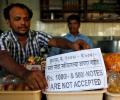
India Inc said policymakers should take doable steps to revive fixed investments and production of capital goods

India's economic growth slowed to 3.1 per cent in January-March and to an 11-year low of 4.2 per cent for the full fiscal 2019-20 amid a drop in consumption and investment. The Gross Domestic Product (GDP) growth stood at 5.7 per cent in the corresponding quarter of 2018-19, according to data released by National Statistical Office (NSO) on Friday.
For the economy to grow by 6.9 per cent in 2011-12, GDP growth for the fourth quarter needs to be 6.9 per cent.

In an interview with Business Standard, he says investments would pick up and inflation would fall in the next financial year, providing the Reserve Bank of India the room to cut rates.
Softening inflation, Das said would make available more policy space to the central bank to address risks to the growth going forward.

The experience of direct cash transfer under PM-Kisan will be useful in designing a larger scheme of DBT for farmers combining all subsidies and support for the agriculture sector in the future, say Ramesh Chand & SK Srivastava.
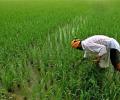
A pick-up in farmer income could have a cascading impact on the rural economy, though agriculture is becoming a smaller part of India's overall rural incomes.
Crosses Budget Estimate by 5.5%, govt expected it to be 4.6% of GDP for current financial year

Advance estimates on Tuesday estimated nominal GDP this financial year to be slightly less than that projected in the Budget, and this would magnify fiscal deficit as a portion of GDP.
Reflecting general rise in living standard, India's per capita income is estimated to grow above Rs 60,000 per annum or over Rs 5,000 per month, said the government data.
The Indian economy will grow by 6.9 per cent in 2011-12 against 8.4 per cent in the last financial year according to government estimates.

The previous high was recorded at 7.5 per cent in the July-September quarter of 2016-17.

The mismatch between PMI and core sector could also be due to the fact that while core sector is calculated year-on-year, PMI is calculated month-on-month.
 © 2026 Rediff.com - Investor Information - Advertise with us - Disclaimer - Privacy Policy - Sitemap - Feedback - About us - Terms of use - Grievances