
Imports rise at highest pace in more than 2 years as crude oil price spikes.

India showed revival signs in the March quarter.

Hardening prices of manufactured items during the month may refrain the Reserve Bank of India from cutting rates in its policy review on February 8.

Central bank moves to infuse liquidity into bond market to help boost sentiment.
Experts said the higher pay out will boost consumption demand.

A collapse in global oil prices has unleashed a wave of monetary easing.

Experts said the slowdown could be attributed to adjustments leading to destocking and the offering of discounts by companies as the government ushered in the new indirect taxation system on July 1.

Costlier vegetables slowly pushed retail inflation, which had remained well within the Reserve Bank's comfortable level of 4 per cent during most part of 2019, peaked to more than three-year high of 5.54 per cent in November.

Power generation and distribution is the most indebted sector

Instead of a rate hike, or even a pause, there could be a window for the RBI for an interest rate cut

Nirmala Sitharaman has designed the revenue mix in such a way that while Centre's share in taxes would grow a massive 25 per cent, states' share would grow a dismal 6 per cent.

Despite the 6-month high, trade deficit has widened to a four-month high of $14.62 billion, as imports rose by 14.85 per cent during the month, reports Subhayan Chakraborty.

This time there has been a rather peculiar criticism of the latest GDP numbers.
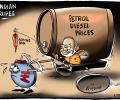
Retail inflation inches up to 3.77%; IIP growth dips to 3-month low
The deficit for the first five months of the year stood at 96 per cent of the full-year target of Rs 5.46 lakh crore despite cut in capital expenditure in August.

The sharp rise was also due to a statistical illusion -- low industrial numbers in November 2015, and sharp reversal of a 12-month declining trend in capital goods.

Home Minister Rajnath Singh said that the decision could cost the government roughly Rs 15,000 crore.

WPI inflation, which was in the negative zone from November 2014 to March 2016, has been on an upward trend for the seventh straight month

The industry has stepped up its demand for a rate cut

Depreciating the rupee against the dollar to boost economic growth has fiscal constraints and monetary limitations

The central government's deposits with the RBI had fallen to just Rs 100 crore as of June 8.

An expected withdrawal of FIIs from the market likely to weaken the rupee against the dollar.

Most analysts expect the note ban to sharply hit GVA growth in Q3 and Q4, and the central bank's stance is being called into question.

Significant portion of the funds used to fuel urban demand have become illegal and inoperative.

With weekly additions slowing, it's likely that demand could be slackening

Deflation masked the rise in food inflation to a 5-month high.

RBI may hold rates steady as economic parametes are going strong, say experts.

Import growth moderated to a four-month low, owing to sharp decline in that of gold.

Much of the Q3 data will simply not be available for the CSO to factor in its calculation.

The revision will do little to help the Congress party-led ruling alliance, which faces an uphill battle in elections due by May amid allegations of economic mismanagement, corruption scams and high inflation.

The services sector, which plays the biggest role in shaping the economy, is facing loads of issues currently. The largest segments, financial and real estate, are struggling to cope with bad debts and low demand for houses.

Growth in the third quarter (October-December) is expected to be the weakest in years, with spending hit due to unavailability of enough replacement currency.
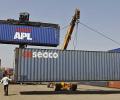
Export growth picked up mainly owing to rising global crude prices, which pushed up processed petroleum exports by nearly 40 per cent, apart from a broad-based improvement in exports of major foreign exchange earners such as engineering goods and gems and jewellery.

A monsoon deficit is likely to affect the agriculture output, which could have an impact on the food inflation
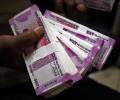
The budgeted indirect tax collection target is Rs 9.26 trillion, and the Centre has collected around Rs 5 trillion in the first 8 months. So it needs another Rs 4.2 trn in the last four months
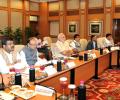
The meeting will focus on how to make the crisis an opportunity for India.

November IIP data show a fall of over 20%, led by automobiles, gems & jewellery and home appliances; turnaround seen as unlikely.
RE of GDP for 2015-16 show that the economy grew 7.9% in 2015-16, rather than the earlier estimate of 7.6 per cent.

UPA-II has yielded a 7.5 per cent average annual growth rate

RBI is expected to discuss about the impact of GST in its monetary policy.
 © 2026 Rediff.com - Advertise with us - Disclaimer - Privacy Policy - Sitemap - Feedback - About us - Terms of use - Grievances