
Market participants are hoping for a few tweaks on the taxation front which will encourage consumers and businesses to spend.
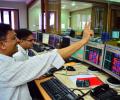
Benchmark BSE Sensex rose by 319 points on Monday on gains in IT and financial stocks after positive quarterly results amid supportive global cues. The 30-share BSE barometer rose by 319.90 or 0.53 per cent to close at 60,941.67. The index opened higher and gained more than 400 points to scale the 61,000 level. It touched a high of 61,113.27 and a low of 60,761.88 in the day.

The S&P BSE Realty Index has emerged as one of the top-performing sectors, yielding a remarkable 45 per cent return over the past six months. The three leading players, listed by market capitalisation, have substantially enriched investor wealth by 43-70 per cent during this period. If the second quarter (Q2) of 2023-24 (FY24) updates from Macrotech Developers (Lodha) and Sobha, along with industry data for the quarter, serve as any indication, the trend of strong bookings for larger players is expected to continue.

BSE-listed companies' market capitalisation reached Rs 197.7 trillion on January 21, against India's nominal GDP of Rs 190 trillion during 12 months ended December 2020.

Most NBFCs will have to slow down their loan growth. Some of the most leveraged will have to sell a part of their assets (or loan book) to banks to raise incremental capital. Others may have to knock on the door of their deep-pocketed parents.

Benchmark indices ended on a flat note on Thursday as fag-end selling wiped out intra-day gains amid weak global trends. The BSE benchmark Sensex slipped 8.03 points or 0.02 per cent to settle at 53,018.94. During the day, it had gained 350.57 points or 0.66 per cent to 53,377.54. Similarly, the broader NSE Nifty fell 18.85 points or 0.12 per cent to close at 15,780.25.

The Securities Appellate Tribunal (SAT) on Thursday quashed a Sebi order that barred NDTV founders Prannoy Roy and Radhika Roy from the securities market for two years in an insider trading case. However, the appellate tribunal partly set aside an order against Vikramaditya Chandra, the group's chief executive officer during the relevant period, and remitted the matter back to Sebi to decide the issue. It further said that trades executed by Chandra during PSI-3 (price-sensitive information) are required to be reconsidered, according to the order passed by SAT.

From the Sensex pack, Hindustan Unilever, Asian Paints, Bajaj Finance, Nestle, Bajaj Finserv, Reliance Industries, Larsen & Toubro, Maruti, Infosys and Bharti Airtel were the major laggards.

The Sensex ended up 48 points at 28,386 and the Nifty gained 13 points to close at 8,476.

10 non-bank and non-finance stocks from the BSE500 Index universe that offer an optimal blend of low valuation, reasonably robust revenue and earnings growth in recent quarters, a strong balance sheet, and most importantly, positive cash flow from their operations.
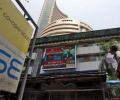
The stock markets, which had opened in the green on rate cut hopes, tumbled after the monetary policy announcement.

Thus far in 2017-18, FIIs and MFs have invested Rs 198.91 billion and Rs 1,119.49 billion in the Indian equity markets. Of this, around Rs 152.46 billion has come in January alone.

Benchmark BSE Sensex and Nifty closed on a flat note after a volatile session on Wednesday profit booking in IT and realty shares negated gains in metal and oil & gas stocks. The 30-share BSE Sensex ended 35.78 points or 0.06 per cent lower at 58,817.29, while the broader NSE Nifty inched 9.65 points or 0.06 per cent higher at 17,534.75. The market remained range-bound for the most part of the session as investors kept their exposure low due to weak global cues, traders said.

The BSE Midcap ended up 0.5% while the Smallcap index ended nearly 1% higher

'You can put 25 per cent right now; put another 25 per cent when Nifty corrects another 500 points.' 'At 13,500 put another 25 per cent and at 13,000 one can get fully deployed.'

The decision is a part of a surveillance review.

'I want us not to underestimate Indian voters. They can tell good work from bad.'

Staggered pull-out will help investors if the market continues to rise.

The Bombay Stock Exchange will start a separate platform for the small and medium-size enterprises by the year-end, a top bourse official said on Wednesday.
The BSE benchmark Sensex climbed 326.84 points on Monday, tracking gains in global equity markets and buying in index majors ICICI Bank and Hindustan Unilever. The 30-share BSE index gained 326.84 points or 0.62 per cent to settle at 53,234.77. During the day, it jumped 394.06 points or 0.74 per cent to 53,301.99. The NSE Nifty went higher by 83.30 points or 0.53 per cent to close at 15,835.35.

Benchmark BSE Sensex on Tuesday gave up intra-day gains to close lower by a little over 100 points on emergence of fag-end selling in FMCG, banking and IT stocks and weak opening in European stock markets. The 30-share BSE index declined 100.42 points or 0.19 per cent to settle at 53,134.35. During the day, it jumped 631.16 points or 1.18 per cent to 53,865.93.

Market benchmark BSE Sensex rallied 635 points to 59,942 in the opening trade of the special Muhurat session on Monday to mark the beginning of Hindu Samvat year 2079. The 30-share index was trading higher by 635.12 points, or 1.07 per cent, at 59,942.27 in the first few minutes of trade. Similarly, the broader NSE Nifty surged 192.20 points or 1.09 per cent to 17,768.50.

Market breadth was weak with 1239 losers and 1078 gainers on the BSE.

Markets snapped two-day losing streak and ended flat with a positive bias on Tuesday as gains in auto shares helped offset losses in IT majors.
Indian companies' market capitalization has grown at the fastest pace last year among major economies despite contraction in GDP, economists from SBI said, flagging the risks to financial stability it poses. Further, retail investors have shown higher interest in markets and their numbers have increased by 1.42 crore in FY21 and another 44 lakh in April and May, they said in a note, wondering if this will be a lasting behavioural change or is transitory. The economists at the country's largest lender attributed the growth in equity markets to lower returns on other financial instruments amid a low rates regime, increase in global liquidity, and even a tendency to spend more time at home because of mobility restrictions which led many to trade more.

The weakness in the rupee and broader markets has led to evaporation in the market cap.

The decline in LIC's share price makes it the biggest wealth destroyer among IPOs which hit the market after COVID-19 took hold globally in 2020.

Of these 26, Bajaj Finance, Associated Alcohols and Breweries, Garware Technologies, Filatex India, Tasty Bite Eatables, Aarti Industries and GMM Pfaudler saw an over 10-fold surge in price since 2014.

The move is meant to curb or reverse the export of India's financial markets to overseas trading platforms.

Liquidity issues post the crisis at DHFL, progress of monsoon, rupee trajectory at the domestic level and oil prices are some factors that will keep markets choppy, analysts say.

The Sensex ended over 51 points lower on Monday while the Nifty settled flat amid a weak trend in global markets and continuous foreign fund outflows. Markets are awaiting the November inflation data to be announced later in the day, traders said. The 30-share BSE Sensex declined 51.10 points or 0.08 per cent to settle at 62,130.57. During the day, it tumbled 505.52 points or 0.81 per cent to 61,676.15. The broader NSE Nifty ended at 18,497.15, marginally higher by 0.55 points.

To keep investors' confidence, however, Modi's government will need to be seen containing the fiscal deficit, while also increasing spending in key areas of the slowing economy.

According to Merrill Lynch (BofA-ML) report, Domestic capital markets are likely to remain volatile in the September-November period due to factors like US Fed's policy action, second quarter corporate earnings and Bihar state elections.
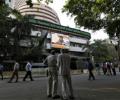
The broader markets also ended lower in line with the benchmark indices

The S&P BSE Auto Index has been one of the biggest outperformers among sectoral indices over the past year with returns of 26 per cent. By comparison, the benchmarks - the National Stock Exchange Nifty50 and the S&P BSE Sensex - managed about 6-8 per cent during this period. Improving demand, falling raw material costs, and rising product realisations, led by the premiumisation of portfolios, have led to a revision of growth estimates and upgrades by domestic brokerages.

Since its results, the stock of bottling and beverage distribution company Varun Beverages (VBL) is up 7 per cent on the back of a strong 2022-23 January-March quarter performance, robust outlook, and revision in profit estimates. Given the sharp uptick, it is now part of the trillion-rupee club, with its market capitalisation at Rs 1.01 trillion. The stock is one of the best performers in the consumer space as well as the S&P BSE 200, of which it is a constituent.

It, however, was a record-smashing week for both the indices, which scaled their lifetime highs.

Equity indices slipped in the negative territory on Wednesday after a two-day breather, with the BSE Sensex tumbling 709.54 points following weak trends in global markets. Unabated foreign fund outflows also played spoilsport for the bourses. The 30-share BSE Sensex tanked 709.54 points or 1.35 per cent to settle at 51,822.53. During the day, it declined 792.09 points or 1.50 per cent to 51,739.98.

The rupee gained 11 paise to 82.68 against the US dollar in early trade on Tuesday as the American currency retreated from its elevated levels. Forex traders said sustained foreign fund outflows weighed on the local unit and restricted the appreciation bias. At the interbank foreign exchange, the domestic unit opened at 82.69 against the dollar and marginally rose to 82.68, registering a rise of 11 paise over its previous close amid a positive trend in domestic equities.

Benchmark share indices trimmed intra-day gains after global crude oil prices resumed their downward trajectory after sharp gains on Friday.
 © 2026 Rediff.com - Investor Information - Advertise with us - Disclaimer - Privacy Policy - Sitemap - Feedback - About us - Terms of use - Grievances