
The Automotive Research Association of India (ARAI) has launched comprehensive conformity assessment and certification services for drone manufacturers, aiming to streamline the type approval process for Unmanned Aerial Systems (UAS) in India. This initiative supports the rapidly expanding drone sector by ensuring design, quality, and performance meet evolving safety and airworthiness standards.

India's real estate sector recorded an unprecedented $9.5 billion in capital inflows during Q3 2026, primarily driven by foreign investors' strong interest in data centres, according to a CBRE Group report.

India's semiconductor sector has garnered USD 1.4 billion in total equity funding across 281 companies, with a substantial USD 701 million raised since 2025 alone, according to Tracxn data.

Bharti Airtel's homegrown cloud platform, Airtel Cloud, has acquired approximately 40 customers within a year of its launch, with a significant portion coming from the manufacturing sector. The platform, designed for Indian companies, offers sovereign, telco-grade cloud infrastructure, connectivity, and GenAI-based provisioning, addressing the growing demand for secure, India-hosted data solutions, particularly for sensitive workloads and regulated sectors.

India's nine key infrastructure sectors recorded a three-month low growth of 4.8 per cent in August, primarily due to reduced production in coal, natural gas, crude oil, and fertiliser, according to government data.

Indian benchmark indices Sensex and Nifty rebounded in early trade after two days of losses, driven by easing crude oil prices and strong buying in blue-chip IT stocks, despite continued global uncertainties. Track Sensex, Nifty on September 30.
A new report by TeamLease Digital highlights a significant AI-ready talent gap in India's technology industry, with shortages of 53-60 per cent in Generative AI and cloud skills. The report indicates that only 16 per cent of IT professionals possess AI skills, leading to rising salary premiums for AI-core roles and a projected demand for over 10 lakh GenAI roles by 2026.

India's cement industry is on the brink of an oversupply situation as aggressive capacity expansion by major players is set to outpace demand growth over the next two financial years, potentially leading to pricing pressures and moderated utilisation rates.

Finance Minister Nirmala Sitharaman has called for enhanced accountability and safeguards for artificial intelligence, particularly as it integrates into critical sectors like finance. Speaking at the Global Fintech Fest, she highlighted the dual nature of AI, capable of accelerating transactions but also amplifying fraud and cyberattacks. Sitharaman stressed the need for human and institutional responsibility in AI-driven decisions, urging regulators and companies to scrutinise high-risk AI applications. She also proposed a federated industry platform for Indian tech companies to navigate international regulations and ensure tax compliance globally.

GIS intelligence solutions provider Mirai Aerospace Systems and Software Solutions has signed an MoU with US-based GreenValley International Inc to strengthen India's geospatial and LiDAR remote sensing manufacturing base. The collaboration focuses on local assembly, manufacturing, technical support, and the development of AI-driven LiDAR applications, aiming to meet India's growing demand across various sectors.

Civil Aviation Minister K Rammohan Naidu announced significant opportunities for Micro, Small, and Medium Enterprises (MSMEs) within India's rapidly expanding aviation sector. With Indian airlines ordering over 1,600 aircraft and the aerospace market projected to double by 2035, there's a massive scope for Indian suppliers to integrate into global aerospace supply chains, moving beyond assembly to design and manufacturing.

French aerospace and defence major Thales views India as a highly dynamic market for avionics, with significant growth potential as Indian airlines expand their fleets. The company, which has a substantial presence and MRO facilities in India, is also exploring opportunities to replicate India-developed solutions globally and sees increased use of AI in development.

Private corporations in India invested approximately 30.3 trillion in fixed assets during FY25, marking a 7 per cent increase from the previous year, according to the statistics ministry. This growth in private capital expenditure contrasts with a slowdown in government capital spending.

Indian and Chinese military officials have held corps commander-level talks in Arunachal Pradesh to review the Line of Actual Control (LAC) situation, following recent Special Representative discussions aimed at de-escalating border tensions and fostering bilateral ties.

Foreign portfolio investors (FPIs) significantly increased their buying in Indian equities during the first half of August, with financial services attracting the largest inflows, reversing previous outflows. The IT sector also continued to see strong interest from overseas investors, driven by a reassessment of valuations and the role of Indian IT firms in AI deployment.
India's private sector capital expenditure is projected to reach approximately 3.2 trillion in the financial year 2026-27, up from 2.6 trillion in FY26, according to a Reserve Bank of India bulletin report, indicating sustained confidence despite global uncertainties.

Banking services across India, particularly at public sector banks, are set to be disrupted for three days starting Monday due to a nationwide strike by bank unions. The strike, called by the United Forum of Bank Unions (UFBU), is primarily to press for a five-day working week and other demands, despite the finance ministry's appeal for dialogue.

India is strategically positioned to develop a robust domestic semiconductor ecosystem, driven by increasing electronics consumption, strong government support through incentives, and a global shift in supply chains. Boston Consulting Group Managing Director Ankush Wadhera highlights India's potential as a safe haven for investments, with the AI boom further fuelling demand for advanced chips. The nation aims to expand its capabilities across the entire semiconductor value chain, attracting significant global and domestic investments.

The portfolio could be split between listed and unlisted investments, or structured along sectoral lines.
Union Finance Minister Nirmala Sitharaman expressed strong confidence in India achieving over 10 per cent economic growth, advocating for increased technology adoption and innovation. She urged overcoming scepticism and highlighted technology's transformative role in agriculture and public sector reforms, while also launching a new fund and book at an IIT Madras event.

Life Insurance Corporation of India (LIC) is facing a thinning of its top management as Managing Director Dinesh Pant exits to join Irdai, leaving one of four MD posts vacant. This comes amidst broader staffing challenges across several public sector insurers and a headless Financial Services Institutions Bureau (FSIB).

Experts at a national symposium in Shillong discussed the role of Artificial Intelligence in tourism, emphasising that AI should support human judgment, local knowledge, and cultural values rather than replace them. Discussions highlighted the need for robust policies to address ethical concerns, safeguard livelihoods, and preserve cultural heritage while leveraging AI for innovation and sustainability in the tourism sector, particularly in Meghalaya.
Union Finance Minister Nirmala Sitharaman has urged significant investment in AI infrastructure, semiconductors, and quantum technology, identifying them as India's next major growth frontiers. Speaking at an IIT Madras Alumni Association event, she emphasized the need to build hardware, skills, and institutional ecosystems to harness these technologies, countering perceptions that India is lagging in AI. Sitharaman also highlighted the potential for increased investment in defence production, particularly in unmanned systems and drones, stressing collaboration between academia and industry.

India's services sector experienced its weakest growth in four-and-a-half years in July, as new business orders, both domestic and export, eased due to intense competition and declining demand. Despite a modest rebound in job creation and improved profit margins, overall business confidence slipped, reflecting a broader slowdown in the economy.

India has achieved its highest-ever annual Foreign Direct Investment (FDI) inflow of USD 94.53 billion in FY 2025-26, with cumulative FDI reaching USD 843 billion since 2014-15, announced Commerce and Industry Minister Piyush Goyal. Production Linked Incentive (PLI) schemes have also significantly boosted investment, production, exports, and job creation.

The Haryana State Narcotics Control Bureau (HSNCB) has arrested a Nigerian national in Gurugram for possessing 15.04 grams of MDMA (ecstasy). The accused, Udeh Frank, was intercepted near Sai Temple, Sector 53, and a case has been registered under the NDPS Act. This arrest is part of an ongoing crackdown on synthetic drugs by the HSNCB Gurugram Unit.

Chief Economic Advisor V Anantha Nageswaran has stressed the urgent need for India's financial sector to proactively address the safety and security risks of artificial intelligence, stating that waiting for problems to materialise is not an option.
Tata Projects has forged a strategic partnership with Canada-based MDS Aero Support Corporation to develop advanced aero-engine testing infrastructure in India. This collaboration combines Tata Projects' infrastructure capabilities with MDS Aero Support's global expertise in gas turbine engine testing, aiming to support India's rapidly growing aerospace and propulsion ecosystem.

Large office leases in Mumbai and Delhi-NCR are commanding premium rentals in key micro-locations, driven by a scarcity of quality Grade-A space and sustained occupier demand, according to real estate consultants.
A member of the Parliamentary Standing Committee on Coal, Mines & Steel, Sasmit Patra, highlighted the transformative potential of AI and digital technologies in making India's mining and metals sector more productive, transparent, and globally competitive. He emphasised their role in enhancing efficiency, safety, sustainability, and community engagement.

The United Arab Emirates (UAE) has expressed intent to invest an additional $25 billion in India, with an ultimate goal of reaching $100 billion in investments, Union Minister Piyush Goyal announced. This comes as both nations plan to enhance cooperation in shipping, ports, energy, and emerging technologies, against a backdrop of expanding bilateral trade.

India's milk supply is struggling to keep pace with rising demand as heat, fodder shortages and low animal productivity threaten dairy production.

A Chandigarh police head constable, Nitin Singh, was found shot dead in his home. His son, Armaan, who was previously out on bail in a fatal road accident case, has been detained as the prime suspect after an argument.

Homegrown software company Zoho has launched Zia Chat, a unified AI interface designed to streamline business operations across various functions. Alongside this, Zoho announced its entry into vertical SaaS with seven industry-specific applications for sectors like retail, automotive, healthcare, and education, reinforcing its position as a 'Swadeshi' alternative to global tech giants.
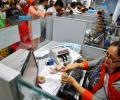
The finance ministry has announced that all banks, including Regional Rural Banks, will remain open on Sunday, September 27, 2026, to ensure public convenience amidst a proposed three-day strike by the United Forum of Bank Unions (UFBU) starting September 28, 2026. The strike, if it materialises, seeks a 5-day banking week and pension reforms.

Indian benchmark indices, Sensex and Nifty, experienced a sharp decline, with the Sensex tumbling 1,247.71 points and the Nifty settling below 23,100, primarily driven by a significant spike in crude oil prices and weak global market trends.

Finance Minister Nirmala Sitharaman has called upon Indian industry to prioritise not just scale but also resilience, better governance, and deeper technological capabilities to achieve the 'Viksit Bharat' goal by 2047.

Indian benchmark stock indices, Sensex and Nifty, rebounded on Friday, driven by value buying in banking, oil & gas, and auto shares following recent sharp losses. The Sensex climbed 315.20 points to settle at 73,895.74, while the Nifty rose 77.40 points to 23,140.50.

United States Treasury Secretary Scott Bessent has warned that Iranian airlines could be effectively shut out of international travel from Wednesday, September 23, as Washington threatens secondary sanctions against foreign companies that continue providing services to Iran's carriers.

Karnataka Chief Minister D K Shivakumar lauded KEONICS' initiative to provide AI-based KEO computers to rural children, marking the institution's golden jubilee. The KEO computers, developed in Karnataka, aim to bridge the digital divide. Shivakumar also highlighted government efforts to promote IT beyond Bengaluru, enhance industry-oriented skills, and digitise property records, emphasising the state's commitment to technology and skill development.
