
Benchmark indices finished higher on hopes of economic reforms
The RBI's macroeconomic report released after the close of markets said upside risks to food inflation remain and that it expects the retail and wholesale price inflation to remain above comfort levels.

Both the indices ended at their highest levels since February 1.

Shares of rate sensitive sectors such as realty, infrastructure, banking and automobiles ended higher ahead of the Reserve Bank of India (RBI) mid-quarter policy review on June 17.

The broader NSE Nifty too fell below the 10,100 level by dropping 100.10 points to end at 10,094.25

Market participants are now awaiting Thursday's meeting of the European Central Bank

The rupee had lost 15 paise to hit two-week closing low of 60.68 against the dollar in yesterday's trade on consistent demand for the US currency from importers and some banks on strong global cues.

The NSE 50-share Nifty spurted 97.25 points, or 0.92 per cent, to 10,715.50
Also keenly watching inflation numbers, with wholesale inflation data expected today

The 30-share Sensex ended down 414 points at 25,481 and the 50-share Nifty slipped 119 points at 7,603.

Mid-caps in cyclical sectors such as cement, financials and capital goods estimated to earn much more

Indian equities are in a multi-year bull story with capex cycle recovery as the main driver.

Waves of foreign portfolio investments worth over Rs 51,000 crore splashed into the Indian market in 2021 as overseas investors turned net buyers of domestic securities for the third straight year while excess global liquidity and other factors steered the ebb and flow of their investing ways. With the global financial system still flush with liquidity, emerging market assets, especially equities, might well remain the preferred investment avenue for many more months to come, experts opined. As the equities sizzled during most of 2021, that also saw economy slowly coming back into the recovery path, Foreign Portfolio Investors (FPIs) turned net buyers but their investment is much less compared to net inflows of Rs 1.03 lakh crore in 2020.
Decline in the rupee coupled with a slide in the crude oil prices have dented the sentiments.

Sensex, Nifty put up a good show in closing trade.

Auto stocks are weighing on the indices.

The global economy may just be entering a new phase.

The dollar gained against other currencies overseas.
In Singapore, oil prices eased in Asian trade today on a mixed US inventory report indicating tepid demand, while expectations of a return of Libyan supplies also weighed, analysts said.

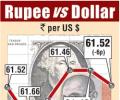
The partially convertible rupee closed at 61.45/46 per dollar, weaker from Wednesday's 61.35/36.

The markets have been unable to sustain at higher levels as a rise in bond yields globally, especially in the US have dented sentiment. Surging commodity prices, especially crude oil that have now hit $70 a barrel (Brent) coupled with inflation woes and fear of sporadic lockdown across major economic hubs back home as Covid cases rise have chased the bulls away. In the short-term, analysts expect the markets to remain volatile as they react to news flow - both from overseas and developments back home. Investors, they say, need to keep a tab on how the US treasury yields move, which in turn will have a ripple effect on how big money moves across developed (DMs) and emerging markets (EMs), including India.

All sectoral indices, led by realty, PSU, oil & gas and banking, were in positive zone with gains of up to 1.25 per cent.
Rate-sensitive sectors like banks, realty and auto witnessed heavy selling pressure ahead of the RBI Monetary policy which is scheduled on September 29.

Indices reversed all its losses during late trades.

Was Adani able to clinch this loan merely as a result of his proximity to Prime Minister Narendra Modi?
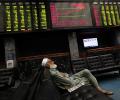
'Rawalpindi must downsize its quest for 'strategic depth' in Afghanistan and Kashmir,' suggests Matein Khalid.

As it is a highly liquid asset, central banks can afford to look past its short-term volatility to longer-run average returns.

The S&P BSE Sensex gained 57 points to end at 26,064 and the Nifty50 climbed 17 points.

The second half of June could be driven more or less by technical factors triggered by news flow from Greece, the US Federal Reserve and the monsoon. The technical picture seems bearish as of now, says Devangshu Datta.

Market breadth is positive with 942 advances and 196 declines.
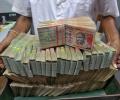
In recent sessions, shares have rallied on hopes Hindu nationalist opposition leader Narendra Modi, a more business-friendly candidate, is seen coming to power on promises of economic revival and jobs.
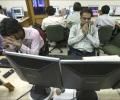
Investors were anxious concerned about the uncertainties over the timing of Us Federal Reserve rate hike, US policies under President Donald Trump, the upcoming French election and rising crude price that could impact inflation, going ahead. A weak closing in Asia tracking overnight losses in the US owing to all these unknowns triggered selling, brokers said.
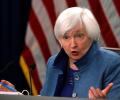
Hawkish guidance by the US Fed raises concerns it could tie the hands of RBI from trimming rates.

Budget for 2022-2023 has returned to its agenda for protectionism in the name of creating a self-reliant India, points out A K Bhattacharya.
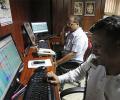
Broader market outperformed the benchmark indices with S&P BSE Midcap gaining over 1%
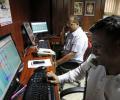
Top gainers from the Sensex pack are Asian Paints, Bajaj Auto, ITC, NTPC, L&T and HDFC, all up 2% each

Nifty crosses 9,750-mark; Bharti Airtel, TCS, Wipro, Lupin and Coal India gained the most on BSE Sensex

RBI's tricky strategy to ease market's pre-Fed jitters.
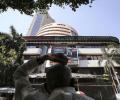
In the broader markets, the BSE Midcap and Smallcap indices extended gains and were up over 1% each
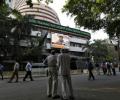
The broader markets outperformed the benchmark indices- BSE Midcap and Smallcap indices gained 0.4% each
 © 2026 Rediff.com - Investor Information - Advertise with us - Disclaimer - Privacy Policy - Sitemap - Feedback - About us - Terms of use - Grievances