

'When an establishment operates despite demolition or closure orders, without proper fire exits, evacuation plans or safety audits, and yet is allowed to host large crowds, the state cannot hide behind the language of accident.'
'The authorities were aware of the risks and of the violations, but chose not to act decisively because doing so would have inconvenienced those with influence and financial stakes.'
'In such a scenario, the moral and legal responsibility for the resulting deaths moves from negligence towards culpability; calling it 'murder' is a way of underlining that these lives were sacrificed at the altar of greed and complicity, not fate.'
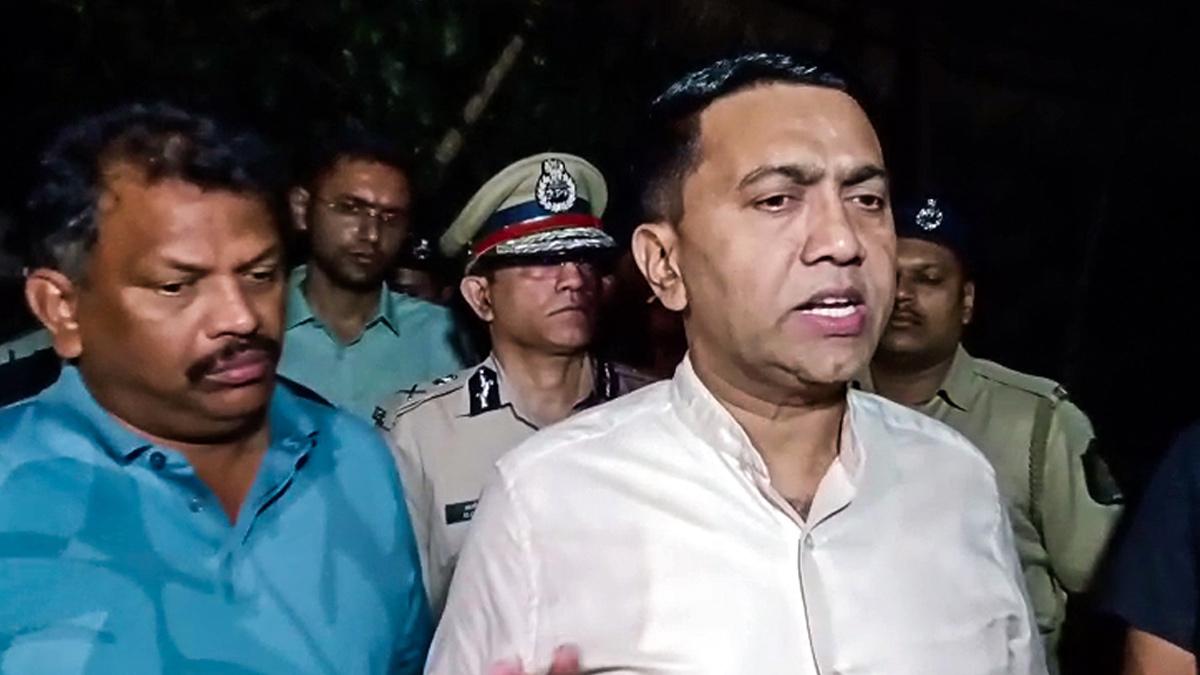
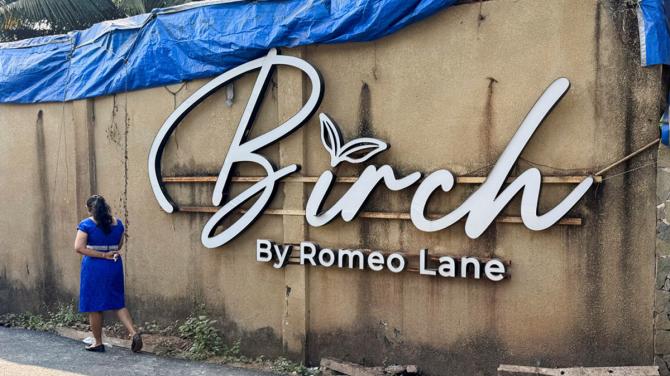
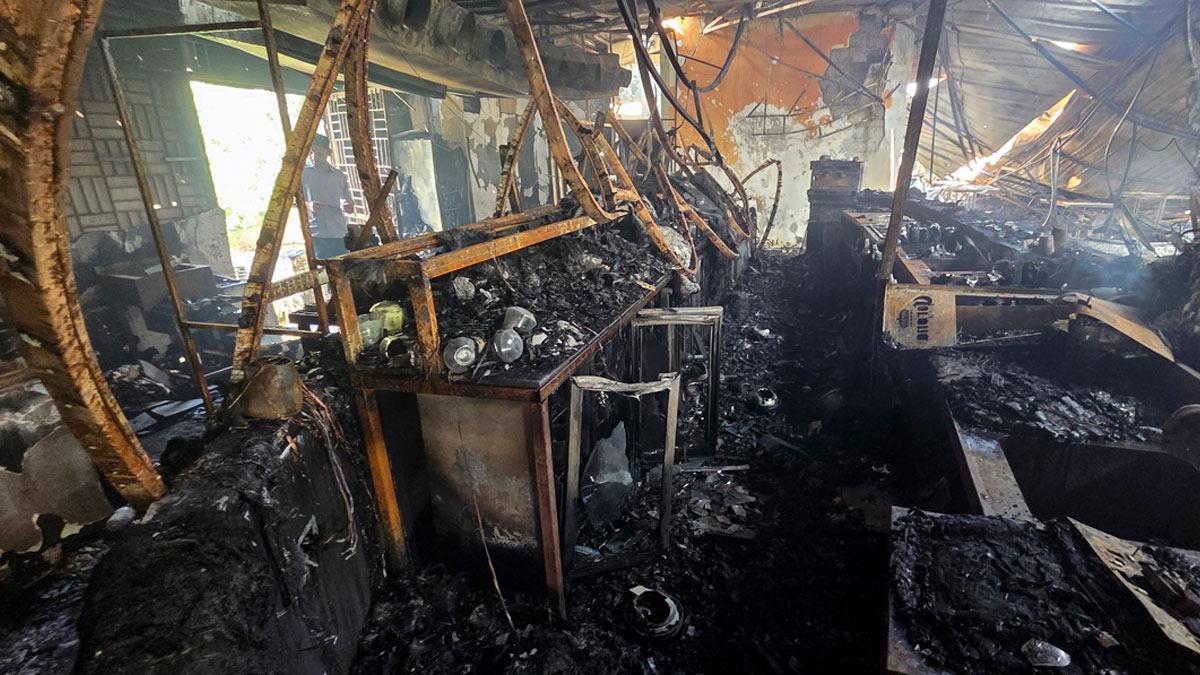
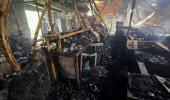
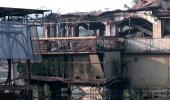
The Birch by Romeo Lane inferno in Arpora, north Goa, in which 25 people -- mostly young staff and four tourists -- died trapped in a basement, has become a grim metaphor for what Yuri Alemao, Leader of the Opposition in the Goa assembly, calls the 'complete collapse' of Goa's governance.
Investigators say the blaze tore through the club that was operating without adequate exits or fire safety planning, despite prior demolition and closure orders from local authorities.
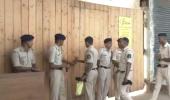
While six injured survivors remain under treatment, the focus has shifted to accountability, as police probe illegal construction, fire safety violations and the political-bureaucratic nexus that allegedly enabled the nightclub to function unchecked.
Club owners Saurabh and Gaurav Luthra fled India for Thailand within hours of the tragedy, prompting Blue Corner notices and a wider manhunt, and reinforcing Opposition charges that Goa has been turned into a haven for lawbreakers with political patronage.
"Without an independent authority examining the chain of decisions -- from land use permissions to fire clearances and police inspections -- the exercise will end up catching small fish and minor functionaries while the real beneficiaries of illegality escape scrutiny," Yuri Alemao tells Prasanna D Zore/Rediff.
How does the Congress view the situation in Goa after the Birch by Romeo Lane tragedy, in which 25 people lost their lives?
There is a total collapse of administration. There is no administration in Goa. Law and order has failed. Outsiders are effectively giving orders to the administration and to the police.
The police have failed, and the chief minister is responsible for this failure. We have a Fire Force Act of 1986 which was debated in the assembly. I myself raised the issue that we need to amend such laws.
After that, there was an order from the panchayat to demolish this particular structure about a year ago. Who stayed it, and at whose instance was it stayed? Only a fair and impartial judicial inquiry can open the lid on this can of worms.
Today in Goa, any illegality is welcomed. You can do anything. What was once known to be a liberal Goa has been absolutely traumatised by this ruthless government headed by (Chief Minister) Dr Pramod Sawant.
There is a builder nexus. There are outsiders and land sharks from all across coming here and giving orders, and basically it is done at the behest of this government.
You can buy anything under the sun, do any type of illegality. Look at the detection and conviction rate; it is the lowest in the country. So criminals are coming here, doing all these illegalities. They are converting money through drugs, illegalities and extortion.
Criminal activities have been rising. Goa was never like this. Goa was known to be liberal.
We are a tourism state. After mining, tourism was the second biggest sector. Today, tourists are not safe in Goa because there are no proper facilities, yet under the pretext of 'carrying capacity' locals are merely fighting to save their land.
They are not getting water, roads; there is rampant inflation. It takes so much time for Goans to get licences, but people come from outside, convert land, carry out illegalities and in a day they get all the permissions. This is a nexus between politicians, police and builders.
When perpetrators know that investigations are compromised, charge-sheets are weak and trials rarely end in stringent punishment, it sends a clear signal that Goa is a safe jurisdiction for criminality.
This erosion of deterrence has transformed a once-safe tourist destination into a place where residents, workers and visitors live with an undercurrent of fear. The Birch by Romeo Lane incident is a direct outcome of that permissive culture.
You have said 'outsiders' are giving orders to the administration and the police. Who exactly are you referring to?
By 'outsiders', I refer to a powerful cartel of builders, land speculators and other vested interests who descend upon Goa with one objective: To monetise every inch of land, coastline and nightlife without regard for law or local sentiment.
These elements wield influence far beyond their formal role because sections of the political establishment and the police have chosen to align with them rather than with the people of Goa.
When such forces begin dictating terms on matters of licensing, zoning and enforcement, the administration ceases to be an impartial guardian of public interest and becomes an instrument of private profit.
Are you alleging that illegal businesses operate under direct political patronage?
There is ample anecdotal and circumstantial evidence to suggest that many illegal operations could not survive a single week without protection from politically connected individuals.
Whether it is unlicensed nightclubs, unsafe structures, dubious land conversions or narcotics-linked activities, these enterprises operate with a degree of confidence that only comes from knowing that someone in authority will shield them.
Ordinary Goans struggle for months to get a basic licence or a building permission, while the same system miraculously clears and then overlooks glaring irregularities when influential names are involved; that contrast exposes the patronage network more starkly than any speech.
How has this nexus affected tourism and local livelihood in Goa?
Tourism was once the lifeline of Goa after mining, founded on a reputation for safety, hospitality and natural beauty; today, that reputation is being shredded by reckless, profit-driven ventures that cut corners on safety and legality.
When tourists are no longer sure that the venues they visit are compliant with basic fire, building and crowd management norms, they begin to look elsewhere, and that exodus hurts every taxi driver, shack owner and small trader who depends on honest tourism.
Simultaneously, local communities are fighting a daily battle to protect their land, water and infrastructure from unplanned, often illegal, projects that clog roads, strain resources and erode their quality of life.
Chief Minister Dr Pramod Sawant has announced a magisterial inquiry into the fire. What kind of investigation do you believe is necessary?
What is required is a judicial or quasi-judicial probe with clear terms of reference, timelines and the power to summon officials, political actors and private players involved in licensing and oversight of such establishments.
Without an independent authority examining the chain of decisions -- from land use permissions to fire clearances and police inspections -- the exercise will end up catching small fish and minor functionaries while the real beneficiaries of illegality escape scrutiny.
You have repeatedly termed the death of 25 people in the Birch By Romeo Lane blaze as 'murder' rather than an accident. Why do you characterise it in that manner?
When an establishment operates despite demolition or closure orders, without proper fire exits, evacuation plans or safety audits, and yet is allowed to host large crowds, the state cannot hide behind the language of accident.
The authorities were aware of the risks and of the violations, but chose not to act decisively because doing so would have inconvenienced those with influence and financial stakes.
In such a scenario, the moral and legal responsibility for the resulting deaths moves from negligence towards culpability; calling it 'murder' is a way of underlining that these lives were sacrificed at the altar of greed and complicity, not fate.
The government has suspended some officers and arrested staff members. Do you consider this an adequate response?
These actions appear designed more to manage public outrage than to address systemic failure; they focus on the lowest rungs of the chain while leaving untouched those who enabled the illegality over months and years.
A few suspensions cannot substitute for an honest appraisal of why warnings were ignored, why enforcement stopped at a particular level, and who intervened when local bodies tried to act.
As Leader of the Opposition, will you push for a comprehensive statewide audit of hotels, clubs and restaurants?
That demand has already been articulated, because it is essential to know how many establishments are operating in violation of fire, building and licensing norms, and where exactly the risks lie.
However, an audit conducted by the same machinery that has been complicit or negligent will be meaningless unless it is overseen by an independent authority and its findings are placed in the public domain.
The uncomfortable truth is that some individuals in positions of power have direct or indirect stakes in these very enterprises; until that conflict of interest is confronted, even the best-designed audit will remain a paper exercise.
There are allegations that businesses owned by who you call 'outsiders' are just the front for politicians in Goa cutting across party lines. Do you agree with this perception?
It would be naive to pretend that such arrangements do not exist; there is a widespread perception, backed by local accounts, that certain politicians or their close associates fund and own most illegal businesses in Goa with these outsiders acting only as their front face.
This structure allows financiers to enjoy the benefits of political protection while maintaining plausible deniability and it explains why some illegal establishments seem impervious to routine enforcement.
When the lawmakers become, in effect, stakeholders in ventures that depend on bending the law, the line between public office and private business is obliterated, and governance itself is compromised at its core.
Who do you hold responsible for ignoring the closure and demolition orders against Birch by Romeo Lane?
Responsibility rests with the government led by the chief minister, because orders issued on paper are meaningless unless there is a determined will to implement them against all odds.
The tourism department, the fire services, the home department and the local bodies should have acted in concert to ensure that the nightclub stopped functioning until it complied fully with safety and structural norms.
Their collective failure suggests not mere oversight but a pattern in which economically powerful entities are allowed to treat regulatory directives as negotiable; it is that permissive environment which ultimately cost 25 people their lives.
What form of political accountability do you believe is appropriate after such a tragedy?
A government that presides over a disaster of this magnitude, after repeated warnings about illegality and systemic failure, has forfeited its moral authority to remain in office.
The chief minister and his council of ministers should step down of their own accord, accepting that under their watch the state failed its citizens in the most fundamental duty: the protection of life.
If they refuse to accept this responsibility, the governor, as the Constitutional head, must seriously consider using the powers available under the Constitution to dismiss a regime that has allowed Goa to descend into criminalised governance.
Many such incidents have happened before. Take the Lairai Devi temple stampede -- 6 people lost their lives that day because safety protocols were not followed. An inquiry was ordered, but even four months after, the report is still not made public.
We have no faith in this government. They only suspend a few people to show action, but innocent lives are lost -- young Indians, aged between 18 and 25. This is not just negligence; this is murder.
The government has no moral responsibility left. They should immediately resign.
I have demanded that the governor use his Constitutional powers to sack this government. There is no administration left in Goa.
This is a complete failure of the intelligence system. A structure was operating with hundreds of people gathering there -- without any permissions, no fire plan, no exit plan. This is nothing short of a man-made disaster, and the government itself is responsible for this murder.



 © 2026