

'The White House lunch that Trump hosted for Munir last year came just after Munir returned from a visit to Iran, at a moment when Israel and Iran were at war.'
'Trump said after that lunch that the Pakistanis know Iran very well. He likely views Munir as a useful interlocutor that can give helpful insights on Iran.'

Key Points
- 'Pakistan has its skin in the game because it borders Iran.'
- 'Pakistan has unusual status of a defence pact with Iran's main rival, Saudi Arabia.'
- 'India's diplomatic alignments disadvantage its position as potential mediator'
On the twenty-fourth day of the Middle East War that has impacted almost the entire world -- Pakistan positioned itself as the lead mediator to bring the warring parties to a table set in Islamabad.
Among Iran's friendliest neighbours and with the second largest Shia population after Iran, Pakistan proactively pitched itself as a neutral player -- despite its close alliance and defence pact with Saudi Arabia, a staunch supporter of US military strikes to diminish Iran.
"I wouldn't hold my breath on these talks happening in Pakistan. There are plenty of reasons to be sceptical, from security risks there to Iran's reluctance to talk to the Americans," says Michael Kugelman, Senior Fellow, South Asia at the Atlantic Council. Dr Kugelman's specialisation is Pakistan, Afghanistan and India and their relations with the United States.
"Even if the talks do happen in Pakistan, the proposals put forward to this point are maximalist positions that are unlikely to get buy-in from either side," Dr Kugelman tells Rediff's Archana Masih.
How has Pakistan been able to position itself as mediator between Iran and the United States when it has been engaged in a conflict of its own in Afghanistan? What strategic and geo-political attributes does it have?
Pakistan enjoys the rare status of having warm ties with both the US and Iran. It hasn't always been like this.
Two years ago, its ties with Washington were shaky and it had recently experienced a brief conflict with Tehran. But over the last year, it's come a long way, holding a series of high-level engagements with both the US and Iran, and somehow managing to positioning itself as a neutral player during the war --despite its close alliance and defence pact with the Saudis.
The fact that Pakistan is one of Iran's few neighbours not to get hit by Iranian strikes during the war -- is an indication of how Tehran views Pakistan at the moment.
And, of course, we all know about how the Trump administration feels about Pakistan -- including Trump himself and his views of his 'favourite field marshal.'
What distinguishes Pakistan from other mediators in the Middle East? How is it likely to impact its global diplomatic standing?
A key one is skin in the game. It borders Iran to the east, which makes it especially vulnerable to conflict spillover effects. Unlike other potential mediators that may take a passive stance and wait to step in until formally invited to do so by the belligerents, Pakistan had a strong incentive to proactively pitch itself as a mediator -- and that's exactly what it did.
Pakistan also has the unusual status of having a defence pact with Iran's main rival. It doesn't want to have to be in the position to decide whether to invoke the pact and enter the war -- because it doesn't want to be dragged into the war.
That gives Pakistan enough reason to act assertively to pitch itself as a mediator.
It's actually quite remarkable to step back and consider Pakistan's mediation efforts -- even if they don't go beyond being a go-between with the US and Iran -- given its constraints:
It's closely allied with Iran's main rival.
It's bogged down in its own war with Afghanistan.
And it has no track record of mediation in complex conflicts in the Middle East, or anywhere for that matter. And yet look where it now stands, as one of the very few nations leading from the front on mediation.
Do these negotiations reportedly to be held in Islamabad have the potential to end the war?
I wouldn't hold my breath on these talks happening in Pakistan. There are plenty of reasons to be sceptical, from security risks there to Iran's reluctance to talk to the Americans.
And even if the talks do happen in Pakistan, the proposals put forward to this point are maximalist positions that are unlikely to get buy-in from either side.
If the Pakistanis somehow manage to get the two sides to Islamabad, it would be a massive lift to get the Americans and Iranians to a yes on a deal. And really, no matter where the talks are held, the hosts will struggle to get a deal.
Iran has said that it has not changed its position on the Strait of Hormuz and wants assured security against future attacks, along with compensation. What guarantees can such a mediation prospectively bring -- for the United States-Israel, and for Iran that both sides would be agreeable to?
Because the two sides have put forward such maximalist positions -- perhaps because each side thinks it has the upper hand -- it's hard to imagine any agreement, much less a commitment to get the Iranians the security assurances they want with the Strait of Hormuz.

Can Donald Trump seriously claim that he and the ayatollah will jointly manage the Strait of Hormuz which is not only closed but also mined? Is it feasible to return to shipping activity on the Strait as before the conflict or will a new strategic order emerge?
Even in the best of times, accessing the Strait can be a challenge.
Controlling the Strait is one of Iran's biggest tools of leverage, and it won't want to relent on that. So expect it to continue to take a hard line until the war is over.
To this point, it has negotiated individual arrangements with a range of countries -- including India -- to allow some access to shipping traffic. I suspect that will continue to play out for quite some time.
Why do you think India was not identified as a mediator considering its relations with the US, Israel and Iran? Or has its closeness with Israel come in the way of playing peacemaker?
The plain fact is that India's diplomatic alignments disadvantage its position as a potential mediator. Its ties with the US, while they've stabilised in recent months, remain shaky.
Its relations with Tehran, while cordial, are also precarious, and especially with the uncertainty surrounding the Chabahar project and the fact that an Iranian ship was sunk after having participated in an Indian naval exercise.
Additionally, Modi's visit to Israel just before the war began may well have preemptively disqualified India as a potential mediator, from Tehran's perspective.
Diplomatic style is another factor. New Delhi likely wouldn't be inclined to be a mediator unless formally asked by the warring parties. This helps explain why it didn't take on this role, at least not on a formal level, with Russia and Ukraine.
Pakistan, by contrast, was quite proactive in publicly and privately positioning itself as a mediator.

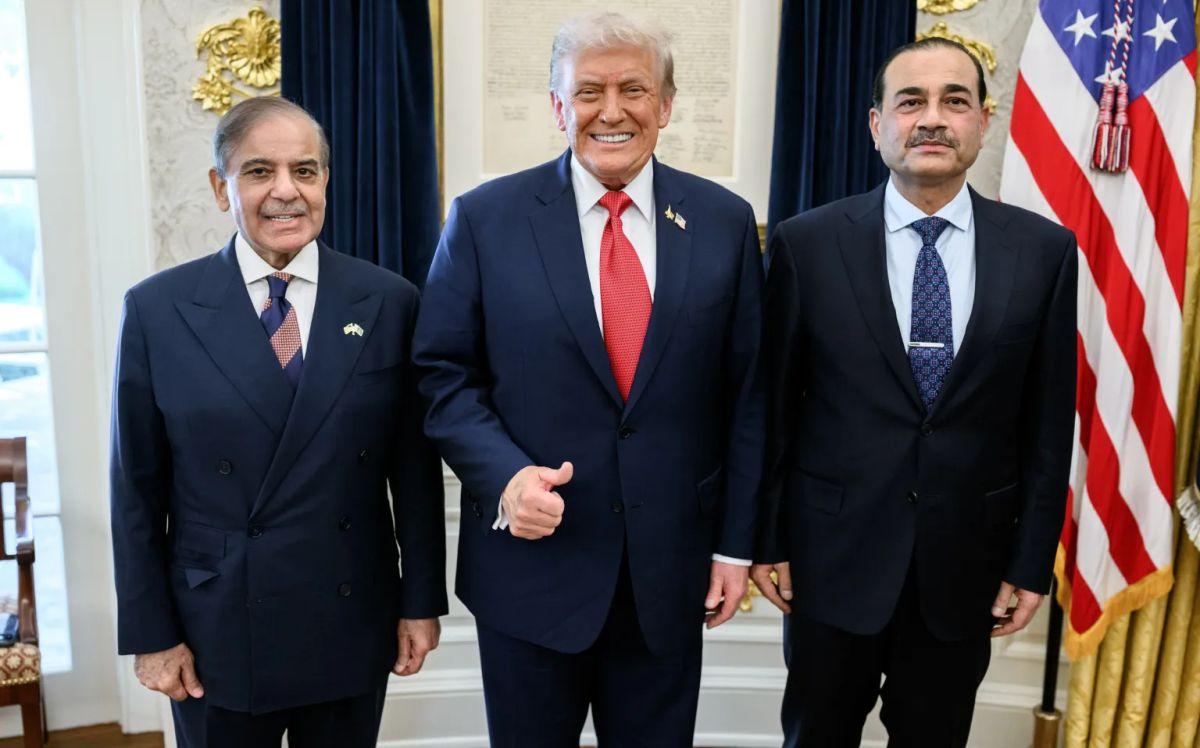
Donald Trump has praised Field Marshal Asim Munir and hosted him at least twice -- how much has Trump's personal rapport with Munir helped Pakistan in positioning itself as mediator?
It's certainly been helpful. One can't rule out the possibility that Trump made a personal appeal to Munir to have Pakistan serve as a mediator.
One can speculate about why the US and Pakistan have suddenly become close again, though Iran I'm sure is a factor.
The White House lunch that Trump hosted for Munir last year came just after Munir returned from a visit to Iran, at a moment when Israel and Iran were at war.
Trump said after that lunch that the Pakistanis know Iran very well. He likely views Munir as a useful interlocutor that can give helpful insights on Iran. And Munir has likely made the case to Trump that Pakistan can be a useful mediator.

How does Iran view Pakistan, a Muslim state without any American base and home to the second largest following of Shia Islam?
It's a complicated relationship. Pakistan's alliance with Saudi Arabia is clearly a tension point, though the Saudi-Iranian rapprochement deal concluded several years ago opened up more diplomatic space for Islamabad to engage more with Tehran.
Iran also worries about the presence of anti-Iran militant groups based along the Iran-Pakistan border, and that was the trigger for the brief Iran-Pakistan conflict in 2024.
Beyond that, though, there's a fair amount of convergence. There are shared historical and cultural factors.
Also, Iran recognises that Pakistan has sought to scale up commercial activity with Iran -- including an ill-fated gas pipeline -- despite US sanctions. And Iran will always treat Pakistan with care given its large Shia community -- some of which was previously leveraged by Iran to cultivate Shia militias to help it serve its objectives in the Middle East.
Iran doesn't view Pakistan as an ally, though it's certainly one of its most friendly neighbours.
Feature Presentation: Aslam Hunani/Rediff


