

'They mean business, but business as usual is unacceptable to them'

"Gen Z wants fair play and a level playing field. It wants an end to corruption and nepotism, guarantee of transparency and accountability, an independent judiciary in letter and spirit, scrapping of the provinces, complete overhaul of the political system -- meaning virtually no place for the current political leaders and fresh elections under an interim government," explains Prakash Rimal, Editor-in-Chief of Nepal Minute, an independent English news portal.
Mr. Rimal was previously editor of The Himalayan Times and has led the newsroom at The Kathmandu Post. With over 30 years of journalistic experience, he is among the most seasoned newsmen in the Himalayan country.
"The constitution will and should survive under all circumstances. If it doesn't, then Nepal will plunge into a much longer spell of uncertainty," Mr. Rimal tells Rediff's Archana Masih in a detailed interview on the unprecedented developments in Nepal.
What have been the most significant takeaways from the unprecedented protests in Nepal?
Let me begin with a backgrounder, giving you some perspectives from the ground:
Political parties -- mainly the Nepali Congress, the Communist Party of Nepal, the CPN (Maoist Centre) and a handful of so-called top leaders [Sher Bahadur Deuba, Khadga Prasad Sharma Oli and Pushpa Kamal Dahal aka Prachanda] -- had taken themselves for granted far too long.
They have been in power, each at the head of the government multiple times. They had been resisting calls for change from within, sometimes by co-opting the dissenting voices and other times by punishing, sidelining and dismissing them completely.
While corruption thrived, accountability and transparency was completely amiss.
Public disenchantment was rising steadily, but the government and the parties were fully disconnected from the up and coming Gen Z, the majority of whom are first time and second time voters.
Business is just too slow and the country's largely remittance and imports based economy has remained virtually stagnant since COVID-19.
Few new jobs have been created. Thousands of youngsters leave the country as migrant workers every day. While others cross the border down south and head for India in search of work and opportunities.
There are quite a few takeaways from the events:
The course of Nepali politics should and will change significantly.
We will see intentional reforms in the ways the parties and their leaders act/perform in the days ahead, of course triggered by the unprecedented protest.
Politics will not only connect to the party rank and file, but also with the digital generation whose perception and understanding of democracy are fundamentally different to that of Gen X and Baby Boomers at the command and control of State structures.
Democracy has still to take roots in Nepal, the State institutions are too weak and tend to crumble under pressure, including the security agencies.
The general public is emotionally very vulnerable and can easily be misled or manipulated. The tech-savvy, individually smart and articulate Gen Z surprised practically everyone as they came 'out of nowhere' and gave a statement that they are there and they are the harbingers of better, qualitative, change.
They want delivery of goods and services. They mean business, but business as usual is unacceptable to them.
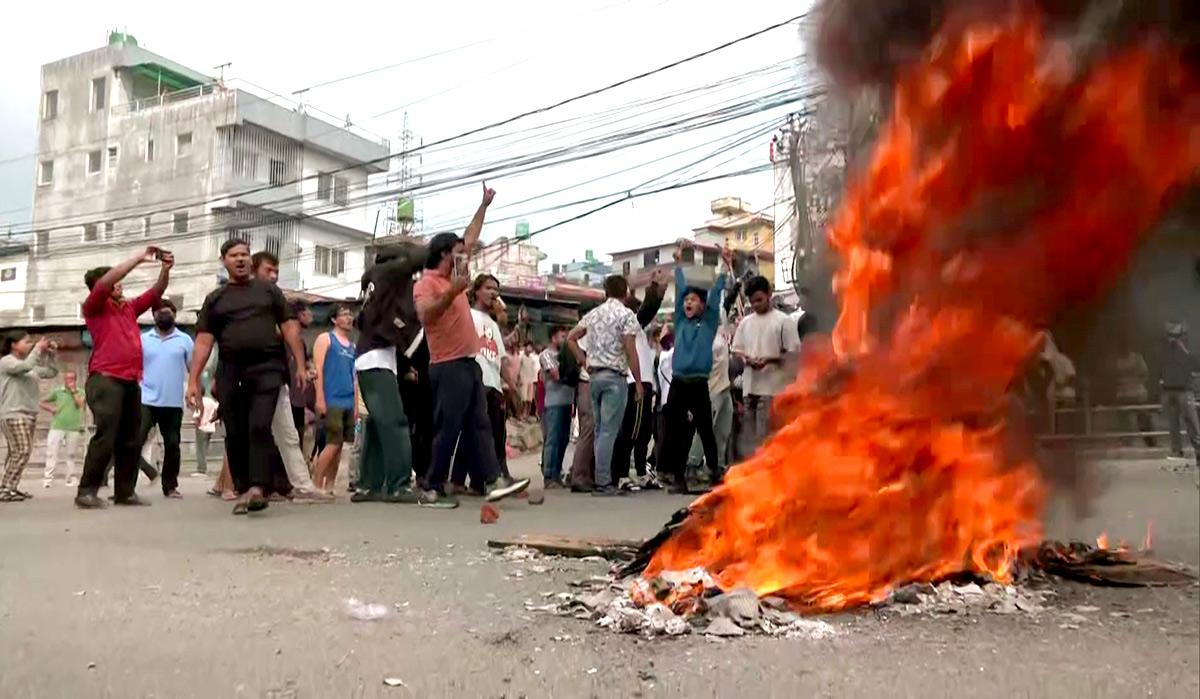
Was the suspension of social media apps and political corruption the main reason for the violent protests -- or are there other underlying reasons as well?
The suspension of social media platforms was only a trigger.
In fact there was a groundswell from beneath -- rampant corruption, the State's failure to deliver goods and services, nepotism, complete lack of transparency and accountability, patronage politics, dysfunctional or malfunctioning State mechanisms and total disconnect with the people, to mention a few.
Of course, ten years down the road since promulgating a new constitution turning Nepal into a secular federal republic, roughly two-thirds of the citizenry has yet to own up to the following:
a. Federalism -- because the general feeling is that the seven provincial structures are white elephants.
b. Secularism -- Nepal used to be the world's only Hindu kingdom with an overwhelming majority of population being Hindus.
c. Total public disenchantment, partly -- perhaps rather negligibly -- also fueled by the absence of the monarchy.
d. Corruption.
e. Governmental inefficiency.
f. Harsh and frustrating economic realities of the day.
What does Gen Z actually want?
Gen Z wants fair play and a level playing field. It wants an end to corruption and nepotism, guarantee of transparency and accountability, an independent judiciary in letter and spirit, scrapping of the provinces, complete overhaul of the political system -- meaning virtually no place for the current political leaders and fresh elections under an interim government.
They are rooting for radical changes, including a new constitution providing for a directly elected prime minister, if not a directly elected president.
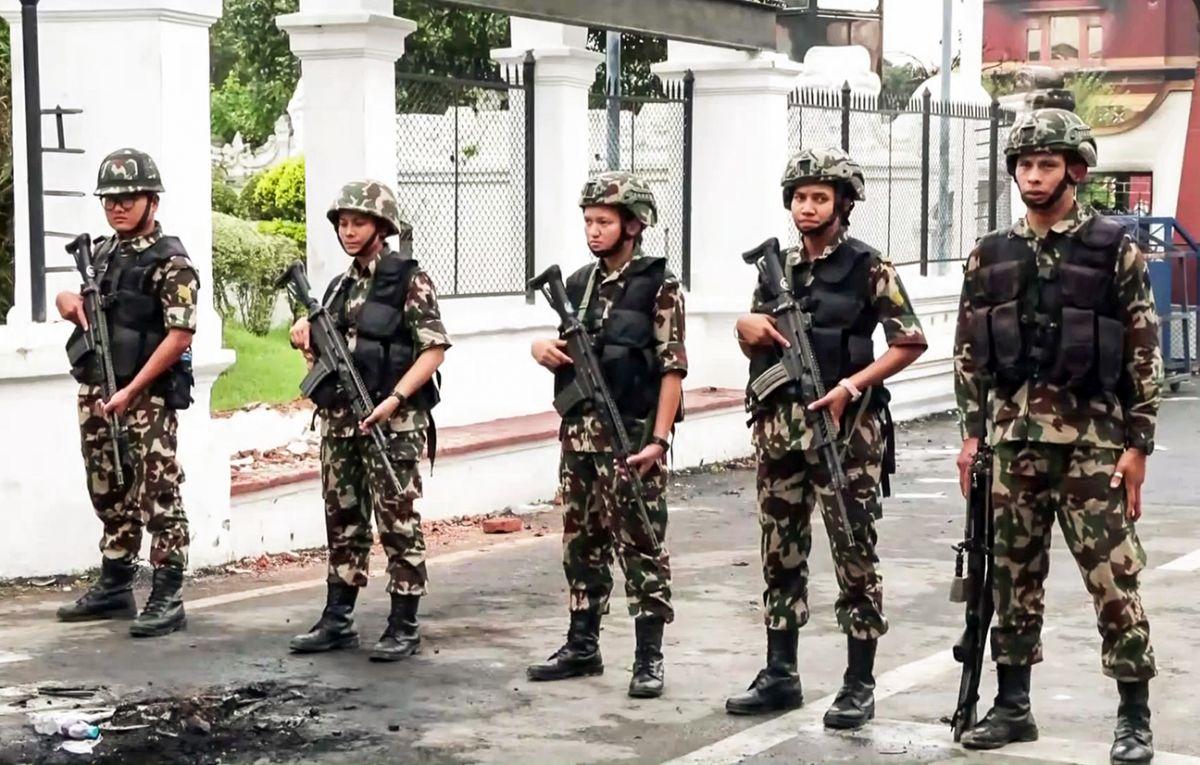
Can the army bring in order in the interim and prevent further burning of buildings, hotels etc?
While protests across the country, particularly on the second day, were extremely violent, normalcy started returning from day three, following the prime minister's resignation.
Yes, law and order will soon be fully restored, but the months and years ahead will be highly challenging for the interim government.

What does it mean for the future of Nepal's political leadership that has enjoyed power?
The protests have effectively seen off the majority of them, the political parties are here to stay. Of course, there will be new players at the helm of affairs, some old ones from within the mainstream parties and many new faces.
Will the Nepali constitution and democracy survive or are they in peril?
We are in a very tricky situation. The constitution is in a trap. It's technically impossible to scrap the constitution because the president is pretty much actively on duty and parliament has not been dissolved.
Yet, it's hard to tell if it will survive. But I think the constitution will and should survive under all circumstances. If it doesn't, then Nepal will plunge into a much longer spell of uncertainty as compared to the years between 2008 and 2025.
It took two constituent assemblies and a timeframe of roughly seven years to scramble together a compromise constitution in the aftermath of the devastating 2015 earthquake.

Who is most likely to take over as interim PM -- Justice Sushila Karki or Kathmandu Mayor Balendra Shah?
Former chief justice Sushila Karki appears to be Gen Z's preferred choice, mainly for her perceived tough stance against corruption while in office and also because she kind of knows the system 'inside out'.
Apparently, Kathmandu Mayor Balendra Shah, idolised by a large number of Nepalis across the board, stood to his ground: Dissolution of the House, first. However, things could change any time.
What will be the biggest challenges for the interim PM?
Winning trust and confidence of the mainstream political parties and dealing with them; holding fresh elections; depoliticising and taking complete control of the bureaucracy; delivering goods and services; instilling a sense of optimism in the restless masses, including the Gen Z and the Millennials.

Do these protests offer an opportunity for the monarchy to return in Nepal?
No. In fact, it's already a day too late. It would probably have been a different thing if the unprecedented and violent protest of Day 2 had restored him (the former king Gyanendra).
Of course, that would have change the course of Nepali history in either direction.
Feature Presentation: Aslam Hunani/Rediff







 © 2026