

'9 September saw Kathmandu and other key cities under the control of goons.'
'There was no authority, the police was nowhere.'
'The crowds torched all three centres of the state -- the supreme court, parliament and the Singha Durbar government headquarters.'
'The army stayed aloof from the complete destruction of these edifices, which is less than a kilometre from its headquarters.'
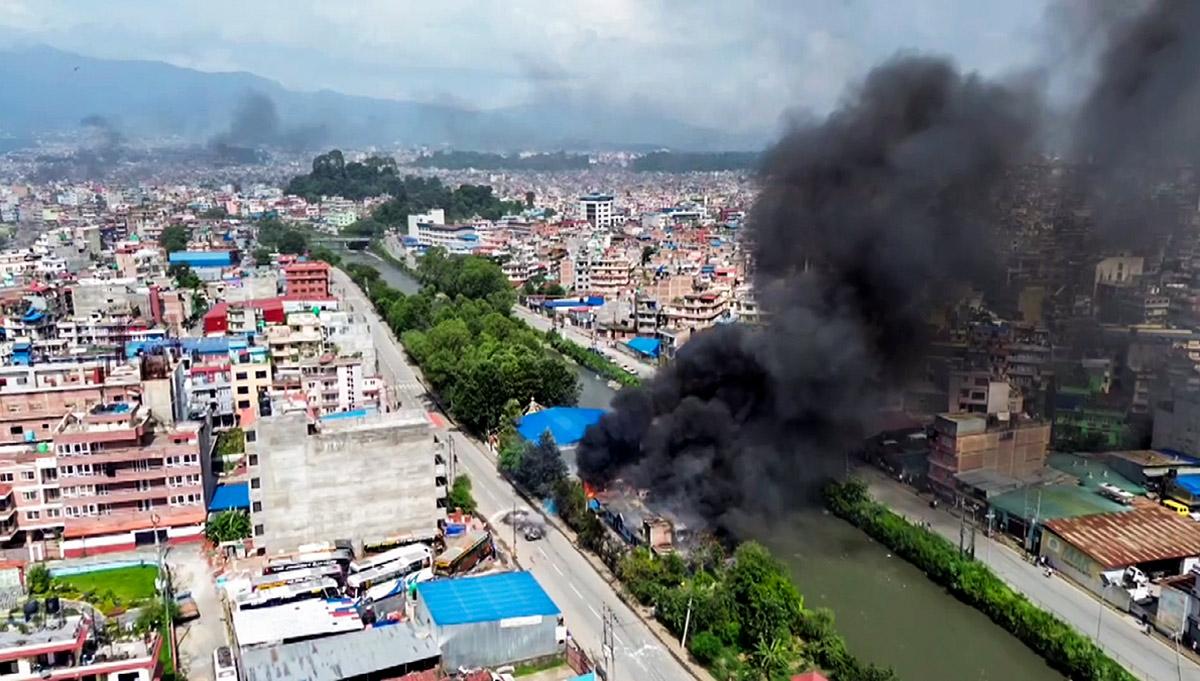
"There are lynch mobs about," says an acquaintance speaking over WhatsApp from Kathmandu, declining an interview on record about Monday and Tuesday's unprecedented events in Nepal.
"Indeed, it is a scary situation, also why I am not wanting to be quoted. Something I have never had to do in Nepal," the acquaintance adds, agreeing to speak on background without being identified by name for this report.
That conversation was from Tuesday evening. On Wednesday morning, this is what the individual had to say about yesterday's horrifying events in Kathmandu.
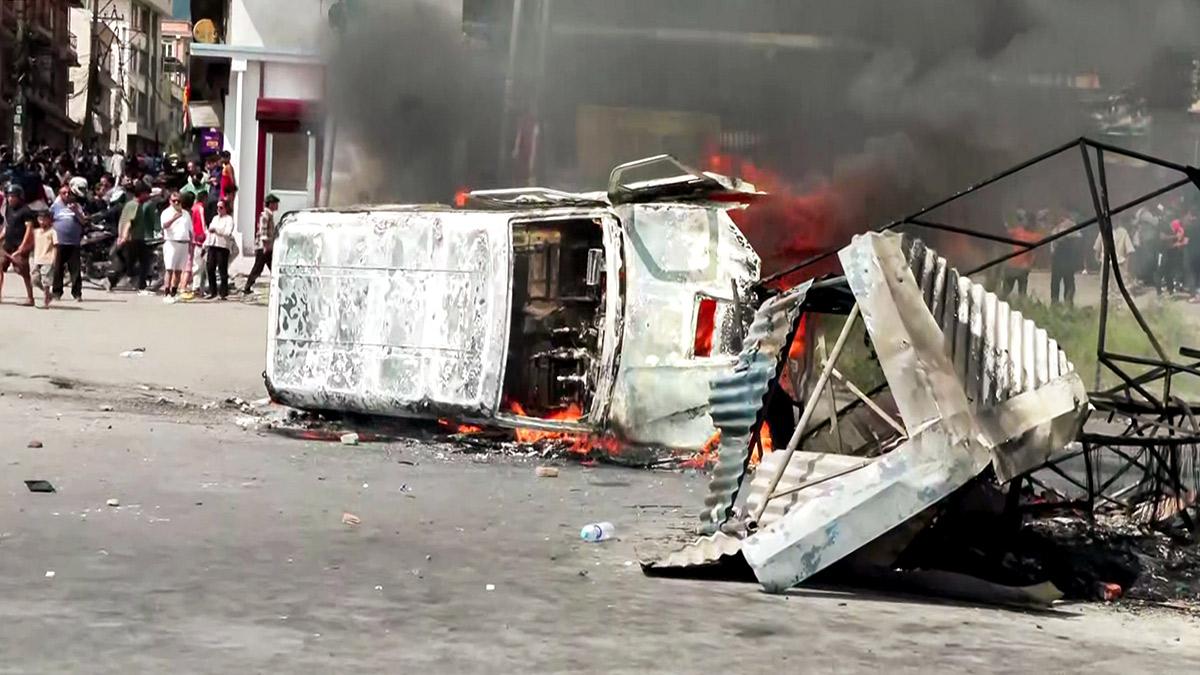
"9 September, the day after the fall of the Oli government, saw Kathmandu and other key cities under the control of goons. There was no authority, the police was nowhere, fire brigades were not allowed out. The crowds torched all three centres of the state -- the supreme court, parliament and the Singha Durbar government headquarters."
"The army stayed aloof from the complete destruction of these edifices, which is less than a kilometre from its headquarters. They also burned the president's office and residence, as well key media houses."
"In what seems a planned manner, they went around the houses of key ministers and public individuals and burnt them. Sher Bahadur Deuba and his spouse Arzu Deuba, the foreign minister till the day before, were manhandled badly. Other ministers were humiliated and beaten in public. All politicians are under army protection or in hiding."
"The wife of former PM Jhalanath Khanal was burned inside their residence. The army finally came on the streets on the night of September 9, and hopefully September 10 will not see a repetition of September 9, a black day that saw unprecedented violence in modern Nepal."
"A popular populist politician Ravi Lamichhanne, being investigated for fraud, was taken out of Nakkhu jail by demonstrators, and all other prisoners also fled the jail. Other jails in various parts have also been emptied."
"President Ram Chandra Poudel seems nowhere in the scene, with the army chief is said to be preparing for negotiations with individuals including Kathmandu Mayor Balen Shah, Ravi Lamichhane and some others."
"The mainstream political parties are nowhere in the scene. Civil society and commentators by and large are cowed down by the mobs on the streets."
"Nepal has emerged as a country whose path to the future is suddenly interrupted."
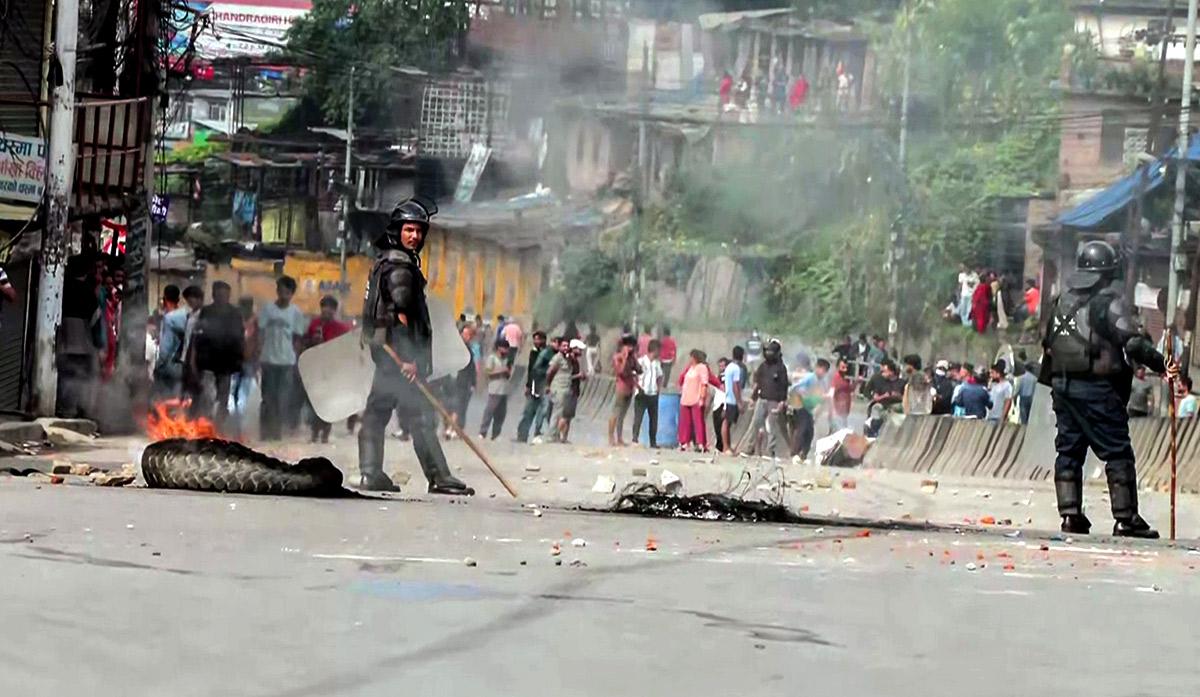
"Who would you hold responsible for the police going berserk on Monday? Was it a tragic miscalculation by the K P Sharma Oli government? Or did the security forces go 'rogue'?" I asked on Tuesday evening.
"Wasn't the quantum of force totally disproportionate to counter the Gen Z gathered on the streets of Kathmandu and elsewhere?"
"It was incompetence of the government that led to the situation yesterday (September 8)," the acquaintance said on Tuesday evening.
"We have a grand coalition made up of the Congress (Nepal Congress) and NC UML (Communist Party of Nepal [Unified Marxist-Leninist]), two largest parties in parliament. But they could not provide good governance, in particular pursuing corruption cases."
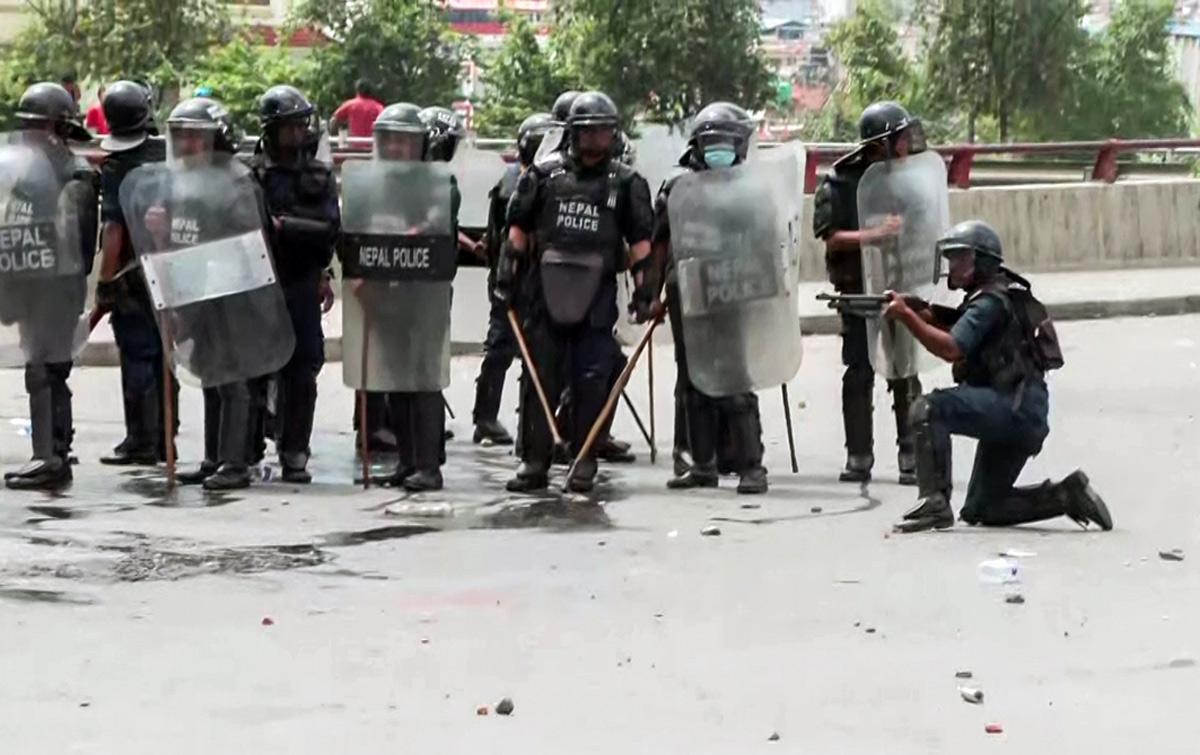
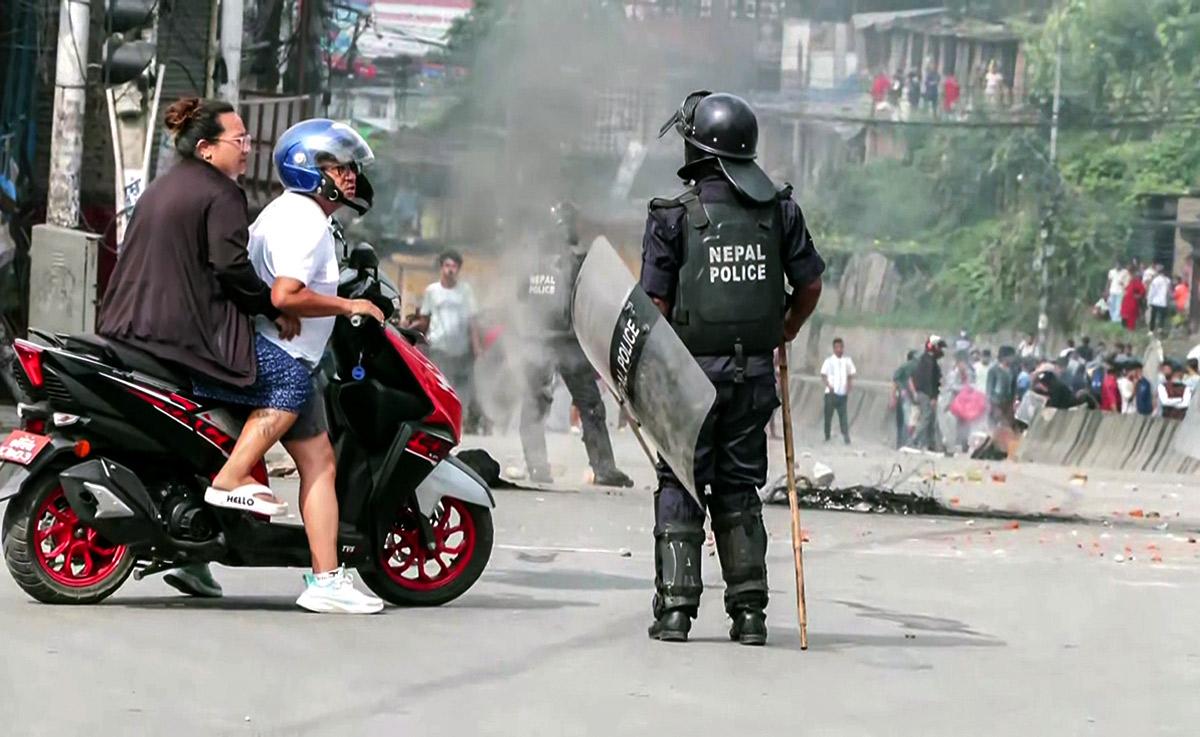
"The police force was at fault yesterday, they did not take precautionary measures of crowd control, and then started shooting live bullets when the crowd entered the parliament building."
"The quantum of force was indeed way out of proportion and that was the trigger for all that has happened today, the arson, the accosting of political leaders, etc."
"What, in your assessment, was the reason for the government to embark on its social media ban move?" I asked.
"Was it really to curb the videos being circulated of the children of families in power enjoying themselves, to shut down these reels of corruption while the people struggled to survive?"
"Did you expect the anger against the social media ban to reach the proportions that it did, and end in regime change?"
"The trigger for the Gen Z demonstration was the suspension (not banning) of key social media portals, asking them to register their contact office in Kathmandu," the acquaintance explained. "This was mainly to ensure proper investigation of complaints and cybercrime."
"However, the government made a hash of it, and the word went out that social media was banned."
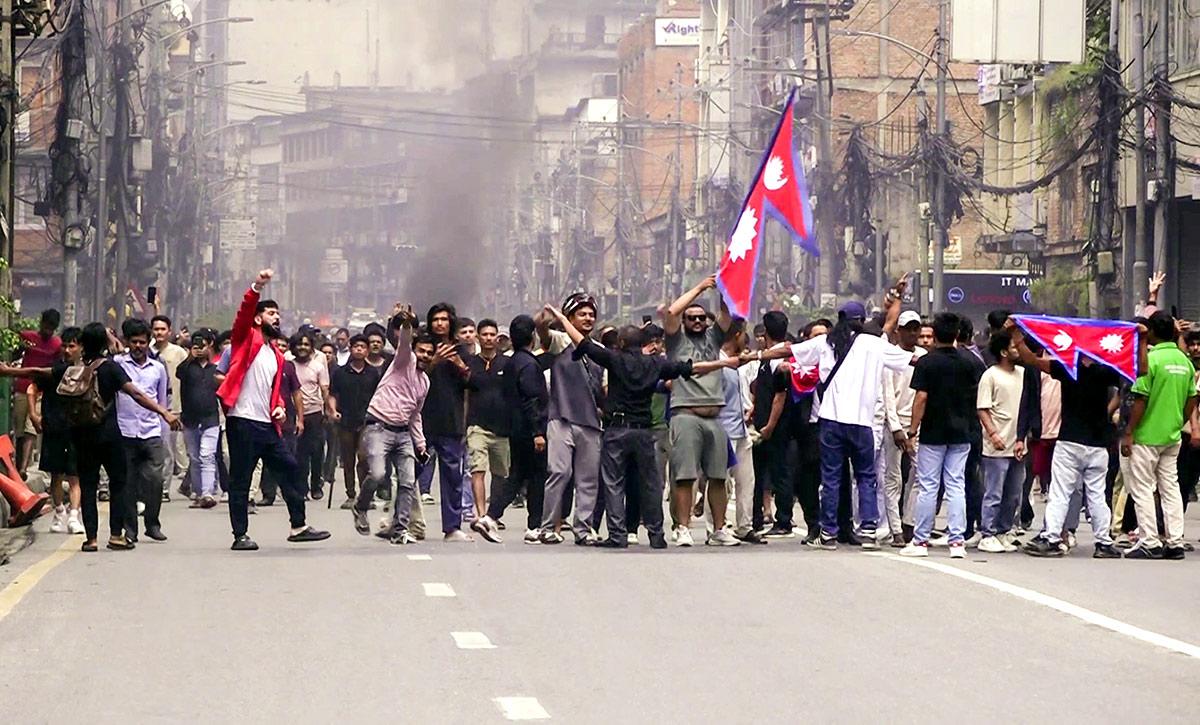
"The Gen Z's main platform for the demonstration was very astute political points related to good governance, transparency and rule of law, as well as corruption and opening the social media portals. The demand was not mainly for social media."
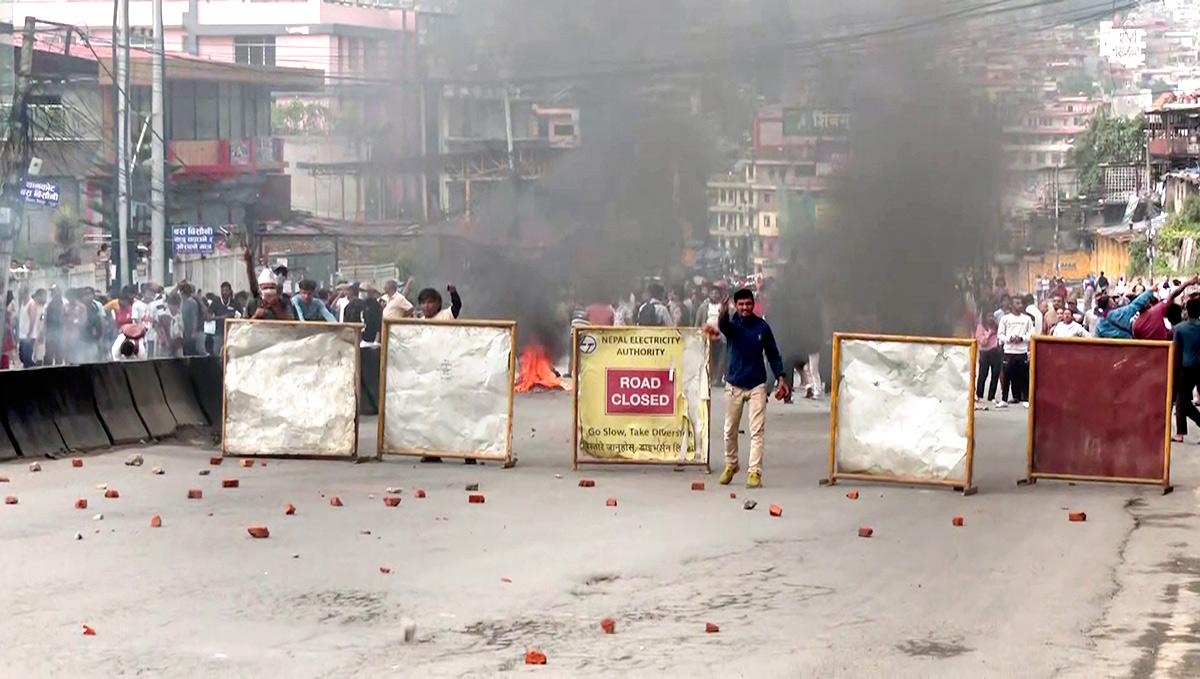
"The government claims the protest was infiltrated by elements out to provoke trouble. Do you believe these claims?" I asked.
"If these claims are correct, who could have unleashed these elements? Was it a monarchical plot? Was it instigated by groups anxious to destablise the Oli government?"
"I believe Gen Z's demonstration was only for the first 2.5 hours yesterday," the acquaintance responded.
"Then, according to their own announcement, 'infiltrators' had taken over and they asked their own demonstrators to go home and be safe. So, it is not the government's claim but that of the organisers themselves."
"It may have been no one's conspiracy -- just that a sober demonstration was taken over by some anarchists. But those who benefit would be the mercurial mayor of Kathmandu, Balen Shah, who keeps aloof from the press and runs on the basis of a tight and efficient social media ring."
"The monarchists are the most plausible people who have taken advantage of this situation," the person adde. "But I do believe that there is a huge proportion of anarchical minded citizens out there. They showed what they are capable of today."
"The mainstream media did a good job of exposing a string of corruption cases over the years, and it is on this basis that the public got informed. However, the court cases never found their proper denouement though investigations and the courts."
"So that led to brewing resentment. On top of it was the conspicuous consumption of some in the ruling elite."
"Did you expect Mr Oli to resign so quickly, given his authoritarian disposition? Did he have no option given the anger seen on Tuesday when his homes and the homes of some of his ministers were torched?", I asked.
"Oli is not authoritarian, no more than any democratic leader," the acquaintance replied. "But he miscalculated badly on several fronts, and he should have resigned last night, not this morning."
"The solution would have been to go back to parliament, but now key politicians have resigned en masse from the parties."
"Do you expect the violence to end quickly? Or could we see an encore of what we saw in Dhaka where students and the like determine the road map of events and policies in the coming months?" I asked.
"The violence will end when the army comes out," asserts the acquaintance. "It should have come out this morning, with the advice of the prime minister. But he did not do it. Perhaps by tomorrow, the army will be on the streets and there will be calm.
"Today has been unprecedented mayhem and we do not even know all that has happened."
"What next in Nepal? Will there be another round of 'horse trading' and another ministry installed that does not satisfy the people?" I asked.
"Has Nepal's democracy been undermined by the events of the last 36 hours? Could it open a route for Mr Gyanendra and his supporters to sneak in and grab power?"
"Nepal's democracy definitely has been undermined. What we need is step-by-step improvement rather than upturning the cart, the latter is what has happened," assessed the person.
"So we now have a situation where the two main political parties have lost out to new and untested populist forces, who will force an early elections," he predicted.
"Which means, waiting for them to mature will take time. Instead of challenging and improving our political and constitutional system, we have now entered a phase of untested political leadership to be in command, perhaps even the dismantling of the 2015 constitution, including the republic, and a return of constitutional monarchy."







 © 2026