

'It is a beautiful balance between traditional old-world sanskaars, and new generations opening up to new worlds without renouncing respect,' observes Sandeep Goyal.
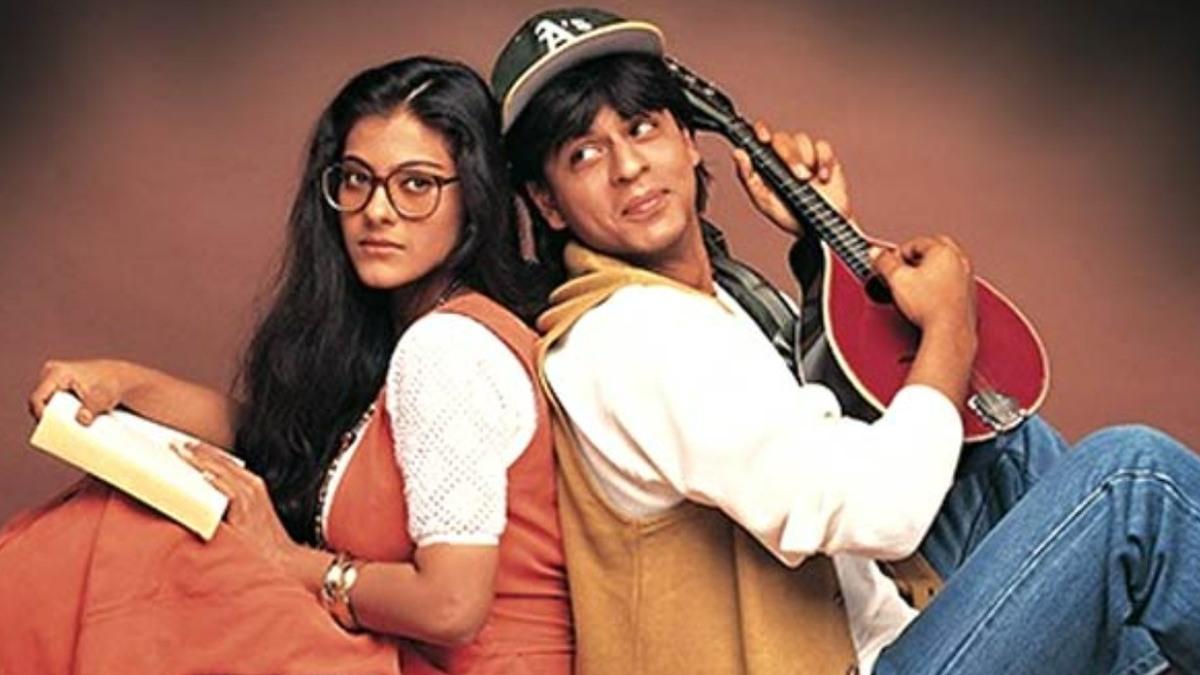
Dilwale Dulhania Le Jayenge celebrated its 30th anniversary recently, marked by a non-stop run at Mumbai's Maratha Mandir.
A film about two young NRIs backpacking through Europe, it bridged the gap between the old and the new, as the obedient and somewhat submissive daughter and her defiant lover weaved a love story that highlighted the tussle between traditional Indian values and an emerging Diaspora that was still desi at heart.
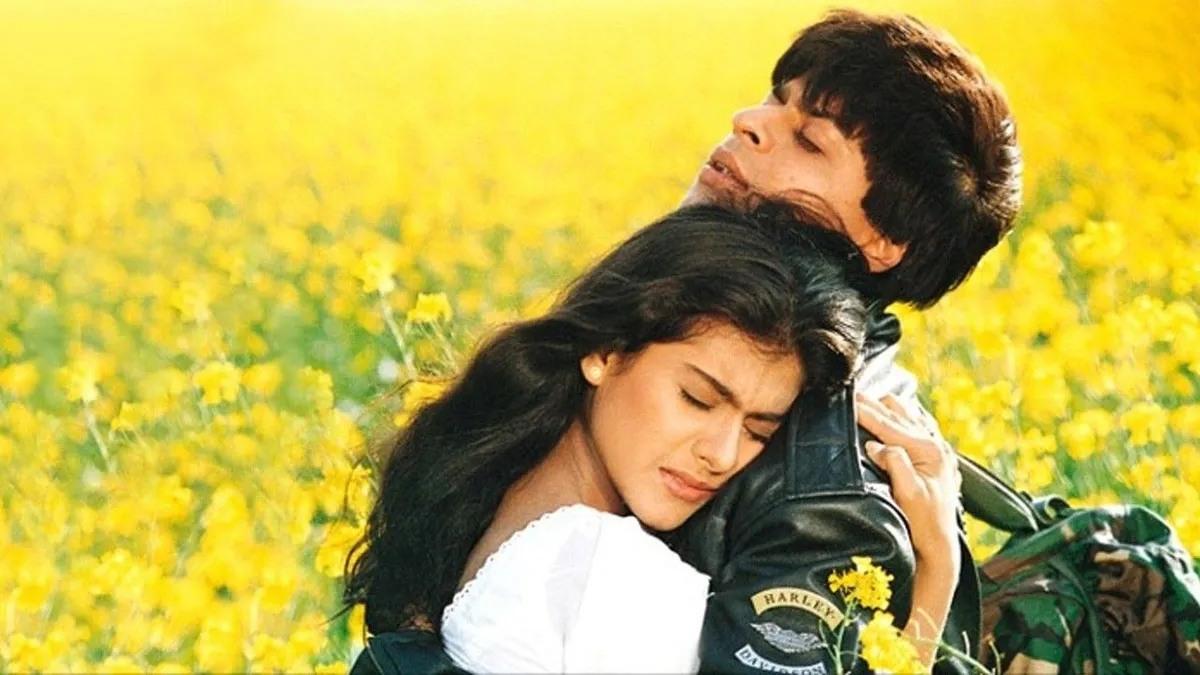
DDLJ, 30 years later, is still about Simran and Raj. About Simran, who didn't know whether to stay back or run away.
About Raj, who appeared to break all the rules, yet chose to play by the very same rules perhaps only to prove that love has to exist (and win) within the structure of traditions.
DDLJ is also about sarson ke khet, the mustard fields of Punjab that served as the backdrop of the pivotal scenes of the movie -- signifying in their own way roots, tradition and homecoming.
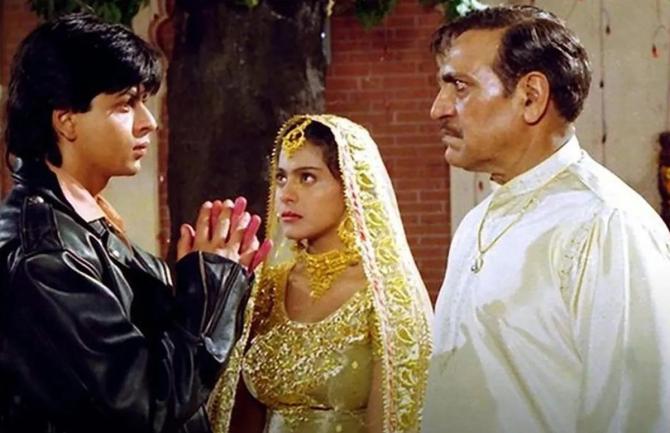
The movie is most importantly about Baldev, Simran's bauji who epitomised the generation of NRIs who had migrated to far-off lands but were still moored in an India that endorsed traditional patriarchal control and authority.
DDLJ is as much about Raj's magical maroon mandolin that became central to the film's romantic narrative, symbolising Raj's charm as he woos Simran with Tujhe Dekha Toh Yeh Jana Sanam.
Last but not least, DDLJ is about the significance of the train that serves as a powerful symbol of journey, destiny, and the intersection of traditional values with modern love.
It functions as both the backdrop for the beginning of Raj and Simran's romance and is the stage for their climactic reunion.

DDLJ is the epic tug-of-war between rebellion and respect; and recklessness and restraint.
Even though Simran and her mother want the couple to elope, Raj is steadfast in waiting patiently for Bauji's consent and approval.
Respect for the family buzurgs (elders) is important to him, he says. Till then Bollywood had always glorified running away to signal defiance. Signal freedom. And then the chase would dominate the rest of the narrative.
In earlier years, in the 1950s-1960s-1970s, the hero would not rebel, but sulk and simmer and submit helplessly to fate, and drink himself to death.
DDLJ trod new ground with a hero who would comply, and yet conquer.

The most well-etched role in the movie was that of Baldev, the Bauji. Played to perfection by the most consummate Amrish Puri.
A man living in London, but still anchored at heart in rural Punjab -- the god of all things -- tyrannical, whimsical, hard as knuckles.
With an ego as fragile as the Lakshmi ki murti in his store. Bauji sees Simran's quest for independence as a personal affront but you soon realise that it is really his fear of the unknown -- the changing times -- that is triggering him to cling to authority and the past.
The story's arc, however, finally leads to the epic dialogue, 'Jaa Simran, jee le apni zindagi'. DDLJ did not question orthodoxy, it just quietly embraced it.

Raj's romance is best captured in Simran's 'palat ke dekhegi' train scene, and as he goes, 'palat, palat, palat,' these magical invocations become an anthem for love's anticipation -- an earnest hope, a silent prayer for that one look of approval, that hint of acceptance.
Aditya Chopra portrayed romance through subtle charm, through a nuanced choreography of soft emotions.
Only most DDLJ fans will never know that the 'palat' scene was actually a copy from the Hollywood movie In The Line Of Fire (1993)!
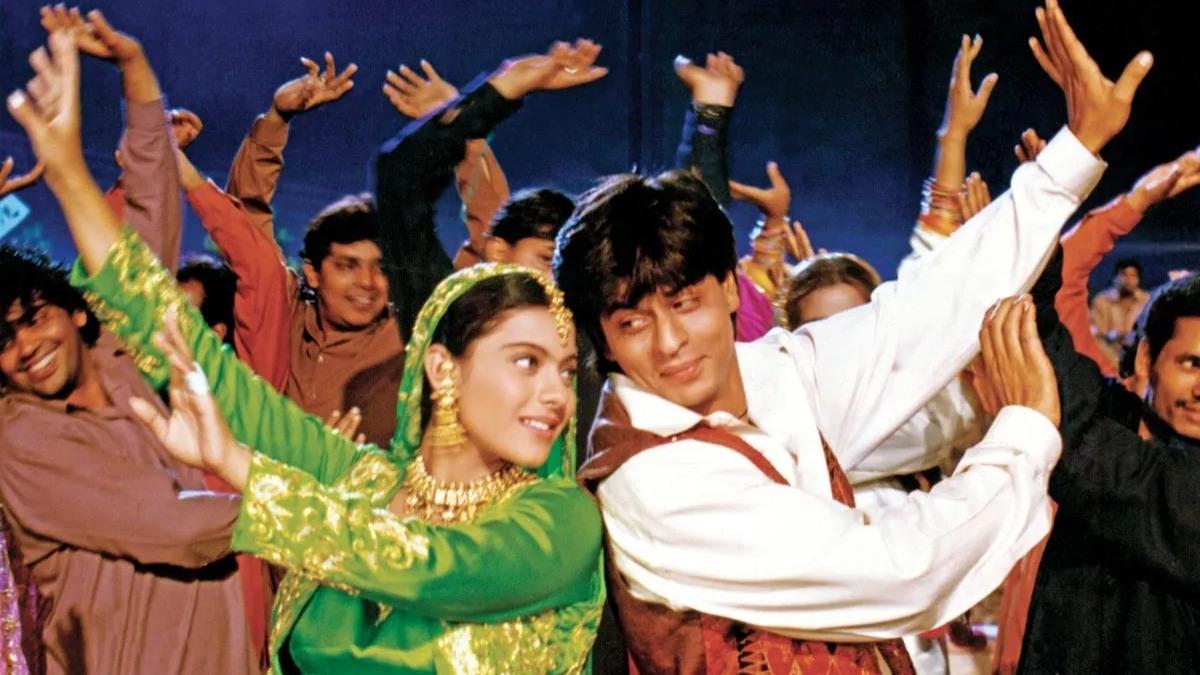
Now to the music of DDLJ. It was special because it perfectly blended originality with accessible, emotional tunes, and effectively served the film's narrative through a unique orchestration of brilliant lyrics.
Composers Jatin-Lalit created fresh, memorable melodies, while Anand Bakshi's lyrical style was both colloquial and poetic. The songs are hummed even today despite the passage of three decades.
DDLJ has, over the years, become the template for how Indian cinema dreams of love.
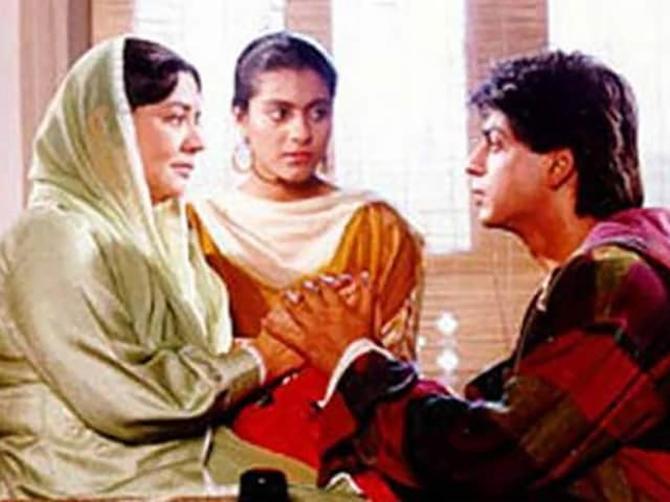
In the movie Shah Rukh and Kajols chemistry displays a unique understanding, a rhythm, and a trust that made them a hit pair. But DDLJ is not just about love or romance.
It is a beautiful balance between traditional old-world sanskaars, and new generations opening up to new worlds without renouncing respect.
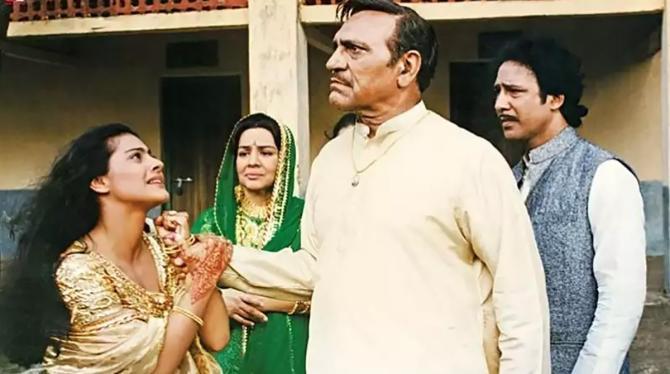
Raj constantly touching feet of all elders was almost a choreographed act. And yes, the reconciliation of generations -- that is the enduring magic of DDLJ, and the reason it swept a record 10 Filmfare awards.
Sandeep Goyal is chairman, Rediffusion.
Feature Presentation: Rajesh Alva/Rediff






 © 2026