
AI will erase outsourcing jobs, redefine skills and disrupt global giants within five years, predicts Vinod Khosla.
The IT legend urges young people to become generalists: Adaptable thinkers who can learn quickly, connect dots across disciplines and shift careers as technologies evolve.
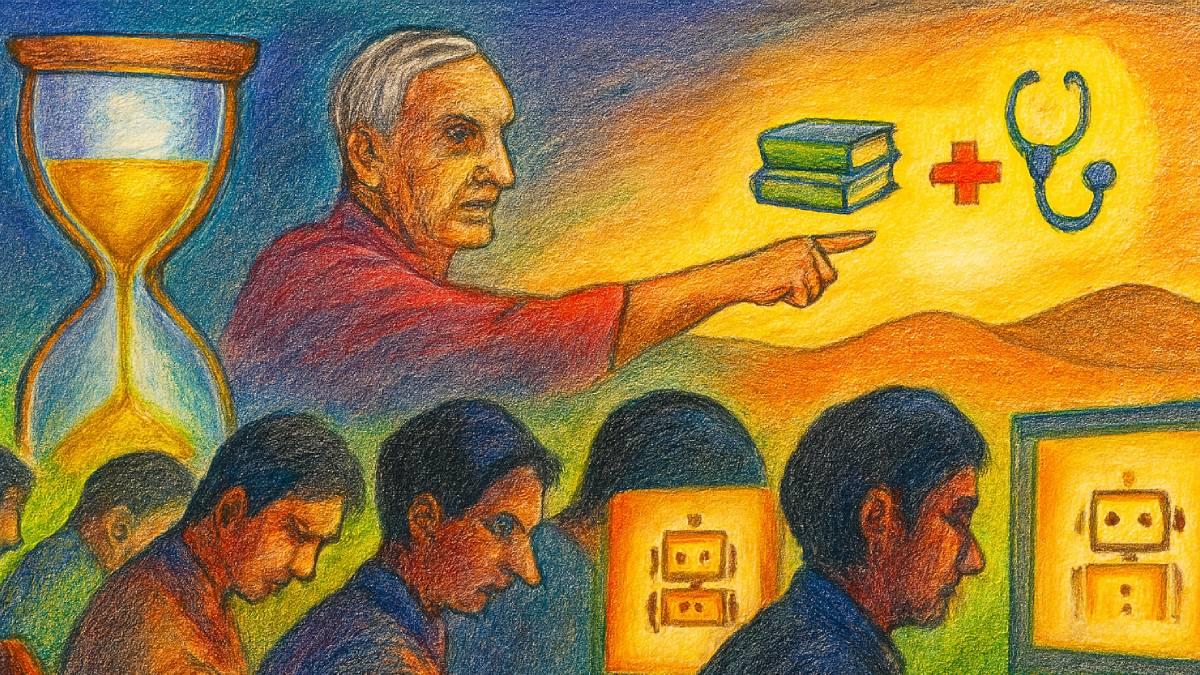
Venture capitalist Vinod Khosla has sounded an urgent warning: Artificial intelligence will obliterate vast swathes of outsourcing and IT services within five years, strip away millions of jobs and even upend the business models of some of the world's biggest corporations.
At the same time, he argues, it offers a once-in-a-generation chance to reinvent education, healthcare and social infrastructure.
Outsourcing on borrowed time
India's information technology and business process outsourcing (BPO) industries have long been its showpiece exports, employing millions and earning billions in foreign exchange. But Khosla, the Indian-born billionaire and co-founder of Sun Microsystems, believes the model is on borrowed time.
In a recent conversation on Nikhil Kamath's People by WTF podcast, he predicted that 'BPO as a business will disappear. Software IT services will mostly disappear.' By disappear, he clarified, he meant they would 'transform radically' under pressure from artificial intelligence.
Routine programming, system integration and data processing, once farmed out to Indian companies at low cost, could be handled faster and cheaper by AI systems.
Unless firms adapt swiftly, Khosla suggested, customers will inevitably turn to these more efficient alternatives.
Eight out of 10 jobs at risk
The warning does not stop at outsourcing.
Khosla has repeatedly forecast that up to 80 per cent of 'economically valuable jobs' may be automated in just five years. This includes not only repetitive tasks but also work traditionally thought of as specialist: legal drafting, financial analysis, medical diagnostics and customer support.
'Most of the jobs you see today will be automated,' he has said in multiple forums, arguing that businesses could halve their workforce while maintaining or even improving output.
Such predictions carry shock value but Khosla insists they should not be read as scaremongering. Rather, he frames them as a necessary wake-up call for economies like India, where employment generation depends heavily on sectors that could be first in the firing line.
From specialists to generalists
For students and professionals entering the workforce, the message is equally stark.
Khosla believes that narrow specialisations -- once the surest path to career advancement -- will be steadily hollowed out by AI. What will matter more, he argues, is versatility.
He urges young people to become generalists: Adaptable thinkers who can learn quickly, connect dots across disciplines and shift careers as technologies evolve. In his words, the most valuable skill in the AI era will be 'learning how to learn'.
Democratise education and healthcare
If his forecasts sound bleak for employment, Khosla is more optimistic about AI's potential to democratise essential services.
He believes education, from primary school to advanced professional training, can be delivered at a fraction of today's cost. In India, he has suggested, AI-driven learning modules could one day be linked directly to Aadhaar, making affordable instruction available nationwide.
Healthcare too, he predicts, will be transformed.
With AI systems able to analyse scans, monitor vital signs and recommend treatments, medical care could become more accessible and affordable, particularly in rural regions where doctors are scarce.
The underlying argument is that AI, properly harnessed, can reduce inequality in access to basic services even as it destabilises traditional job markets.
A deflationary force
Khosla has gone further, telling The Wall Street Journal that AI will trigger broad deflation. By dramatically lowering costs across industries, it could reshape economies as profoundly as electricity or the Internet once did.
He also warns that the Fortune 500 roster of corporate giants will not be immune. Companies that fail to integrate AI into their operations, he predicts, could face rapid decline, overtaken by more nimble rivals who adapt faster.
Alarm bells in India
For India, the message is two-sided.
On one hand, millions of jobs in call centres and IT parks may vanish more quickly than policymakers anticipate. On the other, AI offers the tools to tackle chronic deficits in education, healthcare and infrastructure -- if deployed creatively.
Khosla frames it as a question of timing and leadership. 'The challenge will be less about whether the change comes and more about how quickly it arrives,' he has said.
The broader world may debate whether his five-year horizon is too aggressive. Yet few dispute that artificial intelligence will radically reshape the labour market. For India's outsourcing-led economy, the alarm bells are ringing and ignoring them may prove costly.











 © 2025