
Welcome to Day 4 of Rediff's week-long celebration of Yoga ahead of the International Day of Yoga.
Today, learn about Phalakasana or the Plank Pose.
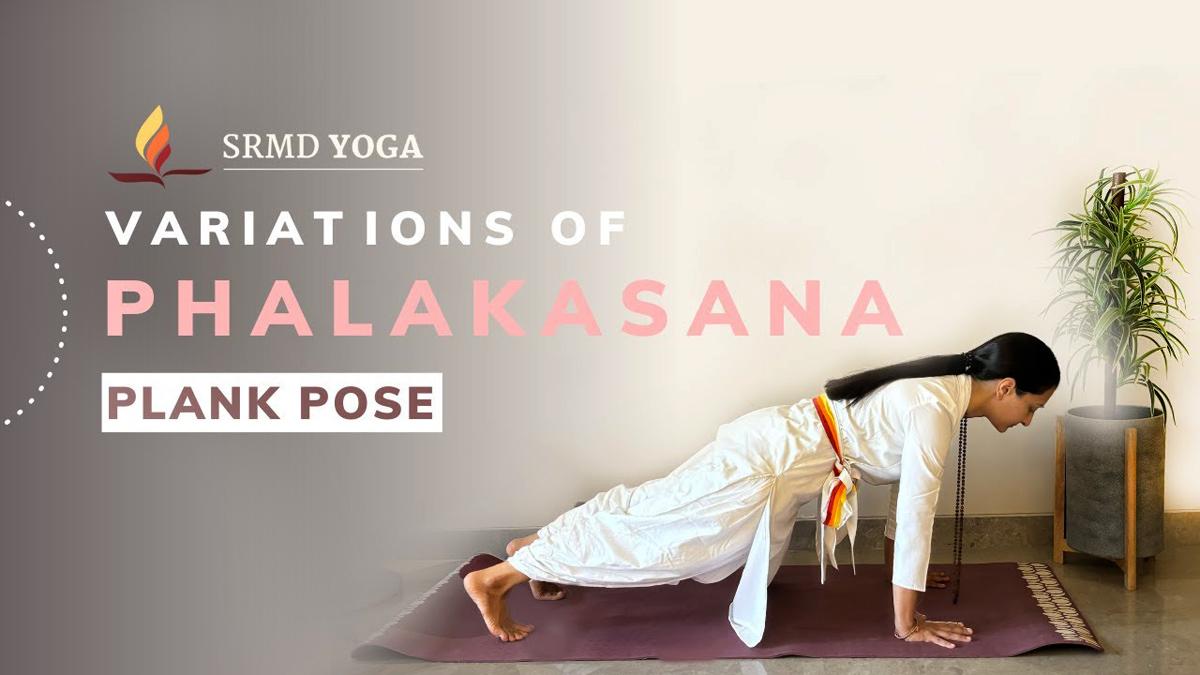
As we celebrate the journey of inner and outer strength in our countdown towards the International Day of Yoga 2025, Phalakasana or the Plank Pose stands as a symbol of integrity and endurance.
Simple in appearance, yet deeply activating, this foundational posture challenges the body and centres the mind. It teaches us that strength isn't about resistance; it's about awareness, alignment and consistency.
A clean demonstration of Phalakasana offers insight into proper technique and accessible variations, making it a pose for everyone -- from beginners to advanced practitioners.
What is Phalakasana (Plank Pose)?
Derived from the Sanskrit word phalaka, meaning plank or board, Phalakasana is a straight-arm balancing posture that forms a strong, straight line from head to heels. It builds full-body engagement, especially targeting your core, shoulders, and arms.
Often used as a transitional pose, Phalakasana is a powerful asana in its own right -- cultivating stability, endurance and focus.
How to practise Phalakasana
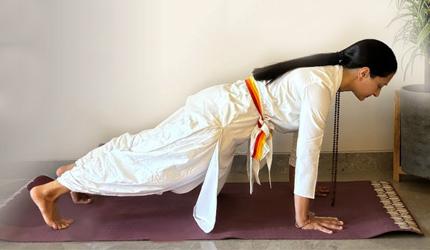
The full pose (High Plank)
Start in a tabletop position with your shoulders above your wrists and your hips above your knees.
Move your feet back one at a time, forming a straight line from your head to your heels.
Keep your wrists directly under your shoulders with your fingers spread wide for support.
Engage your core, draw your navel in and keep your legs firm; don’t let your hips sag or lift them too high.
Lengthen your neck; gaze forward or down.
Hold for a few steady breaths, maintaining steady engagement throughout your body.
Knee-down Plank (for beginners or those recovering from injury recovery)
Begin in the full plank setup, then gently lower your knees to the mat.
Maintain a straight line from your head to your knees, keeping your core engaged.
This variation is ideal for building strength gradually without straining your lower back or wrists.
Forearm Plank (for deeper core activation)
From tabletop or full plank, lower your forearms to the mat, elbows under shoulders and palms facing down.
Move your feet back and engage your body in one strong line, like you would do in a high plank.
This variation reduces pressure on your wrists and intensifies engagement of your abdominal muscles.
Vasisthasana (Side Plank Variation)
From Phalakasana, shift your weight onto your right hand and the outer edge of your right foot.
Stack your left foot on top of your right and lift your left arm up toward the sky. Alternatively, you can place the right knee on the mat for support.
Engage your core.
Keep the body in one straight line from heels to crown.
Gaze upward or forward and hold your posture; keep your breath steady.
Return to plank and repeat on the other side.
Chair-assisted Plank (gentle standing variation)
Place your hands on the back or seat of a sturdy chair.
Move back until your body forms a diagonal line.
Engage the arms, core and legs actively to simulate the same muscle groups with less intensity.
These variations allow you to access the benefits of the Plank Pose regardless of your level or condition.
Benefits of Phalakasana
- Builds core strength and endurance
- Tones the arms, shoulders, chest and back
- Improves posture and spinal alignment
- Enhances balance, focus and breath awareness
- Forms a stable foundation for more advanced poses
Contraindications
Though safe for most practitioners, take care with the following:
Those with wrist, shoulder or lower back injuries should modify or avoid.
Pregnant individuals may prefer elevated or standing variations.
Avoid holding the pose for too long if fatigued, to prevent collapsing into your joints.
Stillness in strength
Phalakasana invites us to find steadiness amidst challenge -- not by forcing but by aligning.
This seemingly simple posture reminds us that true strength is quiet, consistent and deeply connected to breath.
Even when we feel shaky, the plank reminds us -- we are stronger than we think.
- Day 1: Vriksasana, The Tree Pose
- Day 2: Virabhadrasana II, The Warrior II Pose
- Day 3: Utthita Trikonasana, The Extended Triangle Pose
Tomorrow: Prasaritta Padottanasana, the Wide-Legged Forward Fold
Atmarpit Dr Mansiji, MD, is the head of SRMD Yoga. She is a paediatrician, neonatologist and a certified yoga trainer by Yoga Alliance. She conducts yoga, breathwork and meditation workshops globally.
Disclaimer: All content and media herein is written and published online for informational purposes only. It is not a substitute for professional medical advice. It should not be relied on as your only source for advice.
Please always seek the guidance of your doctor or a qualified health professional with any questions you may have regarding your health or a medical condition. Do not ever disregard the advice of a medical professional or delay in seeking it because of something you have read herein.
If you believe you may have a medical or mental health emergency, please call your doctor, go to the nearest hospital or call emergency services or emergency helplines immediately. If you choose to rely on any information provided herein, you do so solely at your own risk.




 © 2025