

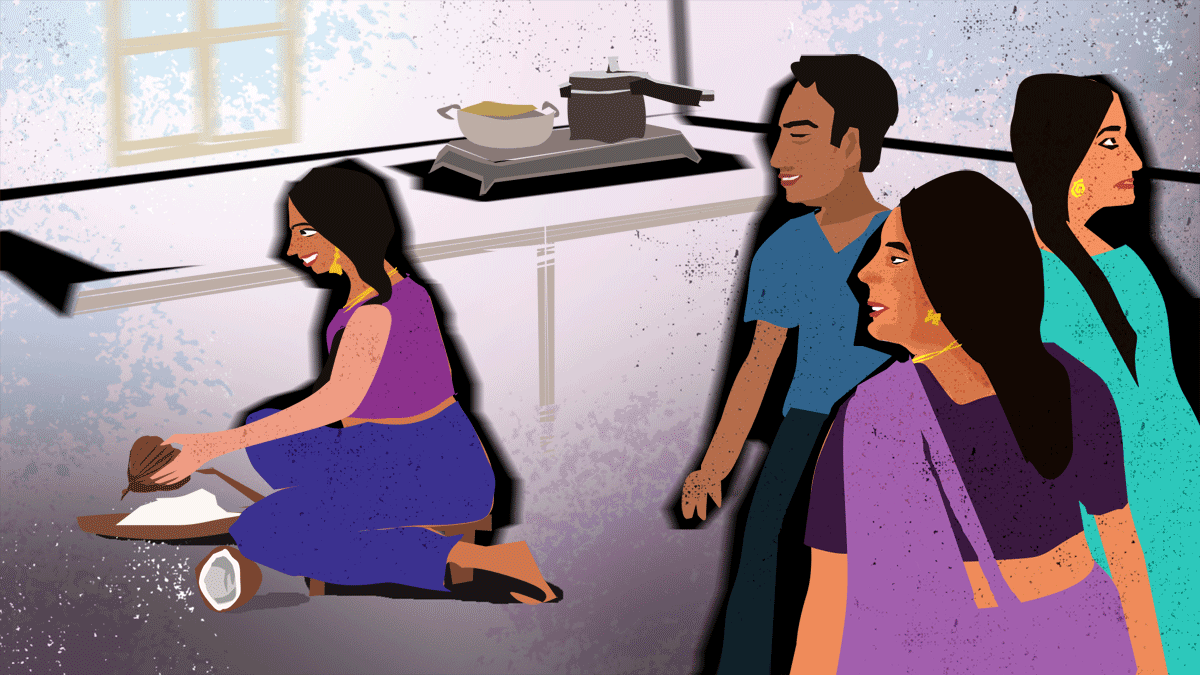
It was one of the few days we three sisters did not mind getting up early.
Outside, it would most probably be raining.
Inside the house, a variety of aromas and sounds would soon begin creating their own symphony.
The dull thud-thud of coconuts being de-husked.
The sharp cracking sounds as they were split open with a few well-placed blows with the sickle knife, the water they held inside splashing into the carefully-placed bowl.
The ksk-ksk of the tarayi (coconut) being grated (that was generally my job); the white meat reserved for the payasa (the Mangaluru kheer); the meat closer to the shell, which would have flecks of brown, kept aside for the various gassis and resas.
And, of course, a few bits of coconut would find its way into my tummy.
The grinding stone would whirl non-stop, converting the coconut into various levels of consistencies depending on the dish in which it was to be used.
There was an order to this too.
First, the white meat of the coconut would be ground down so that the milk could be squeezed out, then ground again. This would be done a total of three times and you would get coconut milk of different consistencies -- first, the rich, thick version that would leave your hands well moisturised as you squeezed out the milk; then one that was slightly less thick and finally, the pale, watery version.
This was for the payasa.
I'd stick my thumb in to each fistful of the roughly ground coconut to make sure I got every bit of the milk.
The dried coconut that was left over after this process would be kept aside so that we could feed it later to cows, who seemed to like it very much indeed.
Then it was time to grind for the gravies. In case you're wondering about the order, it's because all these would be ground in the same grinding stone and you wouldn't want the masalas to accidentally sneak into your payasa, would you?
Meanwhile, the knives would be playing a feisty game with the chopping board as a variety of vegetables and nuts were cut to different sizes.
In the hall -- by this time we had been shooed out of the kitchen -- it was time to push the sofas to a corner.
Then the chairs were carried away, to sit in their new home for the day -- the bedroom.
The mop would come out and the living room's floor would be wiped clean.
Giggling, we three would head for a bath, knowing that we'd come out to dress in our traditional outfits and change our jewellery -- today was not the day for the earrings we wore to school; we'd wear tiny gold danglers instead, and bangles, and a delicate chain.
Impatiently, we'd wait for Ma to finish up and have her bath so that the festivities could begin.
Though she had spent the whole morning cooking a feast for our Chauthi (Ganesh Chaturthi) lunch -- and, let me tell you, it's truly yummy; even die-hard non-vegetarians end up licking their fingers at the end of this all veg spread -- she would be glowing.
We'd pray in front of our little temple, serve tiny bits of the meal prepared to Lord Ganesha and then... it was time for us to eat.
Mats and bedsheets would be laid down on the floor and clean banana leaves would be placed in front of them; Ma would double check that the tip of the leaf faced the eater's left and the broad end the right.
When we were little, we were allowed to serve uppu (salt), uppad (pickle), talli (a lightly-salted salad of cucumbers, tomatoes, onions and chillies onto which lime had been squeezed) and fried appala (both the spicy and non-spicy versions of papad) and sendige (vadam).
The main meal -- since it all consisted of steaming hot dishes -- would be served by my mother.
Waiting more impatiently than the three of us would be our father!
First the veggies -- kadaleli (black chana), padengi gassi (whole mung), kanchala (bitter gourd) and bendekayi (lady's fingers).
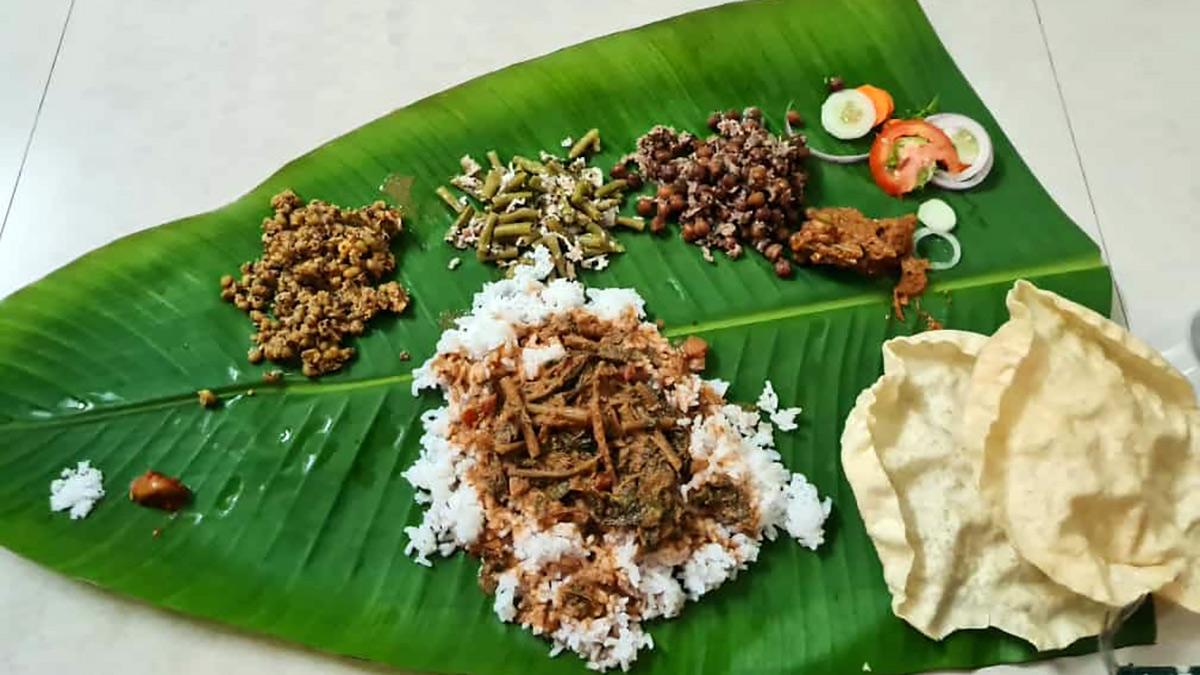
Then, the rice -- in which you would make a well into which the padpe saar (made from chauli or green amaranth leaves) would be poured.
And, finally the kadale salai payasa (made with coconut milk, sabudana, chana dal, jaggery, cardamom, raisins and cashew that had been soaked first and then fried in ghee).
Though I love every one of these dishes, I enjoy them even more during Ashtami (Krishna Janmashtami) and Chauthi because they are prepared differently.
Cashew is added to the pandengi gassi (green whole mung) and to the kadale upkari while ambade (Indian hog plum) is added to the kanchala and bendekayi gassis and padpe saar. This is a tart green fibrous fruit that is used instead of tamarind and it lends each dish a flavour that's different from how it tastes during the rest of the year.

To eat the ambade, you pop it into your mouth and chew it like you would drumstick (moringa fruit) and let the tangy juice flow (the chewed out fibrous bit, just like the drumstick, is to be discarded).
Umm! My mouth is already watering!!
The padpe, too, is different. Instead of using the tender leaves, the entire mature plant, including its thick white root is used and I absolutely love it.
Here, then, is my mother, Satya Raghava's recipe for Padpe Saar and I hope you all enjoy it as much as I do.
Happy Chauthi!

Padpe Saar
Serves: 4
Ingredients
- 2 padpe or green amaranth plants, cleaned, chopped, the stem and root to little finger sized pieces or 1 bunch of padpe leaves, cleaned
- 4 tbsp thogari bele or toor dal or pigeon peas
- 2-3 ambade or Indian hog plums
- Salt to taste, about 1½ tsp
For the masala:
- 5 bedki chillies or if you want it spicier, 3 bedki chillies and two sambhar chillies (with a hint of oil)
- 1 tbsp kothemberi or brown dhania or coriander seeds
- 1 tsp jeerige or jeera or cumin seeds
- 1 tsp dasemi or rai or mustard seeds
- ½ of a fresh medium coconut, grated, approximately 50 gm
- 1 small niruli or onion
- 2-3 pods boluli or garlic
- Dash akka namak or crystal salt
- Water
For the tempering:
- 1 tsp dasemi or rai or mustard seeds
- 2-3 pods boluli or garlic, slightly crushed
- 10-12 karipatta or curry patta leaves, torn
- 1 tbsp oil
Method
- Roast the spices for the masalas on a tawa over low heat.
Cool.
Grind into a powder in a mixer/blender and then add the fresh coconut, onion, garlic, crystal salt and a little water if needed and grind to a fine paste.
Keep aside. - Cook the toor dal for 3-4 whistles, over medium heat, in a pressure cooker and keep aside.
- Boil the amaranth in a little water in a saucepan over medium heat till cooked, about 5-8 minutes, and keep aside, along with its water.
- Lightly crush the ambade, then boil in a little water for 5 minutes and keep aside.
- In a toph or large saucepan or a kadhai, add the coconut masala paste and begin cooking on a low heat.
Add the water from the cooked padpe and till you get gravy consistency.
Add the toor dal and mash the dal if necessary with the back of a ladle.
It should not be too watery nor should it be too thick.
Add the salt.
Cook for about 5 minutes and add the cooked padpe, ambade.
Let simmer for about 5 minutes and keep warm. - In a tempering pan, heat the oil over medium heat.
Add the mustard seeds.
When it splutters, add the garlic.
Add the curry leaves, garlic.
When the fragrance of the garlic starts to change, the curry leaves crisp up slightly and the garlic turns a light brown, your tadka is ready. - Pour it into your curry and stir before serving.
Editor's Note: If you cannot find ambade, you can use a marble-sized ball of ball of puli (tamarind). It will still taste very good but, trust me, the ambade is way, way better.


