

'Shubman Gill is a great thinker and player, but man management will be key to his leadership success.'
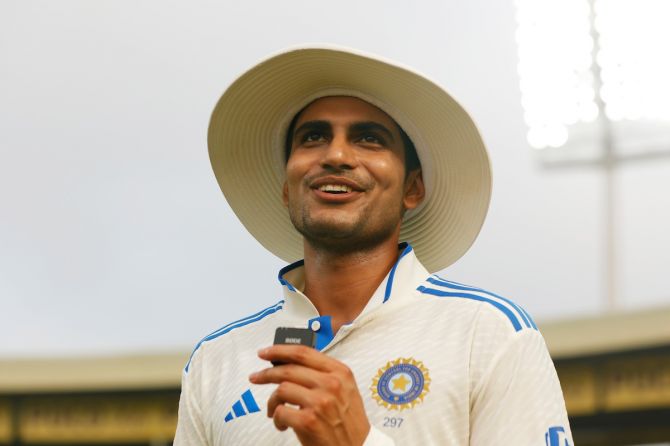
"Shubman Gill has got a real understanding of his game and his technique. So it was good to have conversations with him around it because I learned quite a bit around his game," Gary Kirsten tells Faisal Shariff in the concluding segment of an exclusive two-part interview.
- Part 1: 'Indian Cricket Changed My Life'

Have you ever seen something like this in a Test team that you lose three, four, five players?
I don't think in recent times something like this has happened where a team loses a chunk, literally 50 to 60 percent of its Test team.
The one thing I'll always say is there's so much depth in Indian cricket.
So, let's not discount the fact that a lot of young players with experience in big matches will be coming in.
Test cricket's a very different animal. And it really does challenge the fundamentals of your game.
So, especially away from home, that'll always be a challenge. But I do remember, when was it, two years ago, a young Indian team beat Australia in Australia. It was like an amazing result to watch that unfold.
The most important thing is how patient are the Indian stakeholders going to be. That's going to be the biggest challenge. Because a proud cricketing nation like India, are they going to accept this rebuilding phase for a decent amount of time?
Because I'm sure, you lose two, three, four games on the bounce and everyone will be shouting and screaming what's going on. But every team goes through it.
There is a rebuilding phase. And it's a great opportunity for some young guys. It's a very exciting time in Indian cricket.
But these phases don't come with pain. And it's how much pain the Indian cricket stakeholders are prepared to accept.
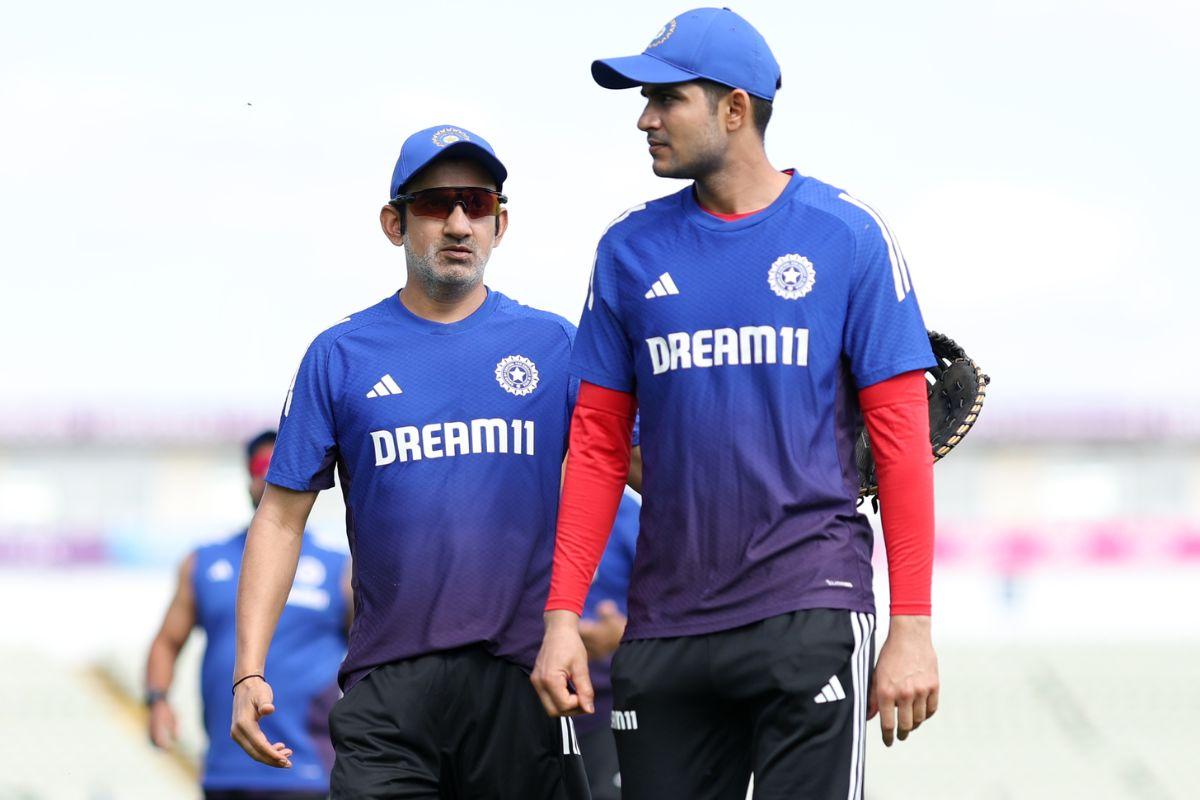
It's probably the toughest time for Gautam Gambhir. Many similarities with you: Opening batsman, young, and he also took over with very little coaching experience, except for IPL teams.
How do you view him, having worked with him, having had him in your team? What do you make of Gautam Gambhir?
Well, I don't know Gautam, the coach, at all.
Gautam, the player, I absolutely loved. He's got a toughness to him that is very useful.
He's had success in the IPL. I remember when we split the one-day team and the Test team and we made him the one-day captain against New Zealand before coming to South Africa. And he did a fantastic job.
I think he's really strong. But he's got a personality and he's got a style. The big thing is does that personality and style connect with Indian players? That's really what it's going to be about.
I don't know enough about how it's going or how he's going with the players. But all I do know is that he's got incredible skill in the game of cricket.
I'm thoroughly fond of Gautam and I just hope that he's getting the support he needs and that the players are starting to, if not already, kind of warm to him and understand how he wants to operate and whether he can add value to the team.
What did you see as a difference between coaching a national team and an IPL team or a team in the leagues?
The main difference is just how quickly you need to be moving, I found that quite challenging.
I always think it takes time to build and form a team unless you've got some history there. But I'll never forget my first job was with Delhi. I arrived at the auction and we didn't have one player on our books.
It was basically starting a brand new team. It's always quite challenging moving from international coaching where you kind of have a long period of time with players and you build these connections and you get to know and understand each other then to suddenly being thrust into an IPL space where you've got like seven weeks and you've got to move very quickly.
Coaching is a lot more hands-on in the IPL than it is in an international format or in an international game.
When I say hands-on, it's like you are potentially quite involved in the strategic outcome of the game in real time.
In international 50 overs and Test cricket, it's a slower process. You can debrief after games. You can debrief between sessions.
The 20-20 cricket goes very quickly. So that was a real challenge. And then obviously, trying to find common cause amongst five or six different cultures is not always that easy. So, yes, it requires a different set of skills compared to international coaching.
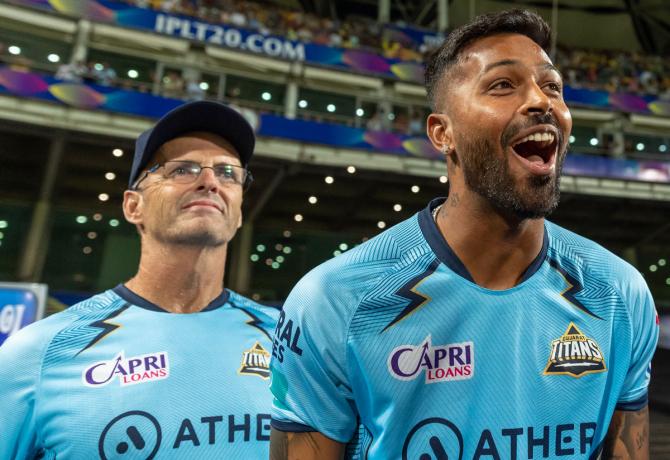
I quite enjoyed the stint I had with Gujarat (Titans) for three years. I wasn't head coach. I was an assistant under Ashish (Nehra).
Ashish was very specific around how he wanted to coach. But I was allowed the opportunity to connect with the players and build relationships. And I really enjoyed that.

How do you measure success as a coach just beyond wins and losses?
What is that parameter that marks out a coach from being a good coach to a great coach?
You'll always be measured by the win-lose column. All coaches accept that. But you'll probably find that most coaches don't measure themselves on that.
I don't measure myself on how many World Cups I won and how many IPL trophies I won. I measure myself on the journey of coaching.
Am I getting better every year?
Am I learning more?
Am I finding out a new way to deal with conflict or deal with a difficult player?
Am I finding a new skill to help a player in his acquisition of skills?
Have I learned something from someone else that might help me talk to this player or become better in this situation?
Have I learned something about communication, how to communicate better?
Have I learned something about running a better meeting? I think that's how I judge myself.
Am I improving every year to give the best of myself? That's my journey that I'm on.
The external journey is how much do you win. But coaching is not like that. You're going to lose a lot. You're not always going to win.
I'm involved in sport because I love the unpredictability of the result. There's never a guarantee that you're going to have the kind of success that we all wish we had.
Every coach starts at the beginning and says we want to win the tournament this year. Only one wins, nine don't win. And nine have to reflect on what they can do this time.
So you're probably going to be more on the nine out of the ten than you are going to be the one out of the ten. And if you're the one out of the ten, great.
He'll take this one time and he'll go what do I need to do better next time. Because he knows that the other nine are thinking of what they need to do better.

What is your style of coaching?
Do you think that a lot of technology is required when you are making plans or you're more a coach who goes by intuition and by his own gut feeling the way Brendan McCullum is advocating these days?
Most are hybrid of that. I don't think just analysing the data and then building strategies around just the data can necessarily always be accurate, because every game, you can't take an average.
Every game is conditions, different situations, bowlers bowling differently to what they might have bowled on another day.
You can use data to understand trends that might be helpful to build strategy. And in the end, you're using data to find competitive advantage.
So, I think the understanding of it, the use of technology in the right way can definitely aid success. But I don't think it can be the only thing for success.
We're dealing with human beings, we're dealing with people that handle pressure differently. And there's no stat in the world that's going to tell you at the moment that an individual is playing in the IPL final, and he's the same person mentally around how to bowl as he was in the first game of the IPL.
It could be a very different human being between the first game of the IPL and the final. The stats will tell you that it's the same human being. He's going to spit out the same data, which I disagree with.
So I do think that there's an element of intuition and feel and kind of understanding your people and understanding who can you turn to when the heat is really on.
Our World Cup success in 2011 was based on the fact that we had seven or eight players that could, in a final, win the game.
Now that's what you're looking for in any high performance environment you're looking for players where you can throw the ball to different people, and they can win the game.
I'm not sure data can be overly accurate on that. But as I said, data, when used correctly -- -- and I know a lot of coaches use it extensively -- can help you build, help you understand the trends that exist. And then you can build a strategy around that.
The importance of mental conditioning, can you break it down, if you could do a dummies guide on it? What exactly does it mean?
'Mental conditioning' sometimes triggers an emotion in people that we think well, either you have it or you don't have it.
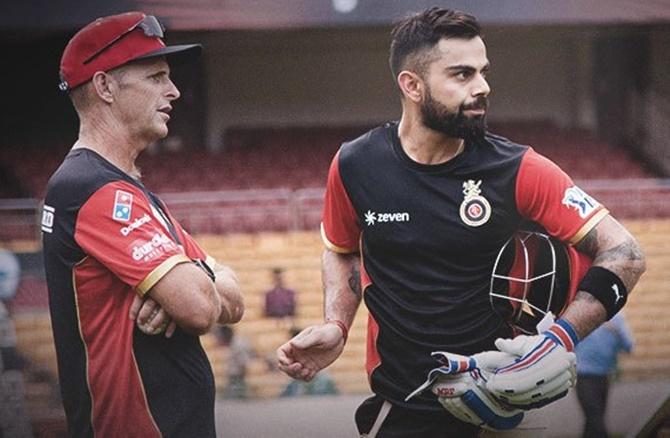
It's like this concept, either he's got big match temperament or he hasn't. We watch Virat Kohli play and he's got massive belief.
We see something in an individual and then we put a name to it. We need to be careful with that because I think everyone can access their mental strength.
It's just how you're able to access it, because we kind of sit with this cognitive side of our decision making, and we've got the emotional side as well. And often emotion takes over.
We can't think clearly. But when we think really clearly on the cognitive side, we can maybe control the emotions a little bit more.
I'm always fascinated to help players become really cognitive under pressure so that they don't get done in by their emotions.
Now, emotions sometimes are really important. You see a bowler get really pumped up in his bowling because he feels he's got the better of a batsman and we visibly see that emotion.
We see Virat Kohli get pumped up when he's batting and we visibly see that emotion. So in those situations, they're really helpful.
But I would say for the better part of the most of us who don't necessarily visibly show their emotions, it's how you can control the emotions and how you can become really cognitive in your performance behaviour.
What is the task at hand rather than am I going to do well or not do well today? And really, when we can move into what is the task at hand, what I need to do absolutely now, move away from the results.
If you can get players thinking really cognitively around the task at hand, and the decisions that they need to make in that moment, I think that that's where mental toughness sits.
So it's an intelligence rather than it's a concept of mental toughness, performance intelligence.
It seems to me, and this is anecdotal, but it seems to me that your better players have greater performance intelligence. And they have built that up over time, over their journey and their experiences. They just seem to handle themselves better. Because of that intelligence, they understand what to do in every situation, understand their own games really well.
That can be quite exciting when a player is operating in that space. Now, it doesn't always happen. I've had some moments in my playing career where I had great performance intelligence. But then I had other times where I got hijacked emotionally.
I was playing with too much emotion and not enough performance intelligence, and I let the moment get the better of me. And it cost me my wicket. But then there were other times where I understood the situation and what was required.
I really wanted to knuckle into the task at hand. And I felt my skills complemented what the task at hand was. And my performance intelligence was up there.
I was able to suppress and control my emotions. So I guess it's trying to find that and help players find that they can make a difference.
When you were in the dressing room, have you seen the way great players prepare and the way good players prepare? Is there a difference?
To be honest with you, professionals prepare the same way. Most professionals have got a decent work ethic. They do what they need to do.
So the answer is I don't see a huge difference. I do enjoy the more inquisitive player, but that's a personal preference.
Not everyone has to be inquisitive. But I do enjoy a player that is engaging, asking questions, understanding his game better, learning a little bit more. But I also enjoy the players quite sure of himself.
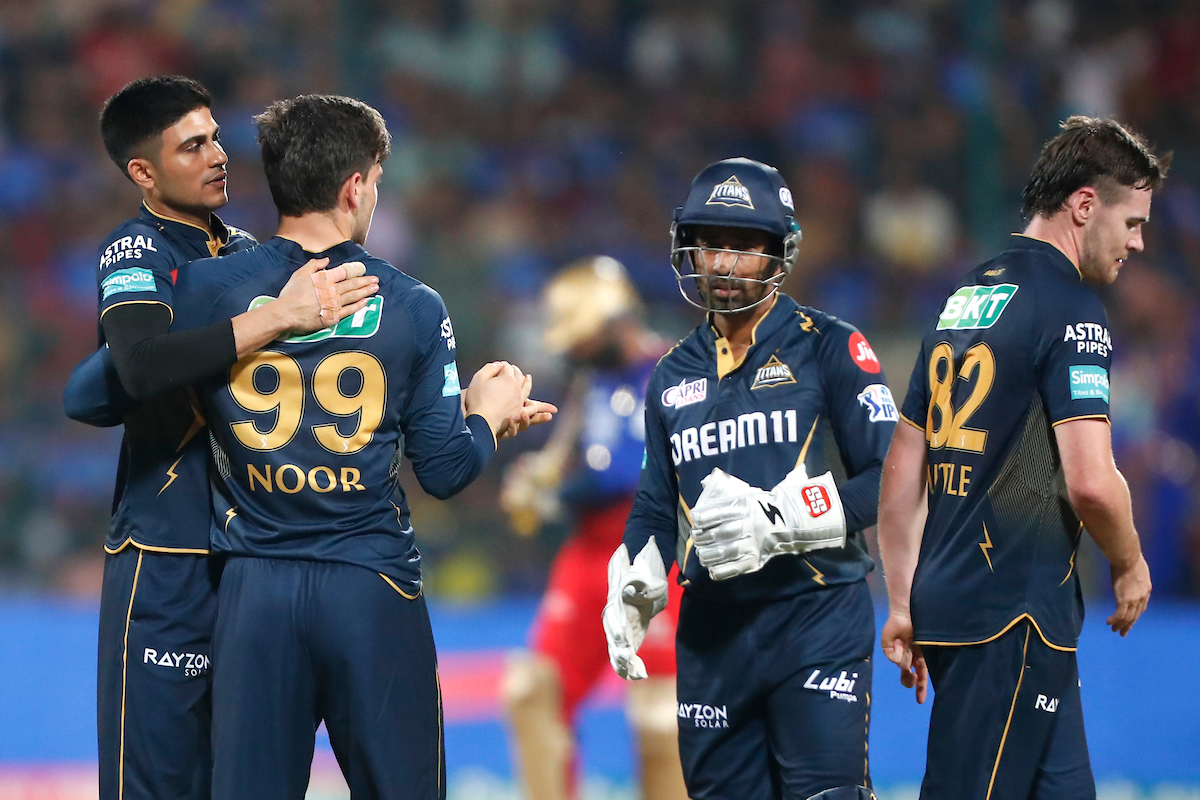
Shubman Gill, as an example in the IPL that I've worked with over the last three years, he's got a real understanding of his game and his technique.
So it's good to have conversations with him around it, because I learned quite a bit around his game. So everyone's slightly different.
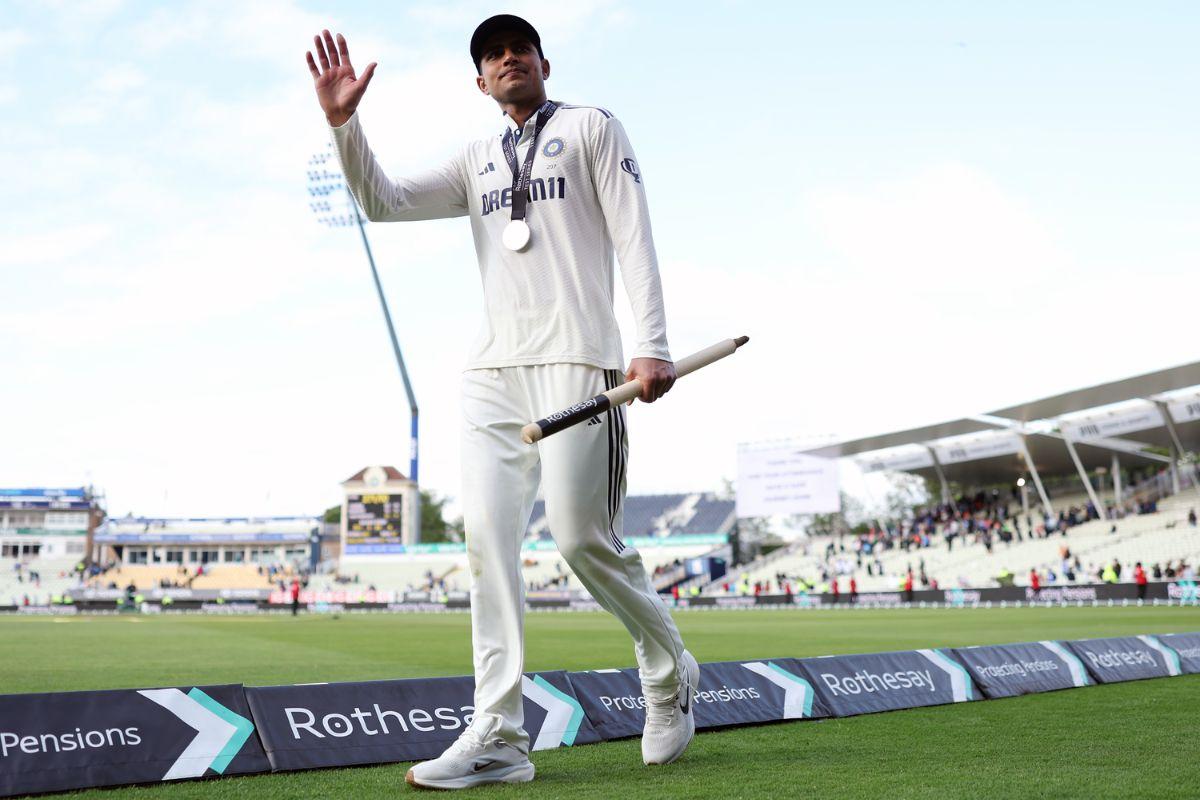
How do you rate Shubman Gill as a captain now that he's leading Team India?
Well, it's early days. I think he's got great potential. Captaincy is a whole lot of things that you've got to put together.
He's a great thinker in the game. He's a good player himself. But there's a whole bunch of things you've got to get right. And I think man management is going to play, like any leader.
Dhoni was an incredible man manager. If he can get that component of his leadership really fired up, I think he has all the credentials to become a great captain for India.
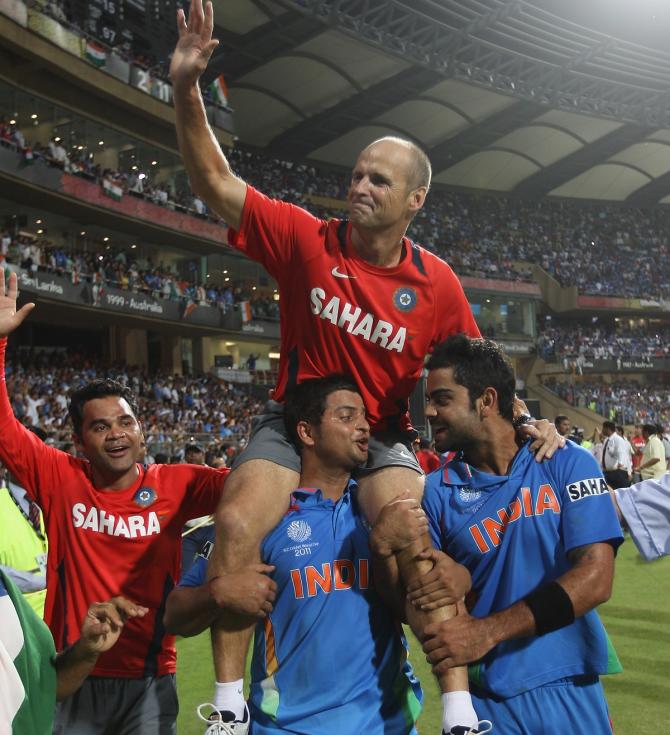
Tell us an interesting incident about your time with Team India that you've never shared before.
There were many. But we had one really fantastic day out where we had a kind of a team bonding day where Paddy (Upton, then mental conditioning coach) had organised each of the members to be part of a small group of about five or six people.
So there were these teams of five or six people, including the coaches, and we all had to make a two-minute movie. And from the director, from the camera, to the director, to the actors, we were told what movie we had to make. And those videos were actually produced.
We ended up watching all those movies. And there were many things that I saw of the Indian players that I never knew or thought that's what their personality was like, as they were acting out the particular things that they had to act.
That was one of the funniest days that I had with the Indian team, watching those movies that each of us made, and seeing the behaviour of some of the individuals that I thought jeepers, he is really a quiet, quiet guy. But when he acted that particular role, I saw a different side to him that I've never seen before.
I love the fact that we could see an uninhibited senior player. I won't mention names, but that was pretty exciting.
Gary Kirsten on Gill, Kohli and his memories of the Indian team that won the 2011 World Cup...
Feature Presentation: Rajesh Alva/Rediff











 © 2026