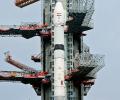
The main focus of the all weather RISAT-1B satellite will be to observe the Indian land with its C-band synthetic aperture radar.
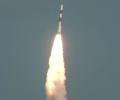
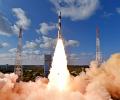
The launch marks a significant milestone for the space agency as it is the 50th flight of PSLV and the 75th vehicle mission from Sriharikota. The 628 kg satellite is meant for applications in various fields like agriculture, forestry and disaster management support. It would also serve military purposes.
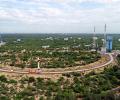
Andhra Pradesh will establish two expansive integrated space cities in Lepakshi and Tirupati, spanning around 33,000 acres.
The Polar Satellite Launch Vehicle (PSLV) in its 63rd mission, would carry the earth observation satellite (EOS-09) which would be capable of capturing high-resolution images of the Earth's surface under all weather conditions.

The RISAT-2B would replace the RISAT-2, which has been actively used by India to monitor activities in camps across the border in Pakistan to thwart infiltration bids by terrorists.

"It is going to be the most complex mission ever undertaken by ISRO. It is going to take place between July 9 and 16, this year," Sivan said, addressing scientists from the Mission Control Centre.

Out of its 47 operational satellites, India currently has six to eight satellites which are used entirely for military purposes.

'Till date, 90-95 per cent of the mission objectives have been accomplished' 'Future programmes will go as planned' After the moon landing mishap, K Sivan, chairman, Indian Space Research Organisation spoke to T E Narasimhan/Business Standard of the future and the mood among his scientists. Edited excerpts:

The Indian Space Research Organisation has resolved to alight its lander on the lunar surface with Chandrayaan-3 in addition to a maiden solar expedition in 2020.

The year ended with the launch of the PSLV's 50th mission.
India scripted history by successfully launching EMISAT, a military satellite, and 28 foreign nano satellites on-board its polar rocket from Sriharikota on Monday, in a complex mission which marked many a first for Indian Space Research Organisation.

In the years to come, India's space assets will play a much bigger role if and when hostilities break out on our borders, says Pallava Bagla.
 © 2026 Rediff.com - Advertise with us - Disclaimer - Privacy Policy - Sitemap - Feedback - About us - Terms of use - Grievances