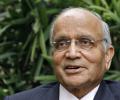
Maruti Suzuki chairman RC Bhargava has said that reducing carbon emissions does not require making a choice between hybrid and electric cars, and that both can play key and complementary roles if the government wants to achieve its aggressive emissions target. Responding to the fact that the sales numbers of hybrid cars have been higher than electric cars in the last quarter of 2024, Bhargava pointed out: "It has never been about electric versus hybrid. "Both have a clear role to play. By 2030 we expect electric car penetration to be around 20 per cent.

Auto major Maruti Suzuki India on Friday said its consolidated net profit declined by 1 per cent year-on-year to Rs 3,911 crore in the fourth quarter ended March 31, 2025, on account of higher expenses. The country's largest carmaker reported a net profit of Rs 3,952 crore in the January-March quarter of FY24.

The country's largest carmaker Maruti Suzuki India will not "walk away" and fight to get back to 50 per cent market share in the domestic passenger vehicle segment, according to company Chairman R C Bhargava. The auto major, which is commemorating 40 years of operations, has seen its market share drop to 43.38 per cent in FY22 from a peak of 51.21 per cent in FY19. In order to get back its dominant leadership, the company plans to drive in models catering to both urban and smaller cities and rural areas.

Unprecedented bribery charges, farewells, separation, failed union, monumental mergers and record-breaking IPOs, along with a healthy dose of online happenings in the form of spat and lessons in customer care, corporate India saw it all in 2024.

Japanese agri-equipment firm Kubota is taking cues from Suzuki Motor's strategy to establish India as its global production hub, according to a report by Nikkei Asia. The acquisition of Escorts in 2022, leading to the rebranding as Escorts Kubota, a prominent tractor manufacturer in India, which held the fourth-largest global market share, offered Kubota a crucial foothold in the Indian and international markets, complementing its strengths with Escorts' established presence.

Maruti Suzuki India (MSIL) will issue equity shares on a preferential basis to parent Suzuki Motor Corporation (SMC) to acquire 100 per cent stake in the latter's Gujarat plant. This deal is expected to increase the share base of MSIL by about 4 per cent. And consequently, it will raise SMC's shareholding in Maruti by around 1.8 percentage point. "Whether it is in terms of PAT (profit after tax) or earnings per share (EPS) or dividend per share (DPS) of MSIL, the share-swap option will give shareholders a better deal than any other option such as cash payment," MSIL chairman RC Bhargava told reporters during a press conference.
Maruti's strategy for the SUV segment is to arrest the decline in customers for entry level hatchbacks.
Maruti Suzuki India (MSI) on Thursday said its new manufacturing facility in Haryana, the company's third in the state, would reach peak production capacity of 10 lakh units per annum in the next eight years entailing a total investment of Rs 18,000 crore. The new facility, which would come at a 800-acre site at IMT Kharkhoda in Sonipat district, will entail total investment of Rs 11,000 crore in the first phase with a production capacity of 2.5 lakh units per annum. The first set of vehicles are expected to roll out from the facility in 2025.
The regulatory burden is the highest on small cars, a key segment of the Indian automobile industry and having a uniform tax structure across all segments of vehicles will not augur well for the sector growth, according to Maruti Suzuki India chairman RC Bhargava. He also said India's economic growth rate could be higher if the manufacturing sector grows fast, which 'unfortunately' has remained a laggard despite the best efforts of the Narendra Modi-led government at the Centre due to implementation gaps at the ground level. "The burden of regulatory changes on the small cars is far higher than the regulatory burden on big cars and that is changing the whole market behaviour.

The company would decide on increasing the capacity and investment needed for the same in presence of its parent Suzuki Motor's chairman Osamu Suzuki

The institutes need to reach the optimum level of resource utilisation.

The country's largest carmaker Maruti Suzuki India (MSI) is planning to invest around Rs 18,000 crore on a new manufacturing facility in Haryana, as per a top company official. The new plant would replace the company's Gurugram-based facility and is expected to have an installed production capacity of 7.5-10 lakh units per annum. While confirming the Rs 18,000 crore investment plan, MSI chairman RC Bhargava told PTI that the company had always planned to shift the Gurugram facility to a nearby location.

The country's largest carmaker Maruti Suzuki India is neither shifting investments nor jobs from Haryana to Gujarat by shifting production of its compact sedan Dzire, company chairman RC Bhargava said on Tuesday. The company is maximising the efficiency of production at its two plants at Haryana and the parent Suzuki's Gujarat plant, keeping in mind the demand of its multiple models.
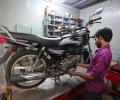
The company will utilise this time to carry out maintenance work at its manufacturing plants.

India's biggest car maker Maruti Suzuki said on Tuesday that its vehicle production in September will tumble by 60 per cent due to chip shortage. The company, which had earlier cut down production at its Gujarat plant, said the chip shortage will hit production in Gurugram and Manesar plants, effectively forcing the automaker to cut production by 60 per cent. Owing to a supply constraint of electronic components due to semiconductor shortage, the company is expecting an adverse impact on vehicle production in September in both Haryana and its contract manufacturing company, Suzuki Motor Gujarat Pvt Ltd. (SMG) in Gujarat.

With rising petrol and diesel prices driving up demand for its CNG vehicles, the country's largest carmaker Maruti Suzuki India plans to widen its CNG portfolio by offering the fuel option in four more models 'very shortly', according to a senior company official. The company, which plans to launch an electric vehicle (EV) in the Indian market by 2025, is also currently keeping a close watch on the country's EV ecosystem "to find out what is the best way of evolution" to be able to offer affordable EVs with hassle free charging infrastructure in order to clock high volumes for a sustainable business.
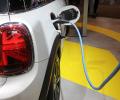
Maruti Suzuki India will launch electric vehicles in the country only after 2025 as demand for such vehicles at the moment is less and it would like to sell around 10,000 units a month whenever it enters the electric mobility space, company chairman RC Bhargava said on Wednesday. Addressing a virtual conference on the company's second quarter earnings, he said under the current circumstances a lot of things in the EV ecosystem such as batteries, charging infrastructure and electric supply are done by other parties and therefore the costing is not in the hands of the company. Also with fuel prices going up, car market leader Maruti Suzuki India is intensifying its focus on more CNG offerings of its models.
Brushing aside concerns raised by proxy advisory firm IiAS on Suzuki's investment in the EV project, Maruti Suzuki chairman RC Bhargava on Thursday asserted that there was nothing in it against the interest of the company and its shareholders as it is part of an earlier arrangement. Countering the criticism from the proxy advisory firm, Bhargava noted that all models produced at Suzuki Motor Gujarat (SMG), including EVs, would be ultimately sold by Maruti Suzuki India (MSI) in the marketplace. IiAS has raised serious questions regarding the decision of the Suzuki Motor Corporation (SMC) to invest directly in the EV project instead of MSI doing it.

Maruti Suzuki India (MSI) plans to drive in CNG trims across its product range as it remains bullish over long-term prospects of the segment amid increase in fuel prices and drop in diesel car sales, according to a senior company official. The company, which sold around 1.62 lakh CNG cars last fiscal year, is also counting on the rapid expansion of CNG dispensing outlets across the country to bring in more CNG products. Bullish on the expansion of the sales network, the automaker expects its CNG car sales to almost double this fiscal year over 2020-21.

According to government data, the Centre procured only 35,179 ventilators out of the 50,000 originally ordered.

Around 23 per cent of all units sold by the company in the domestic market currently are diesel cars.
Corporate leaders said a stable government at the Centre will help boost infrastructure spend, address agricultural distress, and encouraging employment.

Most of the engines used by Suzuki's two-wheelers in India are manufactured by Maruti at its Manesar plant.

General Motors India Vice President P Balendran termed the decision as a positive move for the overall economy.

With the government not continuing with lower excise duty beyond December 31, major car makers, including Maruti Suzuki, Hyundai, GM India and Honda have raised vehicle prices by up to Rs 127,000.

One can see the scale of recalls going up as the market expands.

Why Kia is keen to drive into India? The Korean automobile maker plans to carve out a niche for itself in the crowded Indian market with its compact sedans and SUVs.

Car marker leader Maruti Suzuki India is looking at nearly doubling the number of models to 25, including entry into SUV and LCV segments, as it aims a target to sell 3 million cars annually.

Maruti is trying to move up the segment by focusing on premium cars, SUVs and even trucks.
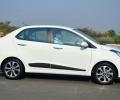
Buoyed by strong sales, Maruti Suzuki, Hyundai and Honda have scaled up their annual targets, but others are still stuck in low gear

BS Annual Awards 2014: Power-packed jury picks the best 7 of corporate India
 © 2026 Rediff.com - Advertise with us - Disclaimer - Privacy Policy - Sitemap - Feedback - About us - Terms of use - Grievances