
When enumerators came for the survey a few days ago, Sudha Murty and Narayana Murthy reportedly told them, "We don't want the survey conducted at our home."

The Karnataka government has approved a statewide Social and Educational Survey, also known as a caste census, to be conducted between September 22 and October 7, 2025. The survey aims to gather comprehensive data on the social and educational conditions of all residents of Karnataka.
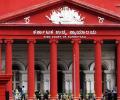
The Karnataka High Court declined to halt the state's socio-economic and educational survey (caste survey) but instructed the government to keep the collected data confidential and ensure participation is voluntary.
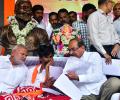
Petitions challenging the Maharashtra government's decision to issue Kunbi caste certificates to the Maratha community for reservation have been filed in the Bombay High Court. The pleas claim the decision is arbitrary and unconstitutional.

The Karnataka government will conduct a new 'Social and Educational survey', popularly known as 'caste census', in the state for 15 days, from September 22 to October 7. The survey aims to eliminate caste discrimination and gather data on financial status and land ownership.
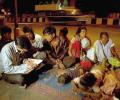
The Social and Educational Survey, popularly known as the 'caste census' in Karnataka, commenced on Monday, with enumerators going door-to-door to collect data.
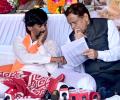
Talks between Maratha quota agitation leader Manoj Jarange and a government delegation ended without a resolution in Mumbai. Jarange criticized the Chief Minister and vowed to continue his hunger strike, demanding a 10% quota for Marathas under the OBC category.
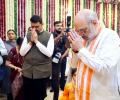
'Devendra Fadnavis is stating that Marathas must feel OBCs are not happy with reservations for the Marathas and therefore they are protesting.'
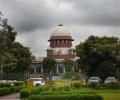
The Supreme Court has stayed the Calcutta High Court's decision that stalled the implementation of a revised list of Other Backward Classes (OBCs) in West Bengal, providing relief to the state government.
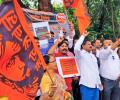
The Bombay high court on Friday constituted a three-judge special bench to hear the pleas challenging the constitutional validity of the law providing Maratha reservation following a Supreme Court directive.
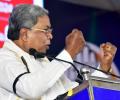
A special cabinet meeting in Karnataka convened to discuss the contentious Social and Educational Survey report, popularly known as 'caste census', ended without a decision. The cabinet will reconvene on May 2 to discuss the report further and make a final decision.

The judgment will impact a sizeable number of people in the state, according to a lawyer involved in the matter.

With the Bihar government releasing the findings of its caste survey, pressure seems to be mounting on the Karnataka government, especially within the ruling Congress, to make the state's Socio-economic and Educational Census, popularly known as the 'caste census', public.
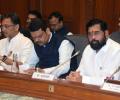
A substantial number of castes and groups are already placed in the reserved category, getting about 52 per cent of reservations altogether. It would be completely inequitable to place the Maratha community in the Other Backward Class (OBC) category, it said.
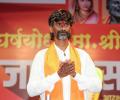
Quota activist Manoj Jarange has announced that he will start an indefinite hunger strike at Azad Maidan in Mumbai from January 20 to intensify his demand of reservation for the Maratha community.

Maharashtra Chief Minister Eknath Shinde on Wednesday said the all-party meeting held earlier in the day decided that reservation should be given to the Maratha community without tampering with the existing quotas of other communities in the state.

Shinde also said directives will be issued to give the Kunbi caste certificates to blood relatives of a person who already possesses similar documents.
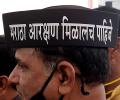
The decision comes a day after Chief Minister Eknath Shinde said a government-appointed committee scrutinised 1.72 crore old documents (including those of Nizam-era) and among them, 11,530 records were found where Kunbi caste was mentioned.
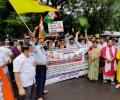
Elections to local governing bodies can be held now with OBC quota in Maharashtra, with the Supreme Court giving its nod on Wednesday, Deputy Chief Minister Devendra Fadnavis said in Mumbai.
The Maharashtra Legislative Assembly on Monday passed a resolution urging the Centre to provide the 2011 census data to enable the State Backward Class Commission to prepare an empirical data of the OBC population, in a bid to restore political reservations for its members in local bodies.

Once the Bill is passed in the assembly and notified, the Marathas will be entitled to reservation in the government jobs and in admission in government institutions.
In its reply, the state government said reservation solely on the basis of religion is also contrary to the principles of social justice and the concept of social justice aims to protect those who are deprived and discriminated against within the society.
The government on Thursday listed bills on personal data protection, to amend forest conservation laws and on the contentious ordinance on Delhi services for the monsoon session of Parliament beginning next week.

Behind its high-decibel campaign, powered by well-organised party machinery, the BJP also appears to have made a slight departure from its 'next generation' approach to stay ahead of an aggressive Congress and enhance its prospects of securing a majority of seats.

Any move of the present government to appease the Marathas may boomerang. Eknath Shinde is a worried man with the agitation not having an easy solution, notes Ramesh Menon.
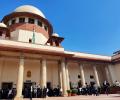
The Supreme Court Wednesday directed the Maharashtra State Election Commission to notify the programme for local bodies elections within two weeks.
The court further held that the state's legislative competence is not affected by the amendment to Article 342(a) of the Constitution of India.
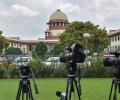
The apex court said that status of those who have already taken benefits of the 2018 law shall not be disturbed.

The Madras high court on Wednesday declined to grant a total stay against the 10.5 per cent Vanniyar quota but held that admission in higher educational institutions and appointment in government services will be subject to the outcome of the batch of petitions challenging the same.

The Maharashtra government will bring an ordinance to grant OBC quota in upcoming by-elections to a set of local governing bodies without crossing the Supreme Court-mandated 50 per cent cap on reservation, said state minister Chhagan Bhujbal on Wednesday.
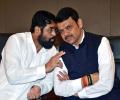
Eknath Shinde knows he can't possibly make all the MLAs loyal to him ministers. How will they be satisfied? And to satisfy them, the BJP will have to play ball.

Haryana assembly on Tuesday unanimously passed a bill to provide reservation to Jats and five other communities in government jobs and educational institutions
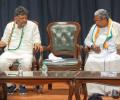
There are lessons for the Congress to learn from the Karnataka elections of how burying the hatchet among top leaders and not washing dirty linen in public can help, says Ramesh Menon.

Marathas have been declared as socially and educationally backward class of citizens and have inadequate representation in services under the state. They are entitled to reservation benefits and advantages enshrined in the Articles 15(4) and 16(4) of the Constitution, the recommendations mentioned.

Senior NCP leader and Maharashtra minister Chhagan Bhujbal on Wednesday said the Supreme Court order on the Other Backward Classes (OBCs) quota was a setback to the state government and it should do everything it can to save the community's reservation.
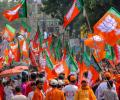
The 12 suspended members are -- Sanjay Kute, Ashish Shelar, Abhimanyu Pawar, Girish Mahajan, Atul Bhatkhalkar, Parag Alavani, Harish Pimpale, Yogesh Sagar, Jay Kumar Rawat, Narayan kuche, Ram Satpute and Bunty Bhangdia.
The Supreme Court on Wednesday directed the Maharashtra government to submit data on Other Backward Classes to the State Backward Classes Commission to examine its correctness and make recommendations on their representation in elections for the local bodies.
The top court, which refused to pass any interim stay order on the quota, said chances of physical court seem remote due to the persisting COVID-19 pandemic. A bench of Justices L N Rao, Hemant Gupta and S Ravindra Bhatt asked the parties said that all parties should sit together and decide on modalities of hearing like who will take how much time and no one shall repeat the arguments.

The perception is rapidly gaining ground that though the chief minister is from the Shiv Sena, the government is being run by the NCP.

The government would extend to the Maratha community the educational concessions given to OBCs.
 © 2026 Rediff.com - Investor Information - Advertise with us - Disclaimer - Privacy Policy - Sitemap - Feedback - About us - Terms of use - Grievances