
'Panchamda created an exclusive theme music for Gabbar Singh, which is used throughout the film every time the dacoit makes an appearance, and in both concept and sound, is so eerie and evil.'
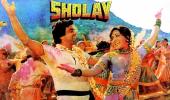
Celebrating Sholay's 50th anniversary on August 15 with a special series, where contemporary film folk analyse the cult classic.
Singer-composer Lalit Pandit, as a child, was part of the chorus that sang songs like Sare Ke Sare Gama Ko Lekar Gaate Chale and Rona Kabhi Nahi Rona. He went on to become one of Bollywood's most prominent composers along with brother Jatin.
Lalit looks back at the chartbuster music of Sholay, composed by R D Burman, and discusses the impact of the film and its composer on Jatin-Lalit's music.
"Jatin and I composed the music for a 1997 action drama, Davaa. One of the songs, Dil Mein Hai Tu, Dhadkan Mein Hai Tu was inspired by the rhythm of Sholay's Mehbooba Mehbooba," Lalit tells Rediff Senior Contributor Roshmila Bhattacharya,.
'Sometimes, despite giving your best, the magic doesn't happen'
Sholay was a blockbuster bahut chali and today, it's considered a cult classic, thanks to Salim Khan and Javed Akhar's powerful writing, Ramesh Sippy's assured direction, the superlative performances by the large ensemble cast and of course, its chartbusters.
The opening song, Yeh Dosti, is an apt choice for the situation and so well picturised ki sur jam gaya, setting the stage for a really special album.
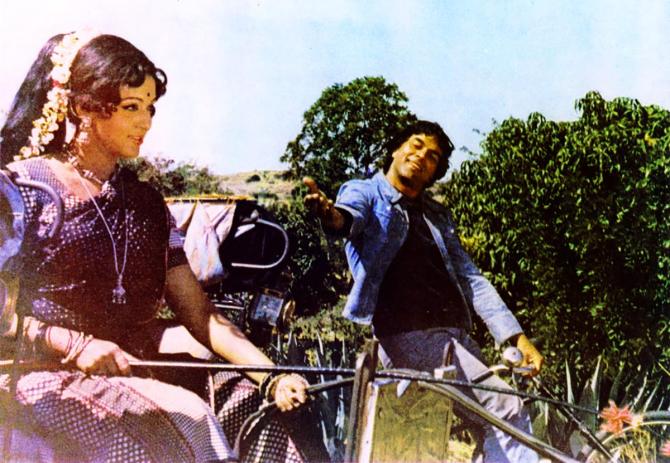
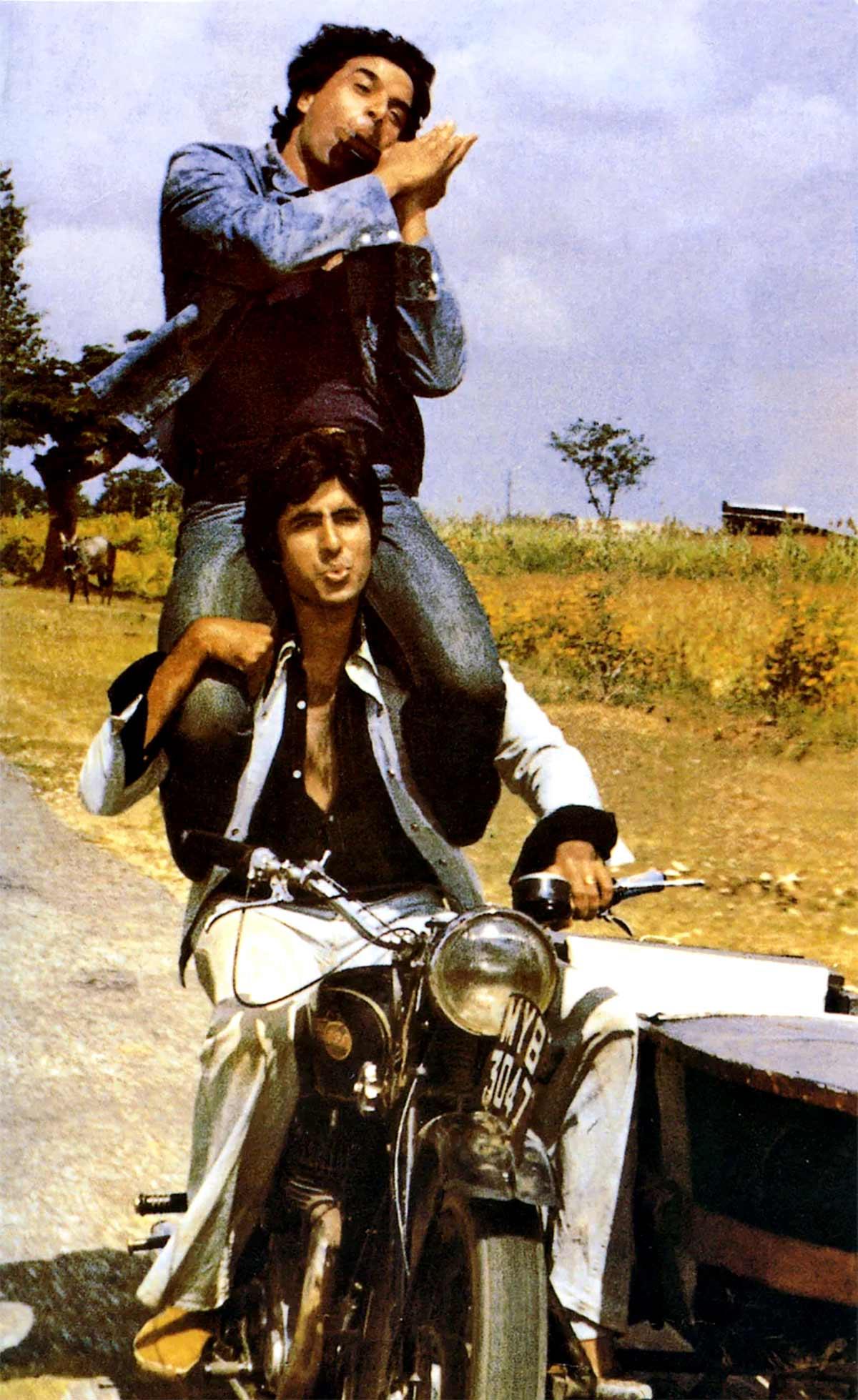
Given that it's an action film with just one conventional romantic track between Veeru and Basanti -- Jai and Radha's feeling for each other remaining unspoken -- there was scope for only one love song, Koi Haseena Jab Rooth Jaati Hai which became very popular after Sholay's release, elevated by Dharamji's (Dharmendra) on-screen ched chaad.
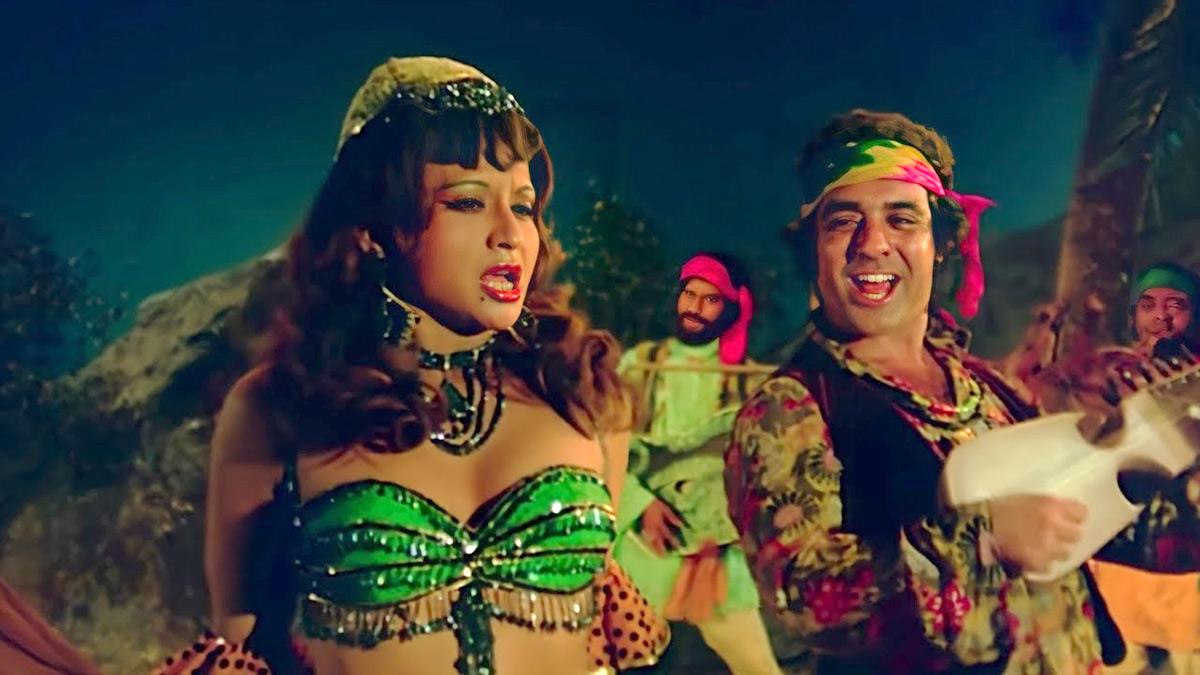
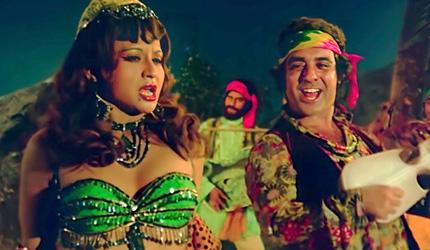
Mehbooba Mehbooba, of course, is a cult hit today.
Maybe Holi Ke Din doesn't rank among the festival favourites, but Jab Tak Hai Jaan, playing out in a tense situation, is an excellent composition.
'Panchamda gave the opening scenes the epic feel of The Good, The Bad And The Ugly'
Sholay had some good songs, but as a composer, what makes the film special for me was Panchamda's (R D Burman) superlative background score.
The melody is so strong and the guitar chords are so uniquely Panchamda that you know immediately this wasn't composed by an arranger.
Having done the background score of Kuch Kuch Hota Hai with my brother Jatin Pandit, I can assert that when a music director does the background score himself, he gives it ek alag hi shakal.
Panchamda gave the opening scenes the epic feel of Sergio Leone's 1966 spaghetti western The Good, The Bad And The Ugly.
Even the tabla beats you hear when Basanti is trying to escape the goons are no ordinary beats.
Panchamda got his guru, Sangeet Natak Akademi Award winner and Padma Bhushan recipient Pandit Samta Prasad, to play for him during that scene.
The combination of western bass and strings with Panditji's tabla beats is lajawaab.
'Panchamda's music breathes life into scenes'
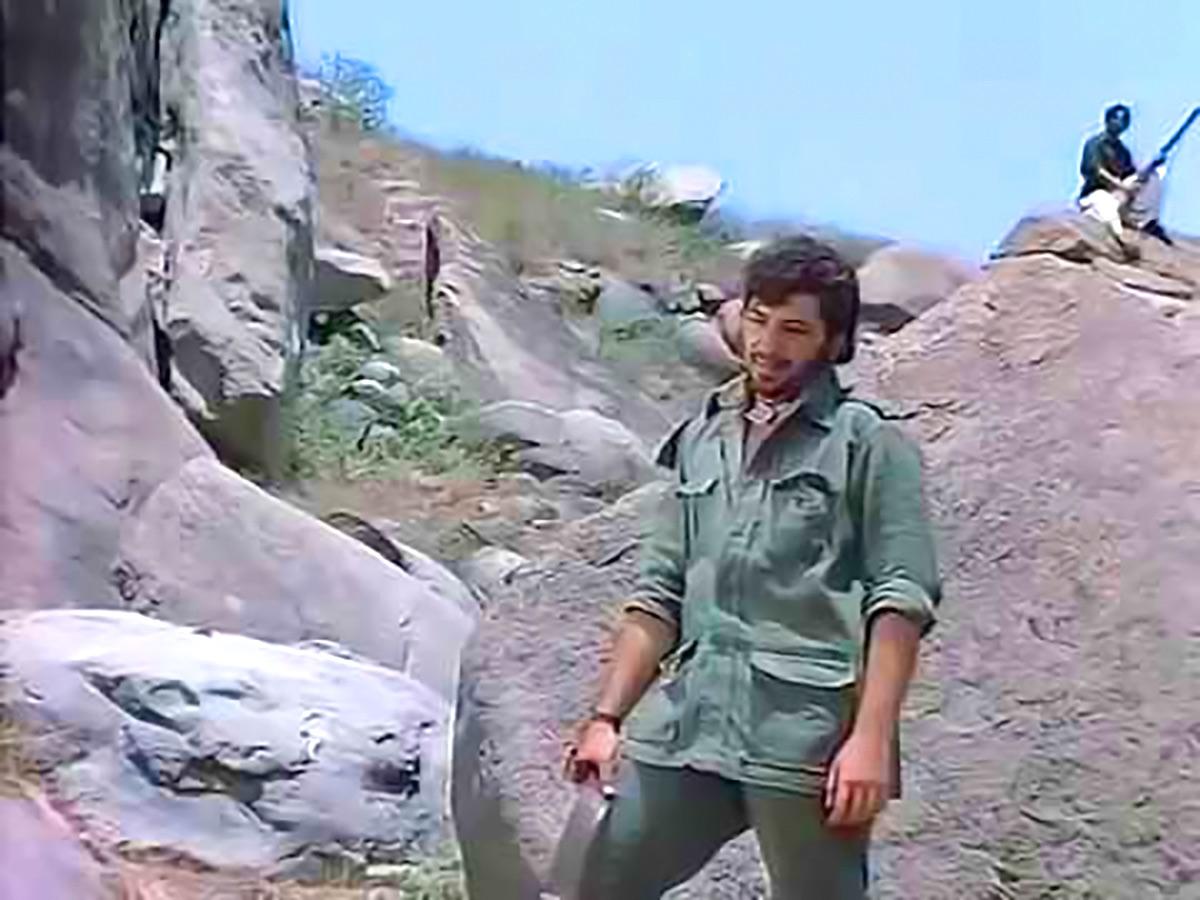
Then there's that beautiful scene where Jai is watching Radha douse out the lanterns while playing the mouth organ.
Not a word is spoken, yet so much -- pain, love, loss, loneliness -- is conveyed through those notes. Such was the genius of Panchamda.
He had assisted his father S D Burman on films like Jewel Thief, including the evergreen gem, Hothon Pe Aisi Baat, and was strong in both melody and rhythm which is brilliantly showcased in Sholay.
The elaborate background score took him a long time to complete, but Ramesh Sippy gave him a free hand.
Panchamda even created an exclusive theme music for Gabbar Singh, which is used throughout the film every time the dacoit makes an appearance, and in both concept and sound, is so eerie and evil.
Just before Gabbar massacres Thakur's family, you can almost hear the wind whistle through a silence which is full of dark foreboding.
Panchamda's music breathes life into scenes like these and more.
'As children, Jatin and I had sung some of Panchamda's songs'
When Jatin and I became independent composers, we were recording the songs of Jo Jeeta Wohi Sikander at Mumbai's Film Centre.
Panchamda had recorded Sholay and several other films at the same recording studio, and whenever we ran into any problems with the machines, we would land up at his place and he would advise us.
On the right side of the studio gate was a cassette shop, and one day, as he was entering, he heard Loveria Hua from Raju Ban Gaya Gentleman playing.
He asked Manoharida, his saxophone player, who had composed the song and was delighted when told it was the Pandit brothers, Jatin and Lalit.
He knew us as the sons of singer and musician Pandit Pratap Narayan.
As kids, we had sung some of Panchamda's songs, like Parichay's Sare Ke Sara, Gama Ko Lekar, Gaate Chale and Rona Kabhi Nahin Rona from Apna Desh as part of the children's chorus.
He called us over, and complimenting us on the clarity of the sound, asked in his inimitable style, 'Achcha gana banaya, Loveria hua, idea kahan se aaya?'
'He described Pehla Nasha as a kamaal ka gaana'
After we completed the Jo Jeeta Wohi Sikander score, Nasir Hussain, the film's writer-producer, called Panchamda over and played the songs for him.
He was an old friend who had collaborated with Nasirsaab musically on several films like Teesri Manzil, Baharon Ke Sapne, Pyar Ka Mausam, Caravan, Yaadon Ki Baraat and Hum Kisise Kum Nahin.
Panchamda liked our songs very much.
His favourite song was Rooth Ke Humse.
He described Pehla Nasha as a 'kamaal ka gaana', and was also impressed with Yahan Ke Hum Sikander nand Jawan Hai Yaaron.
Panchamda didn't comment on other composers, but he always spoke very fondly about us and our 'fresh music'.
'R D Burman and Sholay still rule our hearts'
Kishoreda (Kishore Kumar), Lata (Mangeshkar) didi and Manna Dey enhanced Panchamda's songs with their vocals.
These singers, along with Ashaji (Asha Bhosle) and Rafisaab (Mohammad Rafi), knew exactly what a song needed to elevate it without having to be told.
Remember Shankar-Jaikishan's peppy Zindagi Ek Safar Hai Suhana from Ramesh Sippy's 1971 romantic-drama?
Even without seeing the visuals, you can visualise Rajesh Khanna careening down the streets on his bike without a care in the world because Kishoreda infused the song with so much energy, giving it punch and expression.
Panchamda himself sang Mehbooba Mehbooba so well; he was an all-rounder with a futuristic vision.
Twenty years later, Jatin and I composed the music for a 1997 action drama Davaa, starring Akshay Kumar and Raveena Tandon.
One of the songs, a six-minute duet sung by Kumar Sanu and Poornima, Dil Mein Hai Tu, Dhadkan Mein Hai Tu, was inspired by the rhythm of Mehbooba Mehbooba, which we tried to match.
Sanu's best song was with Panchamda, Kuch Na Kaho, Kuch Bhi Na Kaho from 1942 A Love Story, his last film.
We haven't tried such experiments since, but the title song of my upcoming film, Manu Kya Karega, has the masti and friendship bond of Yeh Dosti.
R D Burman and Sholay still rule our hearts.





 © 2025