
'A close look at the time-lines tells you that exactly as the back-channel negotiations were in their most crucial stage, "somebody" was planning the 26/11 attacks in Mumbai,' says Shekhar Gupta questioning Khurshid Mahmud Kasuri's account of a peace deal with India.

'It would not be incorrect to say that the Chinese-Pakistani strategy of containing India began in the aftermath of the 1965 war.'

'She was the only prime minister who won a decisive military victory.' 'She won a real war; she didn't play video games on prime time TV over surgical strikes!' 'She understood power better than any other politician, saw it as her birthright and used it with inborn expertise.' 'Every politician today who tries to be a "supremo" through populism and absolute control over his or her party is referring to the Indira Gandhi playbook!'
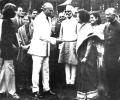
'Indira Gandhi, it appears, did not to consult her Cabinet colleagues, or diplomats, or civil servants when she decided to sign the agreement in Shimla.' 'We ruefully recall Bhutto's perfidy and the Indian prime minister's gullibility,' says Lieutenant General Ashok Joshi (retd).

'The biggest advantage for India was its seasoned and experienced political leadership who had spent decades struggling against the Raj and had spent years behind bars.' 'Not a single prominent leader of the Muslim League spent one day in jail.' 'Gandhiji, Nehru and Sardar Patel were intelligent, shrewd men with their hands on the popular pulse.'

It is unconscionable to choose between Sardar Patel, who united India physically, and Indira Gandhi, who gave meaning, content and pride to the unity of the nation and became a martyr at the altar of national unity, says Ambassador T P Sreenivasan.

Harassment, corruption and the burden of compound interest for years are also the reasons.

Muslims constitute 20% of UP's electorate. Currently, Muslim voters are divided between Akhilesh's SP and Mayawati's BSP. What will tilt the balance? Can Muslims back the winning party? Mohammad Sajjad explains the mysteries of UP's Muslim politics.
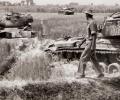
Declassified US documents of the era indicate.
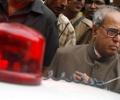
Coming down heavily on Pakistan, President Pranab Mukherjee has said unless it dismantles the terror infrastructure on its soil, there is no scope for progress in talks between the two countries.

'I want to be murdered at your hands, so I can live on in history. The verdict of who is or is not a traitor cannot be pronounced by a secret agency, but by history.' Pakistani journalist Hamid Mir, who survived an assassination attempt on April 19, challenges his enemies to dub him a traitor and says nothing will stop him from exposing them.

'For so long as the rulers of Pakistan remain committed to confronting and vanquishing India, they will sustain delusions, breed terrorists, and export them.'

Glimpses of the final days of the 1965 War, as seen from the diary then defence minister Y B Chavan maintained during the war.

'We don't know what the reasons were that we gave back the Haji Pir Pass which was strategically very important. Today the entire infiltration into Kashmir takes place from that area. If we had retained that post that we had captured, things could have been different.' 'A lesson we need to learn is if you start losing the gains of war at the negotiating table, they become a disincentive for future wars,' says Lieutenant General D B Shekatkar (retd), reviewing the lessons from the 1965 War.

'India was in no position to wage another war in 1965, having suffered a morale-shattering defeat in 1962. The three services were in the middle of a modernisation and expansion phase and therefore not fully trained or battle-ready.'

Three Indian Air Force officers held as Prisoners of War in a jail in Rawalipindi made a heroic escape. They reached as far as the Pak-Afghan border in Pakistan's Wild West -- within sniffing distance of freedom -- only to realise that they had finally met their match. Or so it seemed. The three escapees were never feted for their audacious attempt 41 years and truly deserve official recognition. Why not honour them at least now, says MP Anil Kumar.

The families of the Muslim youth from Hashimpura who were shot dead 28 years ago had some committed supporters in their long struggle for justice.
