
Dhurandhar's most dangerous idea is that Director Aditya Dhar envisions an Indian state run by a deep state -- an intelligence machinery not accountable to Parliament, courts, or voters. A future political system where unelected officials decide when Indian democracy is 'fit' to function, observes Syed Firdaus Ashraf.
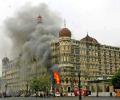
The trial of Abu Jundal, accused in the 26/11 Mumbai terror attacks, is set to resume after the Bombay High Court overturned a lower court order requiring authorities to hand over confidential documents to the accused.

The various transcripts and telephonic conversations between the handlers and the attackers, which are in possession with the Mumbai police and the Intelligence Bureau, point out to the role of Syed Zabiuddin in the attacks.
Suspected Indian link to the 26/11 Mumbai carnage Syed Zabiuddin's family in Beed, Maharashtra, ostracised by its own people, is trying to come to terms with their son being labeled as a terror mastermind. In the second part of the terror trail, rediff.com's Prasanna D Zore travels to Beed, as he attempts to communicate with Zabiuddin's family.
Lashkar-e-Tayiba operative Abu Jindal, who was arrested in Delhi on Monday, was once called Syed Zabiuddin Syed Zakiuddin Ansari, according to police records. He was a member of the Students Islamic Movement of India in the 1990s and was known simply as Ansari. He was given the alias of Abu Jundal after he joined Lashkar.

The Congress party has claimed credit for the extradition of Tahawwur Rana, an accused in the 2008 Mumbai terror attacks, from the US, saying the Modi government did not initiate the process and merely benefited from the "mature, consistent and strategic diplomacy" begun under the UPA. Former Home Minister P Chidambaram said the government did not secure any breakthrough to make the extradition possible, nor is it the result of any grandstanding. He added that it was a testament to what the Indian state can achieve when diplomacy, law enforcement and international cooperation are pursued sincerely and without any kind of chest-thumping. Chidambaram detailed the UPA government's efforts in securing Rana's extradition, citing the registration of a case against him in 2009, diplomatic pressure on Canada and the US, and continued efforts despite legal setbacks. He highlighted the role of the UPA in securing Rana's conviction for other terrorism-related offences and the cooperation between the US and Indian agencies in gathering evidence and securing his extradition. The Congress leader further stated that it was the UPA's groundwork that paved the way for Rana's extradition, even after the change in government in 2014.

Tahawwur Hussain Rana, a Pakistan-born Canadian national and close associate of David Coleman Headley, could be extradited to India in connection with the 26/11 Mumbai terror attacks. Rana's travel history in parts of north and south India before the attacks in 2008 is expected to provide crucial leads for the investigation. His extradition would mark the third person to be tried in India for the attacks, after Ajmal Kasab and Zabiuddin Ansari alias Abu Jundal.
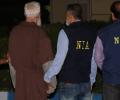
Tahawwur Hussain Rana, a key accused in the 26/11 Mumbai terror attacks, was brought to India on Thursday after being "successfully extradited " from the US, the National Investigation Agency (NIA) said. The 64-year-old Canadian citizen of Pakistani origin landed in Delhi in a special plane on Thursday evening, ending days of speculation of when and how he will be extradited, officials said. The NIA said in a statement that it had secured the successful extradition after years of sustained and concerted efforts to bring to justice the key conspirator behind the 2008 mayhem that claimed 166 lives. Rana is accused of conspiring with David Coleman Headley alias Daood Gilani, and operatives of designated terrorist organisations Lashkar-e-Taiba (LeT) and Harkat-ul-Jihadi Islami (HUJI) along with other Pakistan-based co-conspirators, to carry out the the three-day terror siege of India's financial capital.

Tahawwur Hussain Rana, a Canadian national convicted in the United States for his role in the 2008 Mumbai terror attacks, has been extradited to India. Rana, a close associate of Pakistani-American terrorist David Coleman Headley, was involved in the conspiracy from 2005 onwards and assisted Headley in obtaining a visa for India. He is the third person to be sent on trial in India for the 26/11 attacks after Ajmal Kasab and Zabiuddin Ansari alias Abu Jundal. Rana's extradition comes after US President Donald Trump approved the request.
'Abu Hamza', who has been linked to several terror strikes in the country, including the 2005 attack on the prestigious Indian Institute of Science in Bangalore, is dead, if the statement of 26/11 key handler Syed Zabiuddin is to be believed.
Sayed Zabiuddin alias Abu Jundal's first brush with the law came at the age of 22 when he was arrested in Maharashtra in 2003 for allegedly stabbing a woman with whom his family had a marital dispute. Zabiuddin, the arrested key handler of 26/11, had attacked Fateema Sheikh Jaleel with a sword and also attempted to burn her, according to Maharashtra police sources.
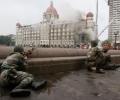
Key plotters of the 26/11 have once again escaped arrest upon the advice of Pakistan's intelligence agency, Inter-Service Intelligence officers.
Zabiuddin Ansari alias Abu Jundal has been spilling the beans about how the entire 26/11 operation was executed from Karachi with the blessings of Lashkar-e-Tayiba founder Hafiz Mohammad Saeed. Rediff.com's Vicky Nanjappa gives details of his ongoing interrogation
Does the deportation of 26/11 prime accused Abu Jundal/Abu Hamza/Zabiuddin Ansari by Saudi Arabia signal a tectonic shift in India's Middle-East policy? Colonel (retd) Anil Athale tries to explain.

'As Rana is not an Indian citizen, our leverage on the US system -- whether it's their judiciary or the executive -- is very limited in that sense.'

India may get access for the second time to Mumbai attacks terrorist David Headley and his accomplice Tahawwur Hussain Rana, reports Vicky Nanjappa.
Alleged Laskkar-e-Tayiba operative Sayed Zabiuddin Ansari, alias Abu Jundal, wanted to take part in the 2008 Mumbai terror attack by landing in the city along with others, according to his confession.
In its chargesheet, the NIA has alleged that Jundal during 2011 and 2012 had made "deliberate attempts for recruiting different persons through internet for joining Lashker-e-Tayiba terror organisation and carry out terror activities in India."
The special Maharashtra Control of Organised Crime Act court on Friday framed charges against 26/11 handler Zabiuddin Ansari alias Abu Jundal in the 2006 Aurangabad arms haul case. The court filed charges against Jundal under sections of MCOCA, the Indian Penal Code, the Arms Act, the Explosive Substance Act and the Unlawful Activities Prevention Act.

Citing security reasons, the Maharashtra government on Wednesday opposed the plea of Zabiuddin Ansari alias Abu Jundal, alleged LeT operative, urging that he be removed from the solitary confinement of a cell in Arthur Road Central prison and be kept with other undertrials.

Sayed Zabiuddin Ansari alias Abu Jundal, a 26/11 mastermind and prime accused in a conspiracy case of attack on Maharashtra Police Academy in Nashik, has complained to a local court that he was tortured with electric shocks by police, a charge denied by the prosecution.
A local court has granted permission to start trial against alleged LeT operative and Mumbai terror attack accused Sayed Zabiuddin Ansari alias Abu Jundal's in a special district and sessions court in the case of conspiracy to attack Maharashtra Police Academy
Pakistan Foreign Secretary Jalil Abbas Jilani arrives in New Delhi on Tuesday to hold talks on Wednesday with his Indian counterpart Ranjan Mathai during which arrest of LeT terrorist Zabiuddin Ansari, who revealed Pakistan's involvement in November 2008 Mumbai terror attacks, is expected to be raised by New Delhi.
The Anti-Terrorism Squad of the Maharashtra police on Wednesday told the special Maharashtra Control of Organised Crime Act court in Mumbai that the Lashkar-e-Tayiba operative and a key 26/11 handler Sayed Zabiuddin Ansari alias Abu Jundal was involved in terror activities since as far back as 1996.

Mumbai terror attacks handler Zabiuddin Ansari alias Abu Jundal, who is lodged at the Arthur Road jail in the megapolis, is in a serious condition, according to his advocate Ejaz Naqvi.
Lashkar-e-Tayiba operative Zabiuddin Ansari, alias Abu Jundal, an accused in the 26/11 Mumbai terror attacks and several other cases, today orally retracted his confession, claiming before a MCOCA court here that he has been falsely implicated and his signature obtained under duress.
"Forensic experts would be called soon to conduct Jundal's voice measurement through audio spectrometer. Besides his interrogation, his voice sample collection is one of our top priorities during the custody period," a Crime Branch official said.
Days after terror suspect Zabiuddin Ansari's revelations about the November 26, 2008 Mumbai attacks being controlled and facilitated from Karachi, Pakistani authorities have claimed 40 Indian nationals were involved in the terrorist incident.
Days after he claimed terror suspect Zabiuddin Ansari could have mounted a "sting operation" to carry out the Mumbai attacks from Pakistani soil, Interior Ministry chief Rehman Malik on Sunday demanded that India apologise for sending Surjeet Singh to spy in Pakistan.
The Gujarat Anti-Terrorism Squad was on Saturday granted the custody of 26/11 key handler Abu Jundal by a Delhi court in connection with the 2006 train blast at Ahmedabad station in which he is alleged to be one of the main conspirators.

The Mumbai police on Tuesday filed a supplementary chargesheet in the 26/11 terror attack case naming Lashkar-e-Tayiba operative Zabiuddin Ansari alias Abu Jundal as one of the key conspirators.
A local court is likely to frame charges against lashkar-e-Tayiba operative and key 26/11 handler Sayed Zabiuddin Ansari alias Abu Jundal next month in the 2006 Aurangabad arms haul case.
In a crucial evidence in Mumbai26/11 terror attack case, the voice samples of arrested Lashkar-e-Tayiba operative Sayed Zabiuddin Ansari alias Abu Jundal have matched with ones on the terror tapes intercepted during the strike.
30-year-old Jundal, who has been confronted with Ajmal Kasab -- the lone surviving Lashker terrorist in the Mumbai terror attacks, was produced before a metropolitan magistrate in his chamber, official sources said. Besides the two, a court clerk was also present during the proceedings.
Lashkar-e-Tayiba operative and a key 26/11 Mumbai attack handler Sayed Zabiuddin Ansari alias Abu Jundal sent money to India at least twice after the Mumbai attack, the chargehseet filed against him in another case in Mumbai says.
Maharashtra Home Minister R R Patil on Friday said in the legislative assembly that records did not show that terror suspect Syed Zabiuddin Ansari alias Abu Jundal, arrested last month in Delhi, had stayed in the MLA hostel rooms of state Minister Fauzia Khan in 2006.
The Anti-Terrorism Squad of the Maharashtra police on Saturday filed a supplementary chargesheet against alleged Lashkar-e-Tayiba operative and 26/11 Mumbai attack handler Sayed Zabiuddin Ansari, alias Abu Jundal, in connection with the 2006 Aurangabad arms haul case. "We have filed a 3,650-page chargesheet against Jundal, and named him as an key accused," said an ATS official.
India will give Pakistan a dossier on LeT terrorist Syed Zabiuddin Ansari, alias Abu Jundal, during Indo-Pak Foreign Secretary-level talks in New Delhi on Wednesday including the passport issued by Pakistan indicating the involvement of state agencies of that country.
Abu Jundal gives interrogators information on Sajid Mir, two Majors and Zarar Shah -- all four of whom were in the 26/11 control room in Karachi
Sayed Zabiuddin alias Abu Jundal, a prize catch in 26/11 terror case, picked up his first lessons in terrorism when Lashker-e-Tayiba terrorist Mohammed Aslam alias Aslam Kashmiri arranged for his arms training in Nepal in 2004.
