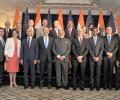
Prime Minister Narendra D Modi's itinerary for his June 21-24 US visit could include an address to a fledgling business advocacy group, the US-India Strategic Partnership Forum.

No prizes for guessing what the BJP's election campaign is going to be, and who will provide important inputs for it.

India and the US on Thursday said they are looking forward to the reconvening of the India-US Trade Policy Forum later this year to further enhance trade relationship and identify new areas for engagement.

India has issued a notice to Pakistan for modification of the Indus Waters Treaty of September 1960 following Islamabad's "intransigence" on its implementation

India's dream to be in the forefront of international politics has come true. India has placed itself firmly as a major player in the shaping of a new world order, observes Ambassador T P Sreenivasan.

'China seems more intent on creating a new world order rather than shaping the existing one.' 'India is of course, at this moment in time, aligned with the West-led order because of China's full-spectrum aggressive behaviour towards India.'
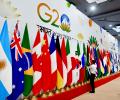
The silver lining for India's presidency is likely to be the support by almost all G20 countries to its proposal to include the African Union as a permanent member of the bloc that has emerged as perhaps the most influential multilateral forum after the United Nations.
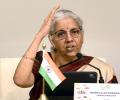
'I'm pitching India for the strengths we offer, including the English language, engineers, doctors, nurses, professionals, innovative talent of startups.'
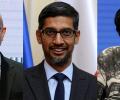
Brand India's societal divisions and distortions have remained as much relevant in 'liberal' America and Europe as it still is in the structurally stratified Indian society of the 21st century, observes N Sathiya Moorthy.

Even as India strives to climb the development mountain, the fact is that the mountaintop is already crowded. If it got there in 2047, India would be very much a late-comer, observes T N Ninan.

Ahead of the Union Budget for 2023-24, Budget makers have welcomed the global consensus view that India will remain one of the bright spots in calendar year 2023. But there is some alarm over the grim global situation and how that might impact the Centre's projections and assessments for next financial year. The big global headwinds include a deep and sustained recession in the West, including India's biggest trading partners in North America and Europe, continuing volatility in commodity markets, and renewed Covid-19 fears, as lifting of strict curbs by China could potentially lead to a massive spread again.

Fitch on Tuesday affirmed India's sovereign rating at 'BBB-' with a stable outlook, on robust growth and resilient external finances, but said weak public finances remain a challenge. India's rating has been unchanged at 'BBB-', which is the lowest investment grade, since August 2006. "Fitch Ratings has affirmed India's Long-Term Foreign-Currency Issuer Default Rating (IDR) at 'BBB-' with a Stable Outlook," it said in a statement, adding strong growth potential is a key supporting factor for the sovereign rating.
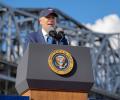
On Friday, Biden announced his intent to appoint 14 people to the advisory committee, which provides overall policy advice to the United States trade representative on matters of development, implementation, and administration of the US trade policy.

In the jobs created in 2022, the share of those in the age group 18-25 increased to at least a five-year high of 56 per cent. A Business Standard analysis of the monthly Employees' Provident Fund Organisation (EPFO) payroll data shows in 2018 the share of youths among the new EPFO subscribers was 50.9 per cent. The National Statistical Office is releasing the monthly EPFO payroll data since April 2018 as part of the government's effort to track formal-sector employment by using payrolls as an instrument.

Today, with the Lok Sabha polls only months away, any inter-state dispute over the Cauvery water dispute has the potential to take more political turns than otherwise, predicts N Sathiya Moorthy.
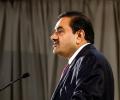
In the context of market integrity, the IRAI and RBI should go over the minutes of the LIC and SBI board meetings when the decisions to invest in Adani equity or debt were taken, notes Jaimini Bhagwati, former World Bank treasury professional.

Of $90 billion remittances that India is expected to receive in 2022, only $27.4 billion has come in the first half of the year.
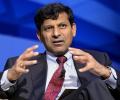
The argument that India is going towards a 'Hindu rate of growth' is "ill-conceived, biased and pre-mature" when weighed against the respective data on savings and investments, said SBI Research in its Ecowrap report. The term Hindu rate of growth was coined by economist Raj Krishna in 1978, which denoted the economic growth of about 3.5-4.0 per cent in terms of GDP during 1947-1980. "India's quarterly sequential Y-o-Y GDP growth has been in a declining trend in FY23.

Modi thanked his Australian counterpart for supporting him in unveiling the foundation stone of 'Little India', a suburb of Sydney.

7 key areas that the Budget must address to re-energise the infrastructure sector, suggests Vinayak Chatterjee.

Prime Minister Narendra Modi Wednesday said the International Monetary Fund (IMF) sees India as a "bright spot" in the global economy and as per the World Bank, India is in a better position to deal with the global headwinds than many other countries. This is because of India's strong "macroeconomic fundamentals", Modi said while virtually addressing the inaugural function of the 7th edition of Invest Madhya Pradesh-Global Investors Summit in Indore. In the past eight years, the government has increased the speed of reforms and removed many hurdles in the way of investments.

Economist Abhijit Sen, a former Planning Commission member and one of the country's foremost experts on rural economy, died on Monday night. He was 72.

It is high time the Indian government signalled discomfort with the UK providing refuge to those accused of financial crimes in India, states Jaimini Bhagwati.

Embracing the habit of SIPs can pave the way for a financially secure and prosperous future, points out Misbah Baxamusa.
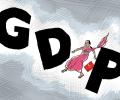
India's economy continues to be robust, but downside risks such as rising crude oil prices, adverse weather conditions, and the global banking crisis outweigh the upside potential in gross domestic product (GDP) growth in the current financial year (FY24), the finance ministry said on Tuesday in its Monthly Economic Review for March. "We reiterate that downside risks to our official forecast of 6.5 per cent for real GDP growth in FY24 dominate upside risks," the review said. "Opec's surprise production cut has seen oil prices rise in April, off their lows of low-seventies per barrel in March.

Significantly, for the first time, the FATF put Myanmar in the "high risk jurisdictions subject to a call for action", often referred to as the watchdog's black list.

'I think my first obsessive, possessive and only half-requited -- as we would joke -- 'love' was Ivan. I saw him first slouching down the corridor of St Stephen's College nearly 50 years ago and was instantly smitten (as was everyone else around him).'

Happily, it does not require the world to hold a mirror up for us. We can look at ourselves and understand easily if we choose to be honest about where we find ourselves three quarters of a century after Independence, asserts Aakar Patel.

The statement of the Minister of State in the Prime Minister's office comes on the heels of India issuing a notice to Pakistan seeking a review and modification of the IWT in view of Islamabad's "intransigence" in complying with the dispute redressal mechanism of the pact that was inked over six decades ago for sharing of waters of cross-border rivers.
India has been relatively insulated from the severe headwinds in the West. However, with a third of the global economy expected to slip into recession in calendar year 2023, the impact will strongly be felt on India's exports and trade economy, leading economists said in a panel discussion at the Business Standard BFSI Insight Summit in Mumbai on Wednesday. The panel comprised former Reserve Bank of India executive director and former Monetary Policy Committee member Mridul Saggar, State Bank of India Chief Economic Advisor Soumya Kanti Ghosh, Citibank India Chief Economist Samiran Chakraborty, ICRA Chief Economist Aditi Nayar, and IndusInd Bank Chief Economist Gaurav Kapoor. The topic of the panel discussion was No recession in sight: Is India decoupled from developed economies?

Go-getter, ambitious, dynamic, workaholic are some of the adjectives that officials who worked closely with B V R Subrahmanyam use to describe him.

'By design or default, the BJP's election strategy militated against the very essence of Karnataka politics and the idea of Karnataka.'

The country's demographic dividend is dissipating, with seriously adverse consequences for young India, asserts Shankar Acharya, former Chief Economic Adviser to the Government of India.
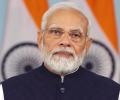
Prime Minister Narendra Modi on Friday expressed hope that G20 will draw inspiration from the vibrancy of the Indian economy and work towards bringing back stability, confidence and growth on the global landscape.

'The BJP's defining character is Hindutva. The party's political strategy is based on a combination of Hindutva+Development.'

Nobody is held accountable for lapses, no matter how badly it affects the person or business whose accounts are frozen. Nor is there compensation for losses. Most people get to know their accounts are blocked only when a cheque bounces, points out Debashis Basu.

Chief Economic Adviser V Anantha Nageswaran on Thursday said cryptocurrencies are akin to 'a world of Caribbean pirates' in the absence of a centralised regulatory authority and are yet to pass the test of a fiat currency. He said that the government is pursuing a 'high-wire balancing act' to ensure that the gains in growth, inflation, and rupee stability of the last four years are not frittered away. He said the recent development in Terra-Luna cryptocurrency, which witnessed a massive meltdown last month, is a 'very important cautionary tale'.

What do we need more of: Leaders who dominate global institutions or local leaders with a 'Make-in- India' mindset?

In a matter of six years, India emerged as the world's third-largest economy in 2011 from being the 10th largest in 2005, moving ahead of Japan, while the US remained the largest economy closely followed by China, latest figures have revealed.

In the first such collaboration for India, the country's flagship payments platform, the Unified Payments Interface (UPI), and Singapore's PayNow payment system have launched a real-time cross-border payment linkage system. The linkage, which was launched by Prime Minister (PM) Narendra Modi and Singapore's PM Lee Hsien Loong on Tuesday, was kicked off by a live cross-border transaction between Reserve Bank of India Governor Shaktikanta Das and Monetary Authority of Singapore managing director Ravi Menon, using mobile phones.
