
The facility, which will manufacture nicotine and nicotine salts, will conform to stringent US and EU pharmacopoeia standards that define purity levels at 99.2 per cent for nicotine meant for pharmaceutical products. ITC will leverage the institutional capabilities of its century-old leaf tobacco business for this. ITC's cigarettes business saw disruptions across the value chain with the onset of the Covid-19 pandemic. The company mentioned in its annual report that with easing of restrictions and improvement in mobility from September 2020 onwards, the business recovered progressively over the remainder of the year to reach nearly pre-Covid levels towards the close of the year.

Experts say it is difficult to determine country of origin where most products are manufactured and sold, as part of a complex global value chain.

Mindtree on Thursday said it will acquire the NxT Digital Business from Larsen and Toubro (L&T) for Rs 198 crore, a move that will enable the mid-sized IT firm to capture opportunities in the IoT and Industry 4.0 space. The acquisition would enable Mindtree to capture opportunities in the IoT and Industry 4.0 market by leveraging NxT Digital Business capabilities to cross-sell and create holistic solutions for new prospects as well as for existing clients, a regulatory filing said. Capability in this space will bolster Mindtree's vision to leverage existing digital strengths and aim to become a 'Go-to business transformation partner' for clients, it added.
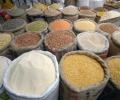
The amendments to the six-and-half-decade law provides that stock holding limit on commodities will only be imposed under exceptional circumstances like national calamities, famine with a surge in prices, the minister said.

Passenger vehicle dispatches from factories to dealers declined 13 per cent to the lowest level in five years in December last year as the industry continued to face production issues due to semiconductor shortage, auto industry body SIAM said on Friday. Passenger vehicle dispatches last month stood at 2,19,421 units compared to 2,52,998 units in December 2020. While acknowledging that the chip shortage situation is not expected to dramatically change in the short term, the industry body expressed hope that things will improve soon.

CEOs expect to finish the ongoing March quarter with positive growth as the corporates get back to work in full strength.

'There will always be a challenge to maintain a fine balance to ensure that the growth keeps happening and inflation is contained.'

'Health will continue to be at the centre of the government's attention as it underpins economic recovery and our collective well being.'

The department for promotion of industry and internal trade has rejected Walmart-backed Flipkart's proposal seeking approval for entry to the food retail sector, citing a regulatory issue, an official said on Monday. The government permits 100 per cent foreign direct investment in food retail for food produced and manufactured in India.

On a standalone basis, the company reported a net loss of Rs 249.4 crore for the first quarter ended June 30. Net sales declined to Rs 3,679 crore in the first quarter as against Rs 18,738.8 crore in the year-ago period.

It also asked the technology giant to ensure more transparency in the revenue reports provided to publishers.

India must remain an integral part of the global economy if it has to grow at 9-10 per cent over the next three decades, Niti Aayog CEO Amitabh Kant said on Tuesday. Speaking at the 15th India Digital Summit, Kant said India needs to become a major global exporting nation, without that it will not be possible to become richer and create wealth for its people over the next three decades.

A greater payment security mechanism for power generation companies to ensure timely payouts for supply of electricity will be in focus in 2022 as stricter rules are on the anvil for 24x7 power supply amid discoms' outstanding dues at a whopping Rs 1.56 lakh crore. Mounting outstanding dues of distribution companies (discoms) to electricity generation companies (gencos) have been a perennial issue affecting the entire value chain in the power sector and are also a hindrance for the ambitious goal of 24x7 power supply across the country even when the payment for coal is made in advance. The situation persists despite the fact that discoms' dues become overdue after 45 days of generating bills and they also have to pay penal interest on the overdue amount in most of the cases to gencos.

Billionaire Mukesh Ambani-led Reliance Industries Ltd's plans for investing Rs 75,000 crore in solar, batteries, fuel cells and hydrogen could create valuation of $36 billion (Rs 2.6 lakh crore) for the new energy business, Wall Street brokerage Bernstein Research said in a report. Reliance currently has three verticals -- oil-to-chemical (O2C) business that houses its oil refineries, petrochemical plants and fuel retailing business; digital services that comprises telecom arm Jio; and retail including e-commerce. New Energy will be the fourth vertical. At the company's annual general meeting of shareholders last month, Ambani announced a plan to invest Rs 75,000 crore in a new energy business over the next 3 years in the next stage in its transformation.
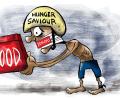
Given that there has been no negative news flow around Zomato, analysts believe it's time to lap up the shares at lower levels.

As India looks to scale up use of technology in agriculture, a recent study has found that with just 2 per cent of the cultivators in India using mobile applications for farm-related activities and real-time alerts, adoption of tech solutions such as Internet of Things (IoT) remains at a nascent stage. It also found almost 90 per cent of the existing start-ups and tech-based companies have solutions that are focused only on pre-harvest operations and not on post-harvest which has a higher investment potential due to the presence of big companies. In post-harvest operations, the study, Titled, IoT Adoption in Indian agriculture, that was conducted by industry body Nasscom along with Cisco India among more than 180 enterprises and 40 agritech start-ups found that unclear Return on Investments (RoI) is a big stumbling block for adoption of tech solutions like IoT.

The Indian information technology industry will need to move up the value chain to tackle competition from countries like China, Philippines and Vietnam, said Ratan Tata.
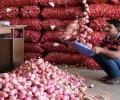
Despite onion prices hitting Rs 130 a kg in the wholesale market, farmers have not gained enough to make a profit this season. Farmers and other stakeholders in the value chain estimate that 30 per cent crop damage this kharif season would result in a decline of about 2 million tonnes in output from Lasalgaon district alone. Similar crop damage across the country could lead to an onion shortage of nearly 7 million tonnes this year.

Macroeconomic management is usually a lot more comfortable with lower fiscal deficits. The sooner we get there, the better for the economy, says former Chief Economic Adviser to the Government of India Shankar Acharya.

From Rs 191 billion in 2019, the world's largest film producing industry now stands at Rs 72 billion thanks to the pandemic.

India's traditional companies are now moving full scale into the renewable and alternative energy space that had been dominated by smaller players over the past decade. Companies such as government-owned NTPC and the Adani and the Tata groups restructured their businesses well in time to become major players in the green space. At the same time, other conventional companies, such as Larsen & Toubro and Reliance Industries Ltd (RIL), which have a presence both in the energy sector as well as myriad other activities - construction, technology and retailing - are tying up with new-age companies to hitch a ride to a greener path.

Confidence had ebbed in the last few years due to default by some errant domestic retailers and exporters. Moreover, many jewellers are believed to have diverted the fund collected through monthly deposit schemes to pay 'mark-to-market' margins on various loans.

The ministry of petroleum and natural gas has granted seven authorisations to companies for selling automobile (auto) fuels in the country. These new approvals are under the relaxed guidelines for authorisation to market transportation fuels that were revised in 2019. This is expected to make the competition more intense in India's petroleum retail business. According to a top oil ministry official, a fresh marketing authorisation has been granted to Reliance Industries (RIL) under these norms. This is being done since RIL's existing retail marketing authorisation has been transferred to its subsidiary Reliance BP Mobility

If there were an Olympics for bank frauds in India, Rishi Agarwal, founder and former chairman of ABG Shipyard Ltd, a nephew of the Ruia brothers of the Essar group, would bag the gold, pushing Nirav Modi to his right, says Tamal Bandyopadhyay.

'Investors should reduce cash gradually and look for value investing.'

With the threat of a third Covid-19 wave looming large, companies are scrambling to protect employees and keep operations safe--from a no-jab-no-entry-at-workplace policy to ramping up vaccination, it's an all-out effort to prevent the scale of devastation seen in the first two waves. At least two top steel companies--Tata Steel and ArcelorMittal Nippon Steel India (AM/NS India)--are pushing for vaccination certificates for entry into work premises. AM/NS India, a joint venture between world's leading steelmaker, ArcelorMittal, and Japan's Nippon Steel, is set to make vaccination the certificate a requirement from July 1.
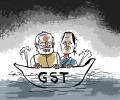
Experts said the rate hike would improve working capital position of the manufactures as it would correct the inverted duty structure but may lead to increase in price of the finished goods.

'We have focused on profitable revenue, cash generating businesses, throughout our journey.'

Countries that have signed the RCEP agreement can start negotiations with India for joining the pact once New Delhi submits a written request stating its intention for the same, according to a declaration. On November 4 last year, India walked out of mega free trade agreement RCEP (Regional Comprehensive Economic Partnership) as negotiations failed to address New Delhi's outstanding issues and concerns. The remaining 15 member countries have signed RCEP agreement and have stated that the pact would remain open to India.

The government on Wednesday approved a production-linked incentive (PLI) scheme for the pharmaceutical sector, entailing an outlay of Rs 15,000 crore. The Union Cabinet, chaired by Prime Minister Narendra Modi, approved the scheme which will benefit domestic manufacturers, help create employment and is expected to contribute to the availability of a wider range of affordable medicines for consumers. The duration of the scheme would be from 2020-21 to 2028-29 and is expected to promote the production of high value products in the country and increase the value addition in exports, an official release said.

Intelligent tools are being deployed to detect content pirated from OTT platforms.

Unveiling his infrastructure conglomerate's green vision, billionaire Gautam Adani on Tuesday said his group will invest $20 billion over the next 10 years in renewable energy generation and component manufacturing and will produce the world's cheapest green electron. The port-to-energy conglomerate plans to triple its renewable power generation capacity over the next four years, foray into green hydrogen production, power all data centres with renewable energy, turn its ports into net carbon zero by 2025, and plans to spend over 75 per cent of capital expenditure until 2025 in green technologies, he said. Speaking at JP Morgan India Investor Summit, Adani Group chairman said the USD 20 billion investment will be in renewable energy generation, component manufacturing, transmission and distribution.

In March this year, when Tata Consultancy Services (TCS) unveiled a new brand statement of "Building on Belief", many wondered if it was the right strategy. When things are uncertain, wouldn't a brand statement such as "Experience Certainty" have been better? But for Rajesh Gopinathan, CEO & MD, TCS, it was all about the way the company was looking at business. As Gopinathan explained over a video call, "Today, we have over 1,000 customers and 98 per cent of our business is repeat business; our relevance to customers should continue, and to increase.

A new passenger train connecting Dhaka and New Jalpaiguri on the Indian side was inaugurated jointly by Prime Minister Narendra Modi and his Bangladeshi counterpart Sheikh Hasina via a video conference.

First Secretary Sneha Dubey gave a blistering retort to Khan in the UN General Assembly as she delivered India's strong Right of Reply from the UNGA hall, carrying on with a tradition seen over the past few years of young Indian diplomats taking on Pakistani leaders and strongly responding to their rants over Kashmir and other internal matters of India.

The success of the Bali Ministerial meeting of the World Trade Organisation in the first week of December in 2013 will mean that in 2014 countries will identify areas for early conclusion so that within the next two years, the Doha Agenda of the WTO -- which has remained in a limbo for long -- can be concluded.

Expect a more modest out-turn of around 5 per cent (if not less) because of the longer-term scarring effects of the Covid shock, the sharply slowing growth in the pre-Covid years and some scepticism about the growth-efficacy of some of recent official policy initiatives, explains Shankar Acharya, former chief economic advisor to the government.

The five-year (2015-16 to 2020-21, or FY21) compound annual growth rate (CAGR) of the overall auto industry is now negative at 2 per cent, against 5.7-per cent growth it saw in the previous five years (from 2010-11 to 2015-16).

Puri said ITC will focus on health and wellness products within the FMCG vertical. He also said the company will attempt to reinforce the existing categories in the FMCG segment.
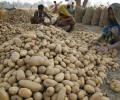
From output surge to lack of cold storage, not much attention has been given to the potato farmers. The export market, too, is bleak, due to unsuitable domestic varieties and an underdeveloped food processing value chain.
 © 2026 Rediff.com - Investor Information - Advertise with us - Disclaimer - Privacy Policy - Sitemap - Feedback - About us - Terms of use - Grievances