
Students at Udai Pratap College in Varanasi, India, protested demanding the removal of a mosque located on the campus. The protest came after tensions arose when a section of students recited Hanuman Chalisa near the mosque while prayers were being offered. The college administration has denied claims by the Uttar Pradesh Sunni Central Waqf Board that the mosque and surrounding land are Waqf property, stating that the mosque was built illegally. The college administration has also accused the mosque of stealing electricity.

Udai Pratap College in Varanasi is entangled in a land dispute with the Uttar Pradesh Sunni Central Waqf Board, which claims a mosque on the campus and surrounding land as Waqf property. The college administration rejects the claim. The dispute dates back to 2018 when a notice was sent to the college alleging the mosque and land were donated by the Nawab of Tonk to the Waqf Board. The college claims the mosque was built illegally and the land belongs to a trust. The Waqf Board attempted construction in 2022 but was stopped by police after the college complained. The college also alleges the mosque is stealing electricity. The mosque administration asserts ownership based on the Nawab's donation and claims a mutual agreement for electricity supply. The college, founded in 1909, has a long history of promoting education in the region.

With this, the number of suits filed in the Krishna Janmabhoomi-Shahi Idgah case, in different courts of Mathura, has gone up to 15.
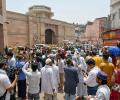
The Supreme Court on Friday agreed to hear an appeal of the Gyanvapi management committee against an Allahabad High Court order which held that lawsuits for "restoration" of a temple where the mosque stands in Varanasi are maintainable.
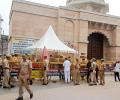
The Allahabad high court reserved its judgment on Friday in a petition challenging the maintainability of a suit seeking 'restoration' of a temple at the site of the Gyanvapi mosque in Varanasi.

The petitions filed by the Anjuman Intezamia Masjid Committee (AIMC) and the Uttar Pradesh Sunni Central Waqf Board had also challenged a Varanasi court order of April 8, 2021 to conduct a comprehensive survey of the Gyanvapi mosque.
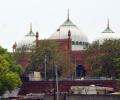
The petitioner submitted an application in the court of the Civil Judge on Monday seeking permission for 'purification' of the sanctum sanctorum of the Keshav Dev temple, which he claimed was inside the mosque, his counsel said.
The objections against the suit were raised by the management committee of the mosque and the Uttar Pradesh Sunni Central Waqf Board.

the Uttar Pradesh Sunni Central Waqf Board on Tuesday filed a caveat in the Supreme Court to prevent the ASI from taking an ex parte order on the issue.
Describing the Waqf Board decision as "not in the interest of Taj Mahal," a representative of the Archaeological Survey of India, who attended the hearing, said it would challenge it in the court of law.
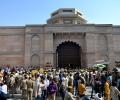
Mishra said that the court has fixed July 7 for the next hearing.

But three years after the apex court settled the Ram Janmabhoomi-Babri Masjid land dispute, there are no signs of any building activity on the proposed mosque site.

The senior advocate had represented the Muslim parties, including the Uttar Pradesh Sunni Central Waqf Board, in the case in trial court, Allahabad High Court and the Supreme Court.

The Allahabad high court on Monday dismissed a petition filed against the allotment of land in Ayodhya's Dhannipur village for the construction of a mosque, following the Supreme Court verdict in the Ram Janmabhoomi-Babri Masjid dispute.

The apex court rejected an appeal challenging a July 10 decision of the Allahabad high court which had also dismissed the plea finding no error or illegality in the order of a Mathura civil judge who had decided to first hear the issue of maintainability of the suit as raised by management committee of the mosque.
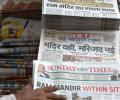
Sunni Central Waqf Board Chairman, Zufar Farooqui said some persons are advising that land should not be taken for the Babri mosque.
AIMPLB member Zafaryab Jilani on Wednesday said the proposed mosque in Ayodhya following last year's Supreme Court verdict is against the Waqf Act and 'illegal' under the Shariat laws.
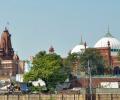
The Akhil Bharatiya Tirath Purohit Mahasabha and the Mathur Chaturved Parishad pleaded to be made respondents in the case. They said the suit for the removal of the mosque should not be allowed as it is detrimental to communal harmony in the country, according to their counsels.
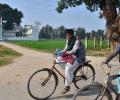
The state government has allotted the five-acre plot in Ayodhya's Dhannipur for the construction of the mosque on the directive of the apex court.
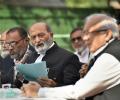
In a historic verdict in November on the Ramjanmabhoomi-Babri Masjid dispute, the Supreme Court ruled in favour of construction of a temple. It also ruled that an alternative five-acre plot must be found for a mosque within Ayodhya.
The mosque is coming up in the Uttar Pradesh district pursuant to the Supreme Court verdict in the Ram Janmabhoomi case.

Justice Padia stayed the Varanasi civil court order, ruling that the subordinate court passed its order ignoring the fact that the high court had reserved its verdict on the plea challenging the maintainability of the suit which had been filed earlier in the lower court for the survey.
Earlier, board's counsel Zafaryab Jilani had said that he is not satisfied with the verdict.

Here is a timeline of the second-lengthiest case in the apex court history:
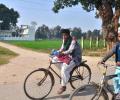
'The idea is to have a place where people can come together and bridge the gap. It will be a contemporary design for the future, and not have the shadows of the past' Ritwik Sharma reports.
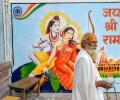
The lawyers said the mediation panel's report was leaked to the media and they do not approve the procedures adopted in the process and the suggested compromise formula of withdrawal of the lawsuit.
Sources in the prominent Muslim body Jamiat Ulama-i-Hind said it was not in favour of filing a review petition and wants the matter to end.
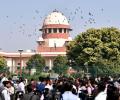
18 review pleas were filed against the November 9 verdict of the apex court. The SC found 'no ground to entertain' any of them.

From the kind of food to the art which will be displayed at the museum, historian Pushpesh Pant shares his vision.
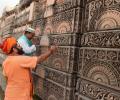
'The common Muslim of this country is not in favour of a review petition because he or she does not want that matters which have been settled are again raised and the community gets caught up in such things'

While Ayodhya resembled a city under seige earlier during the day, the scene was no different elsewhere in the state with police and central forces keeping an eye over the security situation and Chief Minister Yogi Adityanath personally monitoring it from a hi-tech control room in the state capital.
Jamiat chief Maulana Arshad Madani said they took the decision following extensive deliberations involving lawyers and experts.
The litigant, in review plea filed through lawyer Ejaz Maqbool, has also sought an interim stay on operation of the verdict in which it had directed the Centre that a trust be formed within three months for construction of the temple at the site.

The apex court said the faith of Hindus that Lord Ram was born at the site was undisputed, and he is symbolically the owner of the land.

The apex court said the parties in the matter should be ready to start the hearing on the appeals which are before it.
 © 2026 Rediff.com - Advertise with us - Disclaimer - Privacy Policy - Sitemap - Feedback - About us - Terms of use - Grievances