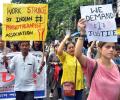
The draft legislation seeks capital punishment for persons convicted of rape if their actions result in the victim's death or leave her in a vegetative state.

The horrifying state of hunger in India adds urgency to the need to implement a new food security law, writes Praful Bidwai.
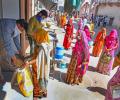
However, experts say that unless clear guidelines are there, it remains to be seen how many people fall within the ambit and who remains excluded.
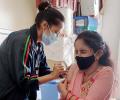
While India launched the COVID-19 vaccination drive on January 16, and has administered over 32.36 crore doses till date, the US which started its inoculation drive on December 14, 2020 has given over 32.33 crore doses.

According to data available on CoWIN platform, an average of 61.14 lakh doses of COVID-19 vaccine were administered daily in the week from June 21-27 which dropped to 41.92 lakh doses daily in the subsequent week from June 28-July 4. In the week from July 5 to July 11, the daily average vaccine doses number further dipped to 34.32 lakh doses.
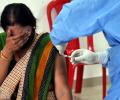
India achieved a "historic milestone" of administering 88.09 lakh coronavirus vaccine doses in a single day on June 21, but the numbers dipped to over 53.4 lakh on Tuesday.
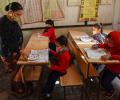
Union Education Minister Dharmendra Pradhan on Tuesday said the Centre is planning to set up 'PM Shri Schools' which will be aimed at preparing students for future and will be the laboratory of new National Education Policy (NEP). nbsp

India has administered more than 88.13 lakh Covid-19 vaccine doses in the last 24 hours, the highest ever vaccination achieved in a single day, the Union health ministry said on Tuesday.
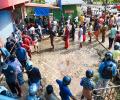
While the coronavirus mutated and evolved, citizens let their guard down and all this led to a spike in cases, snowballing into the second wave, Union health minister Harsh Vardhan said.

The Centre has put the blame on state governments while state governments complain that money is not released for the proposals given by them to the Empowered Committee that has been tasked with recommending proposals to be funded under this framework.
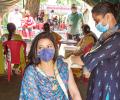
The Centre on Tuesday placed orders for 44 crore doses of Covishield and Covaxin, a day after Prime Minister Narendra Modi announced that the Centre would take over the state procurement quota and provide free jabs to state governments for inoculation of all above the age of 18.

Faulting previous governments for not taking adequate measures to economically empower women in the country, Prime Minister Narendra Modi on Thursday said his government was constantly creating an environment in which women self-help groups can connect villages with prosperity as he released Rs 1,625 crore as capitalisation support fund to over four lakh such groups. In a virtual interaction with the women self-help groups (SHGs) under the "Aatmanirbhar Narishakti se Samvad" (dialogue with self-reliant women) initiative, Modi said in a changing India, opportunities are increasing for women to move forward. The movement of woman SHGs has intensified in the last 6-7 years with over 70 lakh of them working across the country, a figure over three times more than earlier, he said, adding over eight crore women are connected with these groups.

'For them life is very difficult since there has been no universalisation of PDS.' 'And let's understand that there are people who need ration instead of cooked meals.'

The implementation of four labour codes in one go from April 1 next year will usher in a new wave of reforms in industrial relations and also help in attracting more investments but employment generation will remain a key challenge in 2021. This year has also been a challenging year for the work force as well as for employers due to the outbreak of the COVID-19 pandemic. The government imposed a nationwide lockdown from March 25, which had an adverse impact on economic activities and resulted in exodus of migrant workers from large cities to their homes in the hinterland. Many migrant labourers lost their jobs and it took months for them to return back to their work places from their native places.

Ambassador Pankaj Sharma, Permanent Representative of India to the Conference on Disarmament (CD), Geneva, said India has been drawing the attention of the world towards these threats and the need to strengthen international cooperation to address them through its annual consensus UNGA resolution titled 'Measures to prevent terrorists from acquiring weapons of mass destruction'.
The SR Abhiyan meeting held in Jaipur, Rajasthan to mark the completion of seven years of MGNREGA decided that both pensions and Mahatma Gandhi National Rural Employment Guarantee Act would be made electoral issues and political parties would be asked to take a stand before canvassing during the upcoming state and national elections.
The leaders later submitted to the government, what they said, were over 5 crore signatures collected during a two-month long nationwide campaign on these demands. The signatures on the charter of demands were delivered on a truck.

'Everybody should be given rations. Nobody should be excluded.' 'Without an income, the present ration quota is not enough.' They should increase it so that one person can eat adequately for a month.'
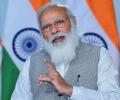
A faltering economy may have led to a re-think on economic strategy. And Mr Modi might think he is politically strong enough to take some risks. But there could be a minefield ahead, observes T N Ninan.

In her opening remarks, while chairing the meeting of the Congress Working Committee, Gandhi also accused the Centre of giving preferential treatment to some states while maintaining "thundering silence" on requests of states ruled by the Congress and opposition parties.
The food security Bill is likely to adopt a three-pronged strategy to ensure food for all, particularly for the most vulnerable sections of the society. The National Advisory Council (NAC) in its initial discussions on the Bill had talked about a universalised scheme.

Education sector on Monday got a 24 per cent hike in budgetary allocation for the next fiscal at Rs 52,057 crore (Rs 520.57 billion) to take forward ambitious programmes like universalising secondary education and increasing enrolment ratio in higher education.

The National Advisory Council, chaired by Congress party president Sonia Gandhi, met for the second time on Thursday after its recent revival and unanimously endorsed the idea of universal access to the public distribution system (PDS) in rural areas.
The National Advisory Council, chaired by Congress party president Sonia Gandhi, met for the second time on Thursday after its recent revival and unanimously endorsed the idea of universal access to the public distribution system in rural areas. It was agreed that a universalised PDS should be implemented initially in 150 districts, a member said.
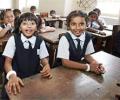
The parliamentary committee on HRD in its 221st report has said the states will not be able to meet their share for Right To Education Act.
In his Budget speech, Finance Minister Pranab Mukherjee announced that the government is committed to the universalisation of the Integrated Child Development Services scheme in the country. Expressing grave concern at the low level of female literacy in the country, Mukherjee said the aim of the National Mission for Female Literacy would be to reduce the current level of female illiteracy by half in three years.

The World Bank has decided to extend an additional soft loan of $ 1.05 billion (Rs 4,772 crore) to the government to improve the quality of education under two major schemes on elementary and technical education.
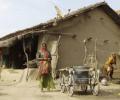
The centre pays only an insulting Rs 200 per pensioner each month at a tight-fisted 0.04 per cent of GDP, among the lowest in the world. Instead, as illustrated by Jean Drze, one option is for NYAY to provide individual rather than household entitlements to all pensioners of at least Rs 1200 per month.
India is lagging behind in meeting the United Nation's Millenium Development Goals for bringing down infant and maternal mortality rates, but is on course to achieve all other targets, the government said on Monday. Minister of Women and Child Development Renuka Chowdhary also informed the Rajya Sabha that the government is planning to merge two schemes for adolescent girls to universalise the programme.
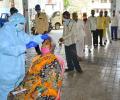
The Centre on Saturday strongly advised 12 states and Union Territories reporting a surge in coronavirus cases to significantly increase testing and ensure people follow COVID-appropriate behaviour, noting that one infected person could spread infection to an average of 406 individuals in a 30-day window without restrictions.
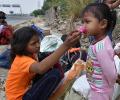
There was no announcement from the government on guaranteeing a minimum basic income, which is the need of the hour. The announcements on portability of ration cards and affordable rental housing to workers are for the long and medium terms. Migrant workers need immediate relief.
Education policy in India has got to be among the most bizarre ever seen.
Pratham's latest report on rural education has some good news, but it's mainly bad.
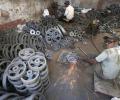
The Code on Wages Bill, 2019 seeks to amend and consolidate the laws relating to wages, bonus and matters connected therewith. The Bill will subsume four labour laws -- Minimum Wages Act, Payment of Wages Act, Payment of Bonus Act and Equal Remuneration Act. About 50 crore labourers will benefit.

'You cannot fight a disease as complex as COVID-19 without a carefully calibrated, localised response.'
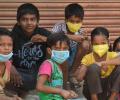
'Make sure you provide enough support (income, nutrition, healthcare, and housing) to migrants stuck (and their households), so they are not compelled to seek work or migrate back.' 'Otherwise, the risk of contagion is extreme.'

Ushering in the biggest programme in the world to fight hunger, Parliament on Monday gave its nod to the landmark Food Security Bill which seeks to provide highly subsidised foodgrains to the country's two-third population as a right.
FinMin does not expect tax or non-tax revenue to reach anywhere close to the targets set in the interim Budget. Sources say that the challenge before the new government will be either to accept the reduced projection and tailor the Budget accordingly or set a more ambitious target.
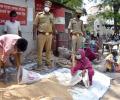
A recent study shows that more than 100 million people are excluded from the public distribution system because the central government insists on using 2011 population figures to calculate state-wise PDS coverage, which effectively leaves out 100 million people, reports Sanjeeb Mukherjee.
 © 2026 Rediff.com - Investor Information - Advertise with us - Disclaimer - Privacy Policy - Sitemap - Feedback - About us - Terms of use - Grievances