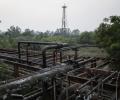
Incineration of entire 358 tonnes of toxic waste from the defunct Union Carbide factory finally concluded as contaminated soil and packaging material were burnt at a disposal plant in Madhya Pradesh's Pithampur on Thursday, over six months after the consignment was brought to the unit.

The unloading of 337 tonnes of hazardous waste from the defunct Union Carbide factory in Bhopal began at an incineration unit in Pithampur, Madhya Pradesh. The exercise, which commenced amid protests from locals concerned about its impact on health and environment, is being carried out following safety regulations. The waste, comprising soil, reactor residues, pesticide remnants, and other materials, has been transported from Bhopal to Pithampur for disposal. The Madhya Pradesh Pollution Control Board has asserted that the chemical effects of certain substances in the waste have diminished. The local administration has launched an awareness campaign to address concerns regarding the disposal process.
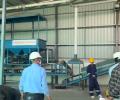
The trial incineration of 10 tonnes of waste from the Union Carbide plant in Bhopal, responsible for the 1984 gas tragedy, began on Friday afternoon in Pithampur, Madhya Pradesh. The process, ordered by the Madhya Pradesh High Court, is expected to take 72 hours to complete. The waste includes soil, reactor residues, pesticide residues, and other materials. The State Pollution Control Board says the chemicals in the waste have become "almost negligible" and there is no presence of methyl isocyanate gas. The incineration process is being monitored by the Pollution Control Board and broadcast live.
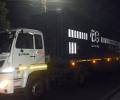
Two men were hospitalised after they set themselves afire on Friday amid a bandh call in Madhya Pradesh's Pithampur against the planned disposal of 337 tonnes of Union Carbide waste in the industrial town, an official said.

A group of people in Dhar, Madhya Pradesh, performed 'Shavasana' (corpse pose) to protest against the proposed disposal of Union Carbide waste, connected to the Bhopal gas tragedy, in the district. They claim the disposal would harm the health of locals and the environment. The waste has been brought from Bhopal for incineration in Pithampur. Protests have been ongoing since the arrival of the waste last month, and local authorities are conducting an awareness campaign to address concerns.

The waste disposal at the plant in Dhar district's Pithampur industrial area was undertaken following directives of the Madhya Pradesh high court.

The first round of trial incineration of 10 tonnes of waste connected to the 1984 Bhopal Gas Tragedy has begun in Pithampur, Madhya Pradesh, amid tight security. The Supreme Court refused to intervene in the MP High Court's order directing the transfer and disposal of waste at a private company-operated plant in Pithampur. The trial incineration is being conducted in the presence of scientists from the central and state pollution control boards. Protesters have expressed apprehensions about harm to the human population and environment due to the disposal of this waste, but the state government has rejected these concerns, saying that solid arrangements are in place for safe disposal.
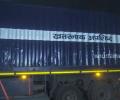
Forty years after the Bhopal gas tragedy, 377 tons of hazardous waste has been shifted from the defunct Union Carbide factory for its disposal, an official said.

The Madhya Pradesh high court in Jabalpur on Monday directed the state government to take steps within six weeks for disposal of Bhopal-based Union Carbide's 337 tonnes of hazardous waste as per safety protocols, while restraining the media from publishing any fake news on the same.

A rally marking the 41st anniversary of the Bhopal gas tragedy was disrupted by a controversy over an effigy allegedly depicting an RSS 'sevak,' leading to an FIR against organizers.
Nearly 900 tonnes of ash generated from the incineration of toxic waste linked to the Bhopal gas tragedy remains undispensed after the Madhya Pradesh High Court directed the state government to find an alternative disposal site.

The civil suit was filed on behalf of the victims of the Bhopal gas tragedy, which killed thousands in 1984.
Rediff.com's Prasanna Zore visits ground zero at the Union Carbide plant in Bhopal.
In a setback to the victims of the Bhopal gas tragedy, a United States court has held that neither Union Carbide nor its former chairman Warren Anderson were liable for environmental remediation or pollution-related claims emanating from the world's worst industrial accident.

Activists burnt the US flag and logos of Union Carbide and Dow Chemicals - as they have done nothing to end the sufferings of the victims for the last 32 years.
The ground water around the Union Carbide factory in Bhopal continues to be contaminated even 28 years after the world's largest industrial disaster in which leak of a poisonous gas had killed more than 15,000 people, the Supreme Court was told on Tuesday.
It has agreed to submit a 'no objection' statement to an American court for directing Union Carbide to clean up the contamination caused by its abandoned factory in the Madhya Pradesh capital.

In a major blow to victims of the 1984 Bhopal gas tragedy, a United States court has ruled that the Union Carbide Corporation cannot be sued for the ongoing contamination from the chemical plant.
United States-based Union Carbide Corporation has filed a petition in the Supreme Court demanding early hearing on the government's curative petition in the Bhopal gas disaster case, saying delays are being used to besmirch the reputation of its parent firm, Dow Chemicals. UCC, a wholly-owned subsidiary of The Dow Chemical Company, in the petition sought a fixed timetable for hearing and early disposal of the curative petition filed by the Union government in December 2010.

A petition has been filed in the National Green Tribunal's Bhopal bench, seeking an assurance from the Madhya Pradesh government that the Union Carbide waste disposal in Pithampur won't harm people in nearby areas. The petition, filed by a Jabalpur-based social organisation, has urged the NGT to direct the state's chief secretary to declare on oath about the safety of people in Pithampur in Dhar district where the waste has been transported for disposal. The petition also seeks direction to the MP government to publish a specific report regarding the disposal of this waste to allay public concerns.

Residents of Tarpura village near Pithampur, Madhya Pradesh, are protesting against the incineration of 337 tons of toxic waste from the 1984 Bhopal gas tragedy at a local facility. They fear the process will be hazardous to health and the environment, despite government assurances. The protest comes after the Madhya Pradesh High Court ordered the transfer of the waste to Pithampur within four weeks. The incident has raised concerns about the potential contamination of soil, underground water, and water sources in the area. The administration has deployed a large police force and held meetings with local residents to address their concerns.

The work to remove 377 metric tonnes of hazardous waste from the now-defunct Union Carbide factory in Bhopal has begun. The waste will be transported to an incineration site in Pithampur near Indore, around 250 km from Bhopal. The move comes after the Madhya Pradesh High Court ordered the authorities to clear the site, 40 years after the deadly gas leak that killed thousands and left hundreds of thousands with health problems.

The incident comes a day after the town was rocked by protests against the disposal plan amid a bandh call given by the Pithampur Bachao Samiti.

Madhya Pradesh police have registered five cases against protesters in Pithampur who opposed the planned disposal of 337 tonnes of toxic waste linked to the Bhopal gas tragedy. Protests erupted on Friday after the waste reached Ramky Enviro company, where the incineration is to be carried out. Authorities imposed prohibitory orders, and police dispersed a mob that marched to the company premises. Two people attempted self-immolation during the protests, but were prevented by the crowd. Chief Minister Mohan Yadav said the state government only transported the waste with safety parameters in compliance with court orders.
Victims of the 1984 Bhopal gas tragedy have filed an appeal in a higher court in New York contesting a lower court's decision that Union Carbide Corporation cannot be sued for the ongoing contamination from the chemical plant.

At least 3,787 people were killed and more than five lakh were affected physically after a toxic gas leaked from the pesticide factory on the intervening night of December 2 and 3, 1984.

An Indian-origin Opposition Labour Party MP secured a debate in Westminster Hall of the UK parliament to call for justice for the victims of Bhopal gas tragedy, which will mark its 38th anniversary early next month.

The top court said that a sum of Rs 50 crore lying with the RBI for the victims shall be utilised by the Union of India to satisfy pending claims of victims.
There is little hope of any justice in the Bhopal gas leak case. If the tragedy and the shock its finale has created awaken us to work on newer laws on corporate responsibility and accountability, it would be a gain, writes Kandaswami Subramanian.

The India-US nuclear deal was aimed at ending India's nuclear isolation and nuclear apartheid, recalls Rup Narayan Das.

The Supreme Court on Tuesday asked the Centre to clarify its stand on whether it wants to go ahead with its curative petition seeking Rs 7,844 crore as additional funds from successor firms of the US-based Union Carbide Corporation (UCC) for giving compensation to victims of the 1984 Bhopal gas tragedy.
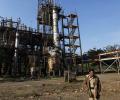
Just months before the deadly gas leak in Bhopal killed 15,000 people, journalist Rajkumar Keswani -- who passed into the ages on Friday, May 21, 2021 -- had warned that the 'city stood on the edge of a volcano'.
'All the political parties did nothing. These parties talk of helping the poor but no one actually did anything,' says social activist Abdul Jabber.

Over the past decade, a change in consumer choice swept through the battery industry - the walkman lost its mojo, smartphones took over cameras and batteries were tucked away in remotes and wall clocks that hardly needed frequent call-ups. The result: Brand Eveready lost mind space. And the company's attempt to stick to the on-ground marketing activities didn't quite help. But Eveready, now at the cusp of change, is putting things right - a new Give Me Red television commercial has been launched after a gap of 7 years featuring an empowered bride ski-diving to her wedding venue. The creative, according to Eveready sources, is in sync with the brand doctrine.
'Why should we disclose classified information to satisfy those who doubt our Hydrogen Bomb capability?'
The Union Carbide Corporation gave a compensation of $470 million (Rs 715 crore) after the toxic gas leak from the Union Carbide factory on the intervening night of December 2-3, 1984, killed over 3,000 people and affected 1.02 lakh others.

Away from the courtroom and legal circles, Nariman was a familiar figure for residents of Hauz Khas who would see him walk regularly, even in the cold winter months of December and January.
NGOs working for the rights of the survivors of the 1984 Bhopal gas disaster on Wednesday alleged that various governments in Madhya Pradesh and at the Centre have failed to bring the culprits of the world's biggest industrial tragedy to justice even after 37 years.

People must have tolerance for each other's opinion at a time when the tolerance level has gone down internationally, Supreme Court judge Justice Sanjay Kishan Kaul said on Friday.
