
Insights from behavioural economics suggest that an ambitious nudge can be effective if three conditions are met, points out Ram Singh Insights from behavioural economics suggest that an ambitious nudge can be effective if three conditions are met, points out Ram Singh, director, Delhi School of Economics.

India's EV ecosystem is growing, but remains too underdeveloped to cushion a major oil supply shock.

'I do believe there will be a resolution in the next couple of months on the penal tariff and hopefully on the reciprocal tariff also.'
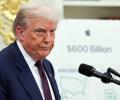
As one of the federal appeal courts in the United States ruled that most of tariffs imposed by Trump administration are not accordance with the laws, US President Donald Trump on Friday (local time) affirmed that all tariffs imposed on the countries will remain in effect, calling a recent ruling by a 'highly Partisan Appeals Court' incorrect.

The Indian government has expressed its disagreement with the IMF staff's 'baseline' assumption that the 50 per cent US tariffs on its goods exports 'would remain in place indefinitely', based on which the staff pegged the country's GDP growth at 6.6 per cent this year, and pared its 2026-27 projection by 20 basis points to 6.2 per cent.

Despite recent share price dips, Bharti Airtel is strategically positioned for growth, driven by investments in data centres via Nxtra, a potential tariff hike, and strong performance in Africa, alongside efforts to deleverage and expand its subscriber base in underpenetrated rural markets.

Sharp differences between Iran and the UAE over the West Asia conflict were on full display during the BRICS foreign ministers' meeting in New Delhi, signalling the challenges the bloc faces in reaching a consensus position on the crisis.

The crisis may not be as visible this time, but the stakes are just as high, points out Rajeswari Sengupta.

Hybrid mutual fund schemes attracted significant inflows of Rs 1.55 lakh crore in FY26, a 29 per cent increase, as investors increasingly opted for diversified investment strategies to navigate volatile market conditions and geopolitical tensions.
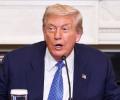
Donald Trump's tariffs, meant as political punishment, have avoided the predicted chaos, lifting US growth, weakening rivals, and letting him claim victory in a resilient global economy, observes T T Ram Mohan.

Prime Minister Narendra Modi and US Secretary of State Marco Rubio discussed various aspects of India-US bilateral ties, focusing on defence, trade, energy, and technology. Rubio extended an invitation from President Donald Trump for PM Modi to visit the US.

'Traders and exporters will have to explore alternative markets.'
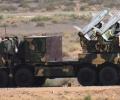
Indian defence stocks have seen an average year-on-year gain of 67 per cent, driven by renewed interest following 'Operation Sindoor' and a broader increase in global geopolitical tensions, with the combined market capitalisation of 18 firms increasing by approximately 2.3 trillion.

Piramal Pharma anticipates a significant turnaround in financial year 2026-27 (FY27), projecting early-to-mid teens revenue expansion and a sharp improvement in profitability, driven by improved business momentum, new product acquisitions, and structural tailwinds.

'Existing investors who have not acted so far may consider holding on to these funds with the understanding that the higher returns they expected from them may now take longer to materialise.'
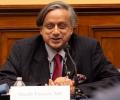
Senior Congress leader Shashi Tharoor says US tariffs are negatively impacting India, leading to job losses, and criticizes President Trump's diplomatic behavior.

Brave statements such as we will continue to be the fastest growing large country are of no consolation, because the direction of trade also determines the flow of investment, points out M Govinda Rao.

'We will be able to anticipate the full picture of the impact after August, which is also the time when demand for a year begins to peak ahead of the December holidays and Valentine's Day.'

Donald Trump says several issues were settled during the final day of talks with Xi Jinping covering trade, tariffs, and diplomacy.

Trump made the announcement in response to what he described as China taking "an extraordinarily aggressive position on trade" by sending "an extremely hostile letter to the world."

India would confront a more entrenched China, a less dependable United States, and a regional order increasingly shaped by great-power bargaining over which it exercises limited influence, notes Amberish K Diwanji.

The imposition of a 100 per cent tariff by the US on imports of branded and patented pharmaceutical products starting October 1 may not significantly hurt Indian drug makers, with Sun Pharma being exposed to some headline risk but with limited earnings impact, according to analysts. Among Indian companies, only Sun Pharma has sizeable sales from patented drugs in the US (about 17 per cent of 2024-25 revenue), HSBC Global Investment Research said in a report.

The post, markedly different from its usual X feed -- typically focused on low-cost tariff plans and anti-spam measures -- appears to ride on Samay Raina's popularity.
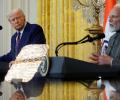
The Trump administration has told the US Supreme Court that it imposed tariffs against India for purchasing Russian energy products as part of its strategy to address the war in Ukraine.
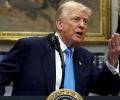

'Just as we cannot surrender the interests of our farmers and dairy industry, Trump is also looking for markets for the produce of the farmers in the Midwest, which are his support base.'

US President Donald Trump met with Chinese President Xi Jinping in Beijing to discuss trade, technology, Taiwan, and the Iran war. Xi Jinping said that 2026 will be a 'historic, landmark year' for China-US relations.

Ratings firm Crisil said on Wednesday that the uncertainties surrounding the US tariffs might be a new hindrance to capital expenditure decisions in the current financial year. The additional 25 per cent tariff imposed by US President Donald Trump on India for its purchases of Russian oil came into effect on Wednesday, bringing the total amount of levies imposed on New Delhi to 50 per cent.

India's first trillion-dollar company will be built on technology it owns, not just operates, predicts Ajay Kumar.

US President Donald Trump has claimed that China has committed to halting weapon supplies to Iran, following his personal diplomatic interventions with Chinese President Xi Jinping.

Amid the arithmetic of subsidies, consumption and capacity, whichever government assumes office in Tamil Nadu after May 4 is likely to inherit a growing debate over how far the state can continue to expand welfare promises without placing additional strain on public finances and the power sector.

Tata Steel reported a significant 124.9 per cent year-on-year increase in consolidated net profit to 2,925.74 crore for the fourth quarter of FY26, driven by higher volumes and an improved product mix in India, alongside planned cost reductions across its global operations.
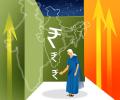
The World Bank has affirmed India's strong position to withstand the current global energy shock, citing high foreign exchange reserves, fiscal space, and low inflation as key buffers supporting continued growth despite international headwinds.

'India should understand that we are not going to make the same mistakes with India that we made with China 20 years ago.'
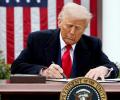
No experts, clearly, were involved in the design of these new tariffs, which have been the subject of bemused wonderment across the world in how completely they ignore logic, rationality, fairness, and economic theory, observes Mihir S Sharma.

Chandrababu Naidu has reorganised the Telugu Desam Party (TDP), appointing his son Nara Lokesh as working president and emphasising a blend of experienced and new leaders to strengthen the party.

Reliance Industries' digital arm, Jio Platforms, may see its initial public offering (IPO) delayed to the second half of fiscal 2027, according to CreditSights. The delay is primarily attributed to ongoing geopolitical tensions in the Middle East, which could impact market conditions and investor sentiment.
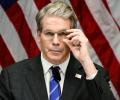
Describing the India-United States relationship as 'very complicated', US Treasury Secretary Scott Bessent on Wednesday hoped that 'at the end of the day, we will come together.'
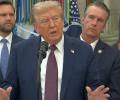
"I understood tariffs better than any human being in the world. And now with my tariffs, they were all dropping them. India was the most highly tariffed nation... And you know what, they've offered me no tariffs in India anymore. No tariffs," Trump said.
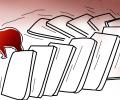
Markets face risk of a prolonged bear phase as oil shocks and geopolitical tensions test inflation, growth and investor confidence globally, points out Debashis Basu.
