
From the Sensex pack, Tata Consultancy Services, HCL Technologies, Tech Mahindra, Infosys, Tata Motors, Bajaj Finance, Kotak Mahindra Bank, Mahindra & Mahindra, Bharti Airtel and Maruti Suzuki India, Tata Steel were the major laggards. PowerGrid, Sun Pharmaceuticals, UltraTech Cement, NTPC, Asian Paints, Nestle India, Titan, IndusInd Bank and Axis Bank were among the gainers.

With nearly 100 launches and unveils, the Bharat Mobility Global Expo 2025, held in Delhi from January 17 to 22, made one thing clear to automobile enthusiasts: Electric vehicles (EVs) are the way ahead for the Indian auto market for years to come.
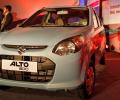
The country's largest automobile maker Maruti Suzuki India (MSI) on Monday said it will hike prices of its cars in the second quarter of the current fiscal due to increase in the input costs. "Over the past year, the cost of the company's vehicles continue to be adversely impacted due to increase in various input costs. "Hence, it has become imperative for the company to pass on some impact of the above additional cost to customers through a price rise," Maruti Suzuki India said in a regulatory filing.

Maruti Suzuki India on Wednesday reported a 42 per cent rise in consolidated net profit to Rs 2,671 crore for the fourth quarter ended March 2023, driven by higher sales, improved realisation and favourable forex movement. The country's largest carmaker logged a net profit of Rs 1,876 crore in the January-March of 2021-22. Net sales during the fourth quarter rose to Rs 32,060 crore compared to Rs 26,749 crore in the year-ago period, Maruti Suzuki India (MSI) said in a regulatory filing.
The automobile sector has started seeing volume growth, the crucial economy segment included. Maruti Suzuki India (MSIL) could be a big beneficiary as the country's largest passenger vehicle (PV) maker has seen several favourable developments including volume recovery. Demand for its new sports utility vehicles (SUVs) appears to be good, and the company has 4 lakh outstanding orders by April 2023, (up from 3.6 lakhs in January 2023). Siam (Society of Indian Automobile Manufacturers) estimates that passenger vehicle demand would grow by 5-7 per cent in the 2023-24 financial year (FY24) and MSIL is likely to beat the market growth.

77 per cent of all transactions in the January-March 2025 period took place digitally, indicating continued preference for online car purchases.


In a filing to the BSE on Monday, Maruti Suzuki India said Suzuki Motor Corporation's stake in MSI has increased to 56.2 per cent from 54.2 per cent due to a share swap agreement with the domestic car market leader to acquire Suzuki Powertrain India Ltd.

Its production declined for the third consecutive year in financial year 2020-21 (FY21) to an 11-year low, while sales volume contracted for the second year to the lowest since FY15. The company manufactured around 1.08 million vehicles last fiscal, a decline from 1.17 million the previous year, and a steeper fall from its all-time high tally of 1.62 million reported in FY18.

Maruti Suzuki India on Monday said the production at its plant in Gurgaon has been impacted due to strike at Suzuki Powertrain India Ltd (SPIL), which supplies engines to MSI.

Sluggish urban demand, a high base effect, and weak sales of hatchbacks and sedans weigh down passenger vehicle sales in FY25.

The country's largest carmaker Maruti Suzuki India (MSI) on Thursday said it is planning to increase vehicle prices from January next year to offset the impact of the rise in input costs. The price increase would vary from model to model, the auto major said, without sharing the details.

Former managing director of Maruti Suzuki India, Jagdish Khattar, passed away on Monday morning following a cardiac arrest, according to people close to him. Khattar (79), a former bureaucrat, was considered as one of the most high profile leaders of the Indian automotive industry, laying the foundation for Maruti's future growth after the government began its disinvestment in 2002 and gradually exited from its joint venture with Suzuki Motor Corporation (SMC). He had joined the then Maruti Udyog Ltd in July 1993 as director (marketing) and went on to become executive director (marketing) in the next six years.
The country's largest carmaker Maruti Suzuki India (MSI) on Wednesday reported a consolidated net profit of Rs 475 crore for the first quarter ended June 30. The auto major had posted a consolidated net loss of Rs 268 crore in the April-June quarter of 2020-21. It noted that during the first quarter its sales and production were adversely impacted due to the second wave of the COVID-19 pandemic.

Passenger vehicle dispatches from companies to dealerships witnessed an increase of 1.6 pc year-on-year in January at 399,386 units driven by robust demand for utility vehicles, industry body SIAM said on Thursday. It was the highest-ever passenger vehicle dispatch for the month of January.

Dealers said the discounts this March are higher than the same month in the previous year.

Toyota's India unit will also source two cars manufactured by Maruti Suzuki, the Baleno and Brezza, including their hybrid variants, and in return Toyota will offer its Corolla sedan to Maruti.

Apple Inc's iPhones assembled in India achieved market revenues of Rs 162,000 crore. Tata Steel's revenue for the same period was Rs 162,324 crore.

Indian passenger vehicles market registered record wholesales of 43 lakh units in 2024, with companies like market leader Maruti Suzuki, Hyundai, Tata Motors, Toyota Kirloskar Motor, and Kia posting their best-ever annual domestic sales. The continued growth of SUVs, along with rural markets playing a key role in driving up car sales, helped the industry better the previous best of nearly 41.1 lakh units posted in 2023.

American electric carmaker Tesla has opened recruitment for various roles in India, including business operations analyst and customer support specialist, in what could be a precursor for the company's entry into the country. As per the job postings on the company's website, the posts are for the 'Mumbai Suburban' area.

The risk-reward for the Indian markets, Morgan Stanley said, is turning favourable.

Villarreal fought back to shock Barcelona 3-2 on Sunday, handing the LaLiga champions their first league defeat since late December.
Major Indian carmakers are preparing for sluggish domestic PV sales growth of just 1-2 per cent in FY26.

Tata Elxsi (TelX) reported a weak Q3FY25, with a sharp deceleration in the transportation vertical. However, recent deals in the Asia-Pacific (APAC), higher mix of original equipment makers (OEMs) and partnership with Qualcomm will improve growth. FY25 is the third successive financial year of revenue growth deceleration and second successive financial year of profit deceleration.

The only silver lining in March's performance -- which otherwise dragged down the financial year's momentum -- was a 6 per cent year-on-year (Y-o-Y) growth compared to March of the previous year. This is largely due to incentives, festival-driven gains, and new launches.

From the Sensex pack, Reliance Industries, Bajaj Finserv, HDFC Bank, Adani Ports, Maruti Suzuki India, Axis Bank, Hindustan Unilever, Sun Pharmaceuticals and Asian Paints were among the laggards. Reliance Industries fell the most by 2.38 per cent to close at Rs 1,171.10 apiece.

Toyota Kirloskar Motor (TKM) has reported a consolidated net profit of Rs 4,787 crore for 2023-24 (FY24) - more than three times the earnings recorded the previous year. This growth can be attributed to robust demand for its vehicles, particularly hybrid models and cross-badged cars from the Toyota-Suzuki alliance.

Japanese auto major Suzuki Motor Corporation (SMC) on Wednesday said its long-serving chairman Osamu Suzuki will retire and assume the role of senior advisor subject to shareholders' approval in the ordinary general meeting to be held in June this year.

The initial public offer of Hyundai Motor India Ltd, the Indian arm of South Korean automaker Hyundai, got subscribed 2.37 times on the third day of the bidding on Thursday, helped by institutional buyers. This is the largest IPO in the country, surpassing LIC's initial share sale of Rs 21,000 crore. The Rs 27,870 crore initial share sale got bids for 23,63,26,937 shares against 9,97,69,810 shares on offer, translating into 2.37 times subscription, as per NSE data.

From premium electric motorcycles to mass-market scooters, manufacturers are rapidly expanding their portfolios to capture a larger share of the booming market.

Among the key concerns of the Street is market share losses in growth segments, led by higher competitive pressures.

The country's largest carmaker Maruti Suzuki India (MSI) witnessed a 3 per cent drop in production last month. In a regulatory filing, the auto major reported total production of 145,560 units in November compared to 150,221 units in November 2020. "The shortage of electronic components had a minor impact on the production of vehicles during the month," it noted.

Most of the engines used by Suzuki's two-wheelers in India are manufactured by Maruti at its Manesar plant.

For the first time, the event will take place across three locations in Delhi: Bharat Mandapam at Pragati Maidan, Yashobhoomi Convention Centre at Dwarka, and India Expo Mart at Greater Noida.

The country's largest carmaker Maruti Suzuki India (MSI) on Monday said it has increased prices of its entire product range, except Celerio, by up to 1.9 per cent with immediate effect. In a regulatory filing, the company noted that it has taken the decision to hike prices due to an increase in various input costs. The weighted average price rise in ex-showroom prices (New Delhi) across select models is 1.9 per cent, it added. This is MSI's third price hike this year.

Maruti Suzuki, Hyundai and Tata Motors reported a decline in wholesales in September as the companies curtailed dispatches to dealers to reduce inventory build-up amid a decline in demand. Maruti Suzuki India reported a 4 per cent dip in total domestic passenger vehicle wholesales last month to 144,962 units compared to 150,812 units in the year-ago month. The auto major said sales of mini segment cars, comprising Alto and S-Presso, grew marginally to 10,363 units against 10,351 units in September 2023.

The initial public offer of Hyundai Motor India Ltd, the Indian arm of South Korean automaker Hyundai, received an 18 per cent subscription on the first day of bidding on Tuesday. The Rs 27,870 crore initial share sale received bids for 1,77,89,457 shares against 9,97,69,810 shares on offer, as per NSE data. The IPO received over 9 lakh applications on the first day.

Maruti's strategy for the SUV segment is to arrest the decline in customers for entry level hatchbacks.

Sedans and hatchbacks have both lost market share to SUVs, which now account for more than 50% share of the 4 million-odd-unit PV market in the country.
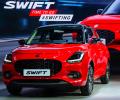
Swift Dzire has clocked 2.5 million in sales, and you might, in a non-too-distant future, see headlines that the DZire has done 3 million as well, observes Suveen Sinha.
