
Students at Udai Pratap College in Varanasi, India, protested demanding the removal of a mosque located on the campus. The protest came after tensions arose when a section of students recited Hanuman Chalisa near the mosque while prayers were being offered. The college administration has denied claims by the Uttar Pradesh Sunni Central Waqf Board that the mosque and surrounding land are Waqf property, stating that the mosque was built illegally. The college administration has also accused the mosque of stealing electricity.

Udai Pratap College in Varanasi is entangled in a land dispute with the Uttar Pradesh Sunni Central Waqf Board, which claims a mosque on the campus and surrounding land as Waqf property. The college administration rejects the claim. The dispute dates back to 2018 when a notice was sent to the college alleging the mosque and land were donated by the Nawab of Tonk to the Waqf Board. The college claims the mosque was built illegally and the land belongs to a trust. The Waqf Board attempted construction in 2022 but was stopped by police after the college complained. The college also alleges the mosque is stealing electricity. The mosque administration asserts ownership based on the Nawab's donation and claims a mutual agreement for electricity supply. The college, founded in 1909, has a long history of promoting education in the region.
The Supreme Court of India will hear a plea from the mosque management committee challenging an order rejecting its petition in the Krishna Janmabhoomi-Shahi Idgah dispute in Mathura, Uttar Pradesh on January 15. The Allahabad High Court had rejected the mosque committee's plea, stating that the religious character of the Shahi Idgah mosque needed to be determined. The case involves claims that the mosque was built after the demolition of a temple, a claim disputed by the mosque committee. The Supreme Court will now decide on the maintainability of the mosque committee's plea.

The Hindu litigants claim the mosque holds signs suggesting that it was a temple once.
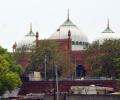
The objections against the suit were raised by the management committee of the mosque and the Uttar Pradesh Sunni Central Waqf Board.

With this, the number of suits filed in the Krishna Janmabhoomi-Shahi Idgah case, in different courts of Mathura, has gone up to 15.

AIMPLB member Zafaryab Jilani on Wednesday said the proposed mosque in Ayodhya following last year's Supreme Court verdict is against the Waqf Act and 'illegal' under the Shariat laws.

The court asked the UP govt to get examined the disputed premises by a five-member team of the ASI at its expense.
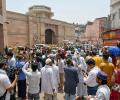
The Supreme Court on Friday agreed to hear an appeal of the Gyanvapi management committee against an Allahabad High Court order which held that lawsuits for "restoration" of a temple where the mosque stands in Varanasi are maintainable.
The apex court rejected an appeal challenging a July 10 decision of the Allahabad high court which had also dismissed the plea finding no error or illegality in the order of a Mathura civil judge who had decided to first hear the issue of maintainability of the suit as raised by management committee of the mosque.
A notification by the MHA said a trust by the name 'Shri Ram Janmbhoomi Teerth Kshetra' has been registered with its registered office at R-20, Greater Kailash Part-1, New Delhi, 110048. The ministry also said as directed by the SC, the UP government has already issued the allotment letter of a five-acre plot to the Sunni Central Waqf Board for construction of a mosque.
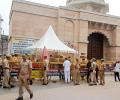
The Allahabad high court reserved its judgment on Friday in a petition challenging the maintainability of a suit seeking 'restoration' of a temple at the site of the Gyanvapi mosque in Varanasi.

The temple is said to be situated in close vicinity of Teele Wali Masjid at Laxman Teela.

Sri Ram Janmbhoomi Trust Chairman Nritya Gopal Das on Thursday welcomed the Allahabad High Court's verdict on the Ayodhya title suit, but said they would challenge the decision to provide one third of the disputed land to Sunni Central Waqf Board, in the Supreme Court.

The petitions filed by the Anjuman Intezamia Masjid Committee (AIMC) and the Uttar Pradesh Sunni Central Waqf Board had also challenged a Varanasi court order of April 8, 2021 to conduct a comprehensive survey of the Gyanvapi mosque.

The senior advocate had represented the Muslim parties, including the Uttar Pradesh Sunni Central Waqf Board, in the case in trial court, Allahabad High Court and the Supreme Court.
The court said the modalities of the survey will be discussed at the next hearing on December 18.
Describing the Waqf Board decision as "not in the interest of Taj Mahal," a representative of the Archaeological Survey of India, who attended the hearing, said it would challenge it in the court of law.
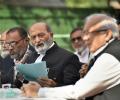
Stressing that the decision of the Sunni Central Waqf Board, one of the main litigants, will have no effect on the AIMPLB decision, Jilani said the board has already taken a final decision in this regard in its meeting on November 17.
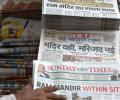
Sunni Central Waqf Board Chairman, Zufar Farooqui said some persons are advising that land should not be taken for the Babri mosque.
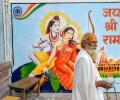
The apex court, which delivered a historic verdict and put the curtains down on the vexatious legal battle that had torn the social fabric of the nation, said that dividing the land would not subserve the interest of either of the parties or secure a lasting sense of peace and tranquillity.
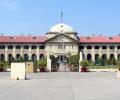
The Supreme Court on Monday directed authorities to remove a mosque from the premises of the Allahabad high court within three months, telling the petitioners that opposing the demolition that the structure stood on a terminated lease property and they can't claim it as a matter of right to continue.
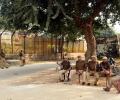
Would have constructed Ram temple on 5 acre land if given to us: UP Shia Central Waqf Board
The petitioner submitted an application in the court of the Civil Judge on Monday seeking permission for 'purification' of the sanctum sanctorum of the Keshav Dev temple, which he claimed was inside the mosque, his counsel said.

The Places of Worship (Special Provisions) Act, 1991 provides for maintaining the 'religious character' of holy structures as it existed on August 15, 1947.
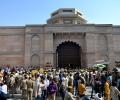
Mishra said that the court has fixed July 7 for the next hearing.
Justice Padia stayed the Varanasi civil court order, ruling that the subordinate court passed its order ignoring the fact that the high court had reserved its verdict on the plea challenging the maintainability of the suit which had been filed earlier in the lower court for the survey.
But three years after the apex court settled the Ram Janmabhoomi-Babri Masjid land dispute, there are no signs of any building activity on the proposed mosque site.
The Sunni Central Waqf Board is expected to file a Special Leave Petition in the Supreme Court on Tuesday, challenging the Allahabad high court verdict in the Ram Janmabhoomi-Babri Masjid title suits.
The Muslim Community has reacted with shock at the latest verdict of the Lucknow bench of the Allahabad high court, which ruled that the disputed site is indeed Ram Janmabhoomi and dismissed the suit filed by the Sunni Central Waqf Board as it was barred by limitation.
They might have been fighting in the courts for ages to stake their respective claims over the much-debated Ram Janmbhoomi-Babri Masjid site in Ayodhya, but the rivals have heartily welcomed the view taken by the apex court on the issue.
Earlier, board's counsel Zafaryab Jilani had said that he is not satisfied with the verdict.
Ruling out giving up its claim on the mosque in Ayodhya, the Sunni Central Waqf Board on Thursday said exploring possibilities for an amicable solution to the dispute without a concrete proposal was a 'futile exercise'.
In the aftermath of the Supreme Court's decision to stay the Allahabad High Court final judgement on the Babri Masjid title suit, rediff.com's Vicky Nanjappa spoke to Jafaryab Jilani, the lawyer who is representing the Muslim organistaions in this litigation.
The Wakf Board, a litigant in the Ayodhya title suit, held an emergency meeting here and decided to challenge the High Court's verdict in the Supreme Court, Wakf Board Chairman Zafar Ahmad Farooqui told PTI.
The Board has already made it clear that it will not go in for a compromise as suggested by the Lucknow bench of the Allahabad high court, which delivered its verdict on the issue on Thursday last.
"The matter is to be settled now by the Supreme Court. We cannot accept the sharing formula, which has been ordered/suggested by the Lucknow bench of the Allahabad high court," says Zafaryab Jilani, chief counsel for the Sunni Central Waqf Board, in an interview.
The Sunni Central Waqf Board and Mohammad Hashim Ansari, litigants in the Ayodhya title suits, will request the Supreme Court for verdict by October1, even as other litigant Nirmohi Akhara will pray for a three months' time to resolve the issue through negotiations.
the Uttar Pradesh Sunni Central Waqf Board on Tuesday filed a caveat in the Supreme Court to prevent the ASI from taking an ex parte order on the issue.
 © 2026 Rediff.com - Investor Information - Advertise with us - Disclaimer - Privacy Policy - Sitemap - Feedback - About us - Terms of use - Grievances