
'The economy is clearly at a very soft spot, and earnings growth is disappointing every day.' 'After three great years, the Indian economy has hit a rough patch.'

Fitch said COVID-19 is still in India and it is very likely that the government will have to spend a bit more on fiscal measures to support the economy.

The stimulus package announced by Finance Minister Nirmala Sitharaman "fails to involve" banks in the economic revival process, a member of the Reserve Bank of India's central board said on Wednesday. The stimulus package is "imaginative and forward looking, yet fails to involve banks as frontline warriors in revival of economy," Satish Marathe, a member of RBI's central board, said in a social media post.
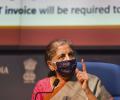
day after Finance Minister Nirmala Sitharaman announced a Rs 1 lakh crore spending package, a top government source said the Centre has not closed its options for another stimulus package.

It will be the second Budget of the Modi 3.0 government and eighth straight Budget for Nirmala Sitharaman, rare in Indian polity.

China has stayed on top for two consecutive months in the MSCI Emerging Markets Investable Market Index (EM IMI), after ceding the position to India in August. At the end of October, China's weight in the key EM gauge stood at 24.72 per cent, up from 21.58 per cent at the end of August. India's weight during this period has slipped to 20.42 per cent from 22.27 per cent.

The Indian economy requires a Rs 3 lakh crore fiscal stimulus, including cash transfer to households through Jan Dhan accounts to spur economic growth amid the pandemic, industry chamber CII said on Thursday and pitched for appointment of a 'Vaccine Czar' for speedy vaccination coverage. CII president T V Narendran also said the chamber expects GDP to grow at 9.5 per cent in 2021-22 as the strong growth in the second half of the fiscal year will be supported by robust external demand and large-scale coverage of vaccination, allowing resumption of economic activity. He also advocated for appointment of a "Vaccine Czar" for speedy vaccination coverage.

The government's Rs 20.97 lakh crore COVID-19 package lacks in addressing the immediate concerns of the economy as the actual fiscal impact of the additional stimulus is only about 1 per cent of the GDP as opposed to the claim of 10 per cent, Fitch Solutions said on Tuesday. Prime Minister Narendra Modi on May 12 announced a stimulus package of Rs 20 lakh crore, or nearly 10 per cent of GDP, to deal with the economic fallout of COVID-19. The contents of the package were broad-based and announced in five tranches.

Quarterly earnings of corporates, trading activity of foreign investors and inflation data are the key factors that are expected to drive the momentum in the equity markets this week, analysts said.

Foreign portfolio investors (FPIs) have net sold domestic shares worth over $10 billion so far this month amid a shift to China, which not only offers attractive valuations compared to India but has also announced several measures to support the economy and the stock market in recent weeks. If the trend doesn't reverse, this will be the first time that overseas funds will yank out more than $10 billion from Indian equity markets in a month.

Foreign investors have poured Rs 57,359 crore into Indian equities in September, making it the highest inflow in nine months, mainly driven by a rate cut by the US Federal Reserve. With this infusion, foreign portfolio investors' (FPIs) investment in equities has surpassed the Rs 1 lakh crore mark in 2024, data with the depositories showed. Going ahead, FPI inflows are likely to remain robust, driven by global interest rate easing and India's strong fundamentals.
The stimulus package announced by the government for the revival of the pandemic-hit economy has been found to be "inadequate", according to a Parliamentary panel report. The report of the department-related Parliamentary Standing Committee on Industry on the impact of COVID-19 pandemic on micro, small and medium enterprises (MSME) sector has noted that in the process of economic recovery post-first wave of the pandemic, the second wave has even more vigorously ripped the economy particularly the MSME sector. "The committee observes that the stimulus package announced by the government for the economic revival from the pandemic hit economy has been found to be inadequate as the measures adopted were more of loan offering and long-term measures instead of improving the cash flow to generate demand as immediate relief," it said.

Indian investors are paying hefty premiums to invest in China markets, with stocks there posting their biggest weekly gain in nearly 16 years. Savvy investors were seen making a dash to invest in the only two China-focused exchange-traded funds (ETFs) available in the domestic markets. On Friday, Mirae Asset Hang Seng Tech ETF closed at Rs 16.9 on the NSE, nearly
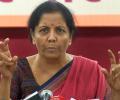
After unveiling a range of relief measures - primarily targeting the MSME and business segment - on Wednesday, Sitharaman is expected to, in her second tranche of financial stimulus, focus on the poor and farm sector.

New investors should gradually build a 5 to 10 per cent allocation to gold.

Finance Minister Nirmala Sitharaman on Friday said the entire fiscal stimulus announced by the government would be funded by borrowings and revenues, and taxpayers will not be charged even a single penny. "I am not expecting the stimulus to be funded by taxpayers. Not a rupee from the taxpayer. The entire amount .... is shown as revenue and borrowings. "The government is borrowing to spend, but it is not taking from people," she said while interacting with journalists at the IWPC (Indian Women's Press Corps).

On a five-day rolling basis, FPI selling is the highest in 24 years.

RBI director S Gurumurthy the package of more than Rs 20 lakh crore announced by the central government can be described as an interim measure.

'Future market gains will likely depend primarily on earnings growth.'

EY said out of the nearly Rs 21 lakh crore package, Rs 8.01 lakh crore is on account of liquidity enhancing measures taken by the RBI since February.
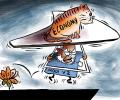
The reform priorities are clear: enhance savings, improve productivity. Just 25 basis points of moving interest rate up or down would not boost investment: Former RBI Governor Y V Reddy.

Economists have said if a stimulus is needed it should be different from what was provided in 2008-09, when the economy faced the ripple effects of a global meltdown following the Lehman Brothers collapse.

Unlike the first two stimulus packages, this time the focus would be on boosting demand.

What might be useful is targeted assistance to those sectors and individuals that are disproportionately affected, suggests Mihir S Sharma.

They say that a stimulus package may not be necessary because, unlike last year's total lockdown, public transport, including the railways and airlines, is running and the restrictions on movement are localised and, in some cases, are partial rather than total.

What stood out in his 15-year journey as a member of the political executive at the Centre was his glowing record as India's most successful and effective finance minister. Both as prime minister and finance minister, he understood the importance of gradualism, except when the economy or the polity was in a crisis.

It pointed out that farm loan waivers, combined with a potential stimulus which the government is mulling now, can result in a 1 percentage point slippage in fiscal deficit

Direct economic stimulus measures such as tax cuts for individuals and industry would have helped to prop up the Indian economy which was hit hard by the lockdowns across several states in India, say economists and corporate leaders. While the measures announced on Monday are focussed more on the supply side, these steps would take a lot of time to move the needle for the economy.

'It's advisable not to go overboard on a banking sector fund or any other sector fund.'

Once we break free of the idea that land is scarce, real estate is just a pile of bricks, steel, and glass. Any price surge will kick off a supply response, which kills off the possibility of sustained price appreciation, points out Ajay Shah.
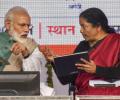
India should take 'measured approach' with stimulus packages to deal with COVID-19 by limiting interventions to the provision of food, shelter and basic necessities of life for all; forbearance on payments of outstanding loans; and extra provision of working capital including what will be necessary to cover outstanding wages from lockdown period to enterprises.

On reforms in pipeline, she said the government is for universal right to minimum wages and wants to remove regional disparity through a national floor wage.

There could be multiple measures announced in quick succession, not only by the finance minister but also other ministers regarding their respective sectors, and by the Reserve Bank of India. The total size of these announcements could rival that of other G-20 nations as a percentage of GDP.

Reliance Industries was the top gainer in the Sensex pack, rallying up to 15 per cent, followed by Kotak Bank, Maruti, HDFC twins, Titan, L&T and Axis Bank. On the other hand, IndusInd Bank, ONGC, ITC and Bajaj Auto closed with losses. the NSE Nifty settled 516.80 points, or 6.62 per cent, up at 8,317.85.

Finance Minister Pranab Mukherjee said the economic recovery led by a robust revival in industrial growth is still not broad-based and is primarily guided by government stimulus measures.

The minister was also hopeful that economic growth would touch 9-10 per cent towards close of the 11th Five-Year Plan ending 2012.

If we basically expect the government to use taxpayers' money to intervene every time when there are some 'sunsets,' then I think you introduce possible moral hazards: Subramanian.

Stimulus was given in phases after Chidambaram had left the finance ministry to head the home ministry in December 2008.
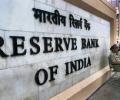
India's economic growth fell to a nine-year low of 6.5 per cent in 2011-12 after clocking over 8 per cent gross domestic product growth for three consecutive fiscals.

'The stimulus message was tagged on to what was meant to be an exhortation to self-reliance, glossing over the near impossibility of merging the immediate requirement of relief for a huge population and a questionable strategy for the future trajectory of a large economy aspiring to superstardom,' points out Shreekant Sambrani.
 © 2026 Rediff.com - Advertise with us - Disclaimer - Privacy Policy - Sitemap - Feedback - About us - Terms of use - Grievances