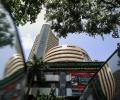
The S&P BSE 500 index, which accounts for 94% market capitalisation of BSE listed companies, has gained 45% from its March 24 low. However, out of the BSE 500 index stocks, 225 have underperformed the index by gaining less than the broader index during this period.

Why do Innovation Revolutions happen outside India, asks Ajit Balakrishnan.

The gems and jewellery industry is staring at a sales washout on Akshaya Tritiya for the second consecutive year as most of the states are under lockdowns due to the raging second wave of the COVID-19 pandemic which has led to negative consumer sentiment, say industry leaders. Akshaya Tritiya, considered as an auspicious day for buying gold and jewellery, falls on May 14 this year. India is the worst-hit among all nations with the second wave of the pandemic, which has been killing more than 3,500 daily and infecting close to 4 lakhs daily for weeks. The massive caseload has nearly paralysed the medical infrastructure.

The rate of unemployment was the highest in the urban areas, which constitute the most number of red zones due to the COVID-19 cases, at 29.22 per cent, as against 26.69 per cent for the rural areas.

After a contraction in the current financial year, India's economy is forecast to bounce back with a sharp growth rate of 9.5 per cent next year provided it avoids further deterioration in financial sector health, Fitch Ratings said on Wednesday. The coronavirus pandemic will lead to shrinking of the already slowing economy in 2020-21 that started in April. Fitch Ratings forecast a 5 per cent contraction in the GDP in the ongoing financial year.

Diamond industry expects revenues to drop by 20-25% in the current financial year.

India, which appears to have been pushed back to being the world's sixth biggest economy in 2020, will again overtake the UK to become the fifth largest in 2025 and race to the third spot by 2030, a think tank said on Saturday. India had overtaken the UK in 2019 to become the fifth largest economy in the world but has been relegated to 6th spot in 2020. "India has been knocked off course somewhat through the impact of the pandemic. "As a result, after overtaking the UK in 2019, the UK overtakes India again in this year's forecasts and stays ahead till 2024 before India takes over again," the Centre for Economics and Business Research (CEBR) said in an annual report published on Saturday. The UK appears to have overtaken India again during 2020 as a result of the weakness of the rupee, it said.

Many governments, especially in the developed world, have resorted to massive stimulus measures to bolster their economies since the 2008 global financial meltdown.

Broadly stagnant sales causes the first drop in business activity in over a year.

'It has the potential to add half a trillion dollars to the economy over the next five years.'

The new agri-infra fund, the duration of which will be 10 years till 2029, aims to provide medium-to-long term debt financing facility for investment in viable projects for post-harvest management infrastructure and community farming assets through interest subvention and financial support.

'If one believes that the Indian stock market will go up 70 per cent every year for the next 10 years, I wish you good luck!'

Gadkari said, infrastructure sector including highways, airports, inland waterways, railways, logistic parks, broad gauge and metro, apart from MSMEs can attract large scale foreign investment.

How do we get back to higher trend growth? The heart of the problem lies in private corporate investment, recommends Ajay Shah.

Expressing concern over the rupee reaching an all-time low, the Bharatiya Janata Party (BJP) said the currency is likely to plunge further as a share of the US financial stimulus package given to India during the sub-prime crisis in 2008-09 may be withdrawn by the Federal Reserve.

According to a new report by international management consulting firm Arthur D Little, the worst of COVID-19's impact will be felt by India's most vulnerable in terms of job loss, poverty increase and reduced per-capita income, which in turn will result in a steep decline in the Gross Domestic Product (GDP). "Given the continued rise of COVID-19 cases, we believe that a W-shaped recovery is the most likely scenario for India. This implies a GDP contraction of 10.8 per cent in FY 2020-21 and GDP growth of 0.8 per cent in FY 2021-22," the report said.

Private hospitals, especially smaller standalone ones, are staring at a crisis that they were not prepared for. Analysts say larger corporate chains have to brace up for at least six months for business to return to normal.

Indian equities are no longer cheap vis-a-vis global markets, and only a short distance away from being the most expensive they have ever been.

'Most of the measures the finance minister announced will take effect after the lockdown.' 'By that time, millions of people will be starving.'
Days after keeping India's rating at lowest investment grade for 13th year in a row, the rating agency in a webinar said despite the contraction in GDP this year, the country continues to be an outperformer among the peer groups.
How long will the RBI allow the government to borrow cheaply? A change in policy direction will see rates climb and bond values fall. Investors in debt funds are therefore at risk, as are people invested in the heated stock market, warns T N Ninan.
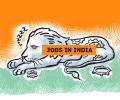
The encouraging news, however, is that India features among the top four countries out of 44 nations that projected a positive hiring trend.

Instead, 2019-20 could be the base from which the Budget estimates for next year are calculated.

Moody's said fiscal measures undertaken by the government -- such as corporate tax rate cuts, bank recapitalisation, infrastructure spending plans, support for the auto sector and others -- do not directly address widespread weakness in consumption demand, which has been the chief driver of the economy. In addition, interest rate cuts by the Reserve Bank of India are not being adequately transmitted to lending rates because of the credit squeeze caused by disruption in the non-bank financial sector, it said.


Stating that the economic costs of shutdown of the global economy are accumulating rapidly, Moody's projected that all G-20 advanced economies would contract by 5.8 per cent in 2020.
The EIU said in a report on Wednesday forecast that the real GDP grew by 1.6 per cent quarter-on-quarter in India, but noted that this uptick was largely owing to base effect.

EPL was suspended on March 13 due to the pandemic and teams resumed training in small groups before voting last week to return to contact training ahead of a June 17 restart.

The V-shaped rebound has been aided by a gush of liquidity flooding the global financial system, thanks to balance sheet expansion.
'The slide in growth has arisen primarily because we have an NBFC crisis on top of a banking crisis,' points out T T Ram Mohan.

'Batsmen were good, but if have to win overseas, we have to get players from the MRF Pace Foundation and the NCA coming through, try to prepare pitches to encourage these faster bowlers rather than dusty turners'

The S&P BSE Sensex plunged 461 points to end at 25,603.

'... the government provides adequate cash and kind support for the poorest of the poor for survival... ...conditional cash and skilling support for the economically poor to raise their incomes to adequate levels... ...and make functional arrangements for providing unemployment allowance to the vulnerable poor during disasters like the present one.'

'The government has stopped our earnings due to the lockdown and must do something for our earnings to restart.'

There are various estimates of India's debt to GDP ratio, but the consensus is that that it would be over 80 per cent at the end of the current fiscal year.

In a pre-Budget meeting with Revenue Secretary Sunil Mitra, Ficci President Rajan Bharti Mittal said in view of the looming threat of a double-dip recession and another slowdown in western countries, the stimulus should not be rolled back in the Budget in February.

The all-time high price of silver is Rs 75,000 a kg, recorded in April 2011.

Finance Minister Pranab Mukherjee on Monday retained the rate of standard excise duty at 10 per cent in the Budget for 2011-12, giving a little respite to industry, which feared a rollback of stimulus measures.
Due to India's limited dependence on external demand and strong fiscal and monetary stimulus measures, the global economic and financial crisis had a relatively muted effect on the country, the Obama Administration told the US Congress on Thursday.

The government plans to immunise 30 million people in the first phase, starting February, and by July, the target is to vaccinate 250 million people, reports Sohini Das.
 © 2026 Rediff.com - Advertise with us - Disclaimer - Privacy Policy - Sitemap - Feedback - About us - Terms of use - Grievances