
The summit is also being attended by Pakistan Prime Minister Shehbaz Sharif, Iranian President Ebrahim Raisi and leaders of several central Asian countries.
'The two sides should support rather than undermine each other, strengthen cooperation rather than guard against each other, and enhance mutual trust rather than be suspicious of each other'

The Indian Army has deployed a significant number of easily transportable M-777 ultra-light howitzers in mountainous regions along the Line of Actual Control (LAC) in Arunachal Pradesh, military officials said on Thursday.
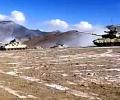
The sources said withdrawal of armoured elements from the south bank of Pangong Tso is almost complete and temporary structures erected by both sides will be demolished in the next few days.
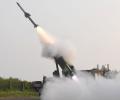
'China is in the middle of a substantial expansion of its nuclear weapon arsenal, which satellite images indicate includes the construction of over 300 new missile silos,' SIPRI's statement noted.

Military experts said the aim of constructing the bridge in the Khurnak area could be to ensure that the Chinese People's Liberation Army is able to quickly mobilise its troops in the region.
India and China are likely to hold the 16th round of high-level military talks on July 17 to resolve the issues in remaining friction points along the Line of Actual Control (LAC) in eastern Ladakh, people familiar with the development said on Wednesday.
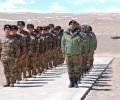
India and China failed to make any breakthrough, but agreed to maintain dialogue to arrive at a mutually acceptable resolution at the earliest.

The Chinese military on Friday confirmed that the troops of China and India have begun the process of disengagement from the Patrolling Point 15 in the Gogra-Hotsprings area of eastern Ladakh in a 'coordinated and planned way'.
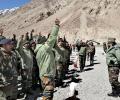
On development of infrastructure by China in border areas, the Army chief said it is going on unabated.

In its annual threat assessment presented before the Senate Armed Services Committee during a Congressional hearing on Tuesday, the US intelligence community said the expanded military posture by both India and China along the disputed border elevates the risk of armed confrontation between the two nuclear powers that might involve direct threats to US persons and interests and calls for America's intervention.

India and China held a special round of military talks on Tuesday at the Chushul-Moldo border meeting point in Eastern Ladakh to discuss air space violations and provocations by the Chinese side in that area in the last 45 days.
There was no official word on the outcome of the talks.

Chinese President Xi Jinping, who made a rare visit this week to the restive Xinjiang region which borders Ladakh, met the troops and officers stationed there and praised their "outstanding contributions" to the border defence and stabilisation of the volatile province.

Tan said that China has always stressed that military cooperation of relevant countries, especially on exercises and training activities, should not be targeted at any third party, but rather serve to help maintain regional peace and stability.

This is Gen Pande's first visit to the sector after taking over as the chief of the Indian Army on April 30.
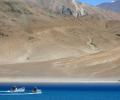
The people familiar with the development said the new bridge is being built in an area that is over 20 km from the Line of Actual Control (LAC).

The Army said Gen Pande witnessed Parvat Prahar exercise besides interacting with officers and troops deployed in the region. The exercise featured a display of operational capabilities by artillery guns and other key weapon systems.
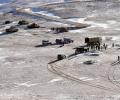
The development comes after after reaching a consensus in the 16th round of military talks, the two sides said in a joint statement this evening.
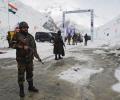
External affairs ministry spokesperson Arindam Bagchi said it is essential that "appropriate agreements between India and China of 1993 and 1996 are scrupulously followed".
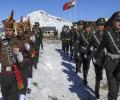
Zhao said some US officials are trying to add fuel to the fire and pointing fingers.

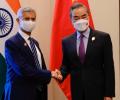
Jaishankar said the last few years have been a "period of serious challenge", both for the relationship and for the prospects of Asia, noting that continuation of the current impasse will not benefit either India or China.

India and China on Friday held 'in-depth' discussions on addressing the remaining issues along the Line of Actual Control (LAC) in eastern Ladakh, holding that disengagement in the North and South banks of Pangong lake provided a good basis to work towards their early resolution.
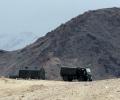
Singh also said that India will give a befitting reply to anyone threatening its unity, sovereignty and territorial integrity as it no longer remained a "weak" country.

India on Friday said that a second bridge being constructed by China on Pangong lake is in an area that has been under illegal occupation of that country since 1960.

Sources indicated that during Saturday's talks, India will insist on a faster disengagement process in remaining areas to bring down tension in the region, which has witnessed a tense standoff between the two militaries for over nine months.

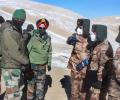
The Chinese and Indian armies continued with the disengagement process in the North and South banks of Pangong lake in eastern Ladakh as per plan and the entire pullback exercise is expected to take another six-seven days, sources in the defence and security establishment said on Monday.
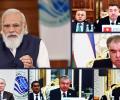
The Shanghai Cooperation Organisation (SCO) will hold its first in-person summit in Samarkand in Uzbekistan on Thursday after two years, shaking off Covid fears and providing a rare opportunity for all its eight heads of state to meet on the sidelines of the event to have face-to-face talks on pressing global and regional issues of common concern.

The 30-member committee, chaired by senior Bharatiya Janata Party leader and former Union minister Jual Oram and of which Rahul Gandhi is also a member,wishes to visit the eastern Ladakh region in the last week of May or in June.

China plans to build a new highway along the Line of Actual Control (LAC) with India as part of Beijing's efforts to strengthen its strategic position and project its power, a media report said on Wednesday.
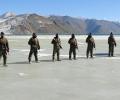
A day after the nearly 12-and-half-hour talks, the two sides, in a joint statement on Monday, reaffirmed that the resolution of the pending issues would help in the restoration of peace and tranquility along the Line of Actual Control (LAC) in the region and enable progress in bilateral relations.

Vice Chief of Army Staff Lieutenant General C P Mohanty on Thursday carried out a comprehensive review of India's military preparedness in eastern Ladakh on the first day of his three-day visit to the region where Indian and Chinese troops have been locked in a bitter standoff for over a year.

India and China on Friday are holding another round of high-level military dialogue to resolve the 22-month-long standoff in some friction points in eastern Ladakh, two months after the last round of such talks failed to yield any significant outcome.
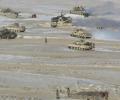
The MEA said there has not been any change in India's position on the LAC and the mutual redeployment as a result of the disengagement process should not be misrepresented.

The Indian Army's Shatrujeet brigade is conducting an airborne exercise along the northern borders in eastern Ladakh to validate its rapid response capabilities, sources said on Monday.

At a media briefing, External Affairs Ministry Spokesperson Arindam Bagchi said India monitors such developments.
'China and India have encountered some setbacks in recent years which do not serve the fundamental interests of the two countries and the two peoples'

It was the second time in the last three days that India asserted that the relationship with China depends on the resolution of the pending issues in eastern Ladakh.
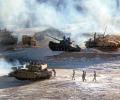
'India cannot allow Beijing's policy of stabilising and destabilising the border at will to perpetuate its own ends.' A riveting excerpt from Manish Tiwari's 10 Flashpoints; 20 Years National Security Situations That Impacted India.
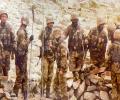
Jaishankar said China, in violation of the 1993 and 1996 agreements not to mass troops on the Line of Actual Control, chose to do so, and added that its attempt was obviously to unilaterally change the LAC.
 © 2026 Rediff.com - Investor Information - Advertise with us - Disclaimer - Privacy Policy - Sitemap - Feedback - About us - Terms of use - Grievances