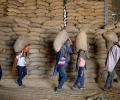
Domestic exporters on Monday expressed concerns over the crisis in Bangladesh and said the developments in the neighbouring country would have implications on bilateral trade. However, exporters expect that the situation may normalise soon. According to exporters, they are already facing disruptions in exports to Bangladesh due to a shortage of foreign exchange in that country.

Even as the bilateral relationship between the two neighbouring countries remains hostile, there is growing coordination between India and Pakistan on one multilateral forum - the World Trade Organization (WTO). Both countries have made two joint submissions at the WTO as co-sponsors in the past two months. In June, Pakistan joined India, Cuba, and 44 African countries, seeking sufficient flexibility in intellectual property rights for developing countries to fight the Covid-19 pandemic.

A high-powered inter-ministerial committee was expected to finalise the list based on the suggestions and recommendations from different chambers, business houses and trade experts, the Daily Star newspaper reported.
Voicing concern over Pakistan's non-implementation of South Asian Free Trade Area, the government said on Tuesday the effect of Islamabad's notification was limited to tariff concessions for India on items in the positive list.
Buoyed by the success of signing the SAFTA agreement, India on Thursday committed to participate in free trade agreement with other nations in the region and asked the Indian auto industry to play a pivotal role and seize the global opportunity.
With the Saarc countries looking resolved to create a South Asian Free Trade Area by 2006, Indian tea industry, hit hard by depressed global prices, has never been closer to bagging the big Pakistani market.
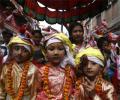
Sushma Swaraj urged the SAARC nations to focus on culture, commerce and connectivity.
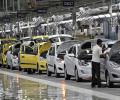
With the Indo-Pak dialogue in tatters and the respective armies exchanging fire across the Line of Control, an unexpected opportunity has presented itself for boosting trade between the two countries.
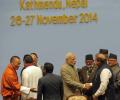
In a phased and planned manner the countries will go for Free Trade Areas, a Customs Union, a Common Market, and a Common Economic and Monetary Union.
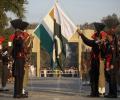
The talks for normalising trade had begun in November 2011.
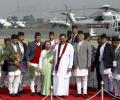
Prime Minister Narendra Modi and leaders of other South Asian Association for Regional Cooperation countries will meet in Kathmandu on Wednesday with an aim to revitalise the regional grouping and make it a major platform to fuel economic growth through liberalised trade and combat challenges of terrorism and climate change effectively.

The only possible solution to the Kashmir issue between India and Pakistan is to create a situation where the "lines while in existence" become "irrelevant", Jammu and Kashmir Chief Minister Omar Abdullah said in an interview published on Sunday.

Prime Minister Narendra Modi arrived in Kathmandu on Tuesday to attend his first SAARC Summit, being hosted by the Government of Nepal.
 © 2026 Rediff.com - Investor Information - Advertise with us - Disclaimer - Privacy Policy - Sitemap - Feedback - About us - Terms of use - Grievances