
Prime Minister Narendra Modi's 76th birthday was celebrated during the inaugural session of SEMICON India 2026 at the Yashobhoomi Convention Centre. The event, focused on building India's semiconductor ecosystem, saw attendees extend warm wishes to the Prime Minister before his address.

India is making a significant push to establish itself as a global semiconductor manufacturing hub, driven by strategic investments and policy support. The upcoming SEMICON India 2026 event will showcase the country's advancements and ambitions in this critical industry, which underpins virtually all modern electronic devices and has faced global supply chain vulnerabilities.

India's semiconductor sector has garnered USD 1.4 billion in total equity funding across 281 companies, with a substantial USD 701 million raised since 2025 alone, according to Tracxn data.
Bengaluru-based deep-tech company RayVector Technologies is demonstrating its advanced multi-sensor module and wafer-handling technology at SEMICON India. This innovative solution uses sensing, imaging, and AI to detect minute irregularities in semiconductor wafers, helping manufacturers prevent costly production losses. The technology is already being utilised by major global players like Samsung, Intel, and TSMC, highlighting India's growing contribution to the global semiconductor ecosystem.

Infosys Senior Vice President Vikram Meghal stated that India is experiencing a significant demand window in the semiconductor market and must evolve from merely engineering products to inventing complete systems. He highlighted the massive shifts driven by AI and supply chain challenges, urging a focus on "Invent in India" to capture higher value and leverage decades of investment in the ecosystem.

UST, a California-based technology company, highlights India's unique opportunity to build an AI-native semiconductor ecosystem, bypassing older models. Speaking at SEMICON India 2026, UST COO Gilroy Mathew emphasised India's advantage in investing in infrastructure and talent at the right time, enabling it to create AI-native manufacturing and supply chains for future competitiveness.

Modi inaugurated the Semicon India 2025 in Delhi, in the presence of Chief Minister Rekha Gupta, and Union Minister of Commerce and Industry Jitin Prasada.
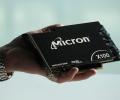
Micron CEO Sanjay Mehrotra announced plans to significantly scale up the company's chip assembly and testing facility in India, moving from "vision to execution" in the nation's semiconductor ambitions. He highlighted the success of the Sanand, Gujarat plant, which is already producing "Made in India" memory chips, and the company's substantial engineering contributions from its Indian centres. Mehrotra also emphasised the critical role of memory chips in the AI era, driving Micron's growth.

From a milk abhishek and aarti in Patna and Vadnagar to blood donation camps in Delhi, sand art tributes in Puri and Agartala, and havan pujas in Jammu, BJP leaders and others nationwide honoured the occasion of Prime Minister Narendra Modi's 76th birthday with prayers, service drives and tributes.
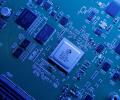
The Indian government has approved two major manufacturing initiatives worth nearly Rs 1.9 lakh crore (USD 22 billion) to expand the country's semiconductor ecosystem and scale up mobile phone production, aiming to strengthen its position as a global electronics manufacturing hub.
Prime Minister Narendra Modi inaugurated Micron Technology's semiconductor plant in Sanand, Gujarat, highlighting India's growing presence in the hardware sector and its strong partnership with the United States in AI and chip technologies.

'The world now realises that semiconductors are not just important for national security, but also for economic prosperity.'
Due to the prevailing geopolitical situation, like-minded countries are collaborating with India to make it a major semiconductor manufacturing destination, a top Electronics and IT ministry official said on Sunday. In an interview with PTI, Ministry of Electronics and IT Secretary S Krishnan said pilot facilities of US storage semiconductor maker Micron and Tata Electronics have already rolled out chips, and their main plants in Gujarat will begin to produce made-in-India chips from the later part of 2025.

Delhi LG Taranjit Singh Sandhu addressed the Global Confluence 2026, emphasising the importance of maintaining a human element at the heart of digital nation-building. He highlighted India's digital transformation and the role of technology in improving lives, while urging a focus on inclusive development and national security.
Prime Minister Narendra Modi is set to inaugurate a semiconductor plant in Sanand, Gujarat, and launch multiple development projects worth over Rs 20,000 crore, marking a significant boost to India's semiconductor industry and infrastructure.

India took another leap in space infrastructure with the foundation stone laid for a new launch pad at the country's second rocket port in Kulasekarapattinam.

India will be an important country in terms of manufacturing in future, Young Liu, chairman and CEO of Hon Hai Technology Group (Foxconn) has said, his latest comment adding to a growing chorus of global voices acknowledging the country's bold moves to position itself as electronics and hi-tech production powerhouse. In an interaction with reporters in Taipei, the top honcho of the Taiwanese electronics manufacturing giant said the development of the entire ecosystem and industrial chain, and opportunities for development in India are "very, very huge opportunities". "If there is no big change, India will be a very important country in terms of manufacturing in the future," Liu said.

'India needs many more job creators, both in manufacturing and services, to make it big.' 'For that, the red carpet must be rolled out fully and for all investors without holding back,' suggests Nivedita Mookerji.

A day after announcing withdrawal from its chip-making JV with Indian conglomerate Vedanta, Foxconn on Tuesday said it is working on plans to apply for incentives under semiconductor and display fab programme, as the contract manufacturer pledged its commitment to India. The Taiwanese electronics manufacturing giant said it has been actively reviewing landscape for optimal partners. The comment assumes significance as Foxconn has pulled out from the $19.5 billion semiconductor JV with Vedanta.

Clearly, Foxconn Chairman Young Liu and his team are looking to raise their game in India.
The exclusive club that dominates the global semiconductor fab scenario is about to get a new member. Taiwan, South Korea, and China control nearly 70 per cent of the global capacity. SEMI, the global industry body for semiconductor and electronics design and manufacturing, projects all fabs collectively will churn out 30 million wafers a month this year.

In 2024 so far, 20 startups have already visited the campus with 80 placements.
India is all set to make its presence felt in the $47 billion global outsourced semiconductor testing and packaging market, an arena where Malaysia and Vietnam have been way ahead so far. The Cabinet last Thursday cleared two projects, the Tata's assembly testing and packaging plant (ATMP) and the Murugappa-owned CG Power with Renesas from Japan as its tech partner. These, together with Micron's assembly and testing plant which is already being constructed in Sanad in Gujarat, will collectively invest Rs 47,300 crore to set up the factories.
Taiwanese electronic contract manufacturer Foxconn on Monday said it has decided to pull out of semiconductor joint venture with Indian conglomerate Vedanta, according to a statement. Foxconn said it is "working to remove the Foxconn name from what now is a fully-owned entity of Vedanta". "Foxconn has no connection to the entity and efforts to keep its original name will cause confusion for future stakeholders," Hon Hai Technology group (Foxconn) said.
A large pool of scientists and engineers coupled with the presence of world-class research institutes is pulling a number of trans national corporations
The India information technology industry, including exports and domestic market and semiconductor industry, is gaining traction despite challenges, said Azim H Premji, chairman, Wipro, at the third Freescale Technology Forum in Bangalore on Monday.
