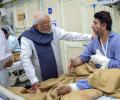
On Wednesday, November 12, 2025, Prime Minister Narendra Modi visited the Lok Nayak Hospital in Delhi and met those injured in the Red Fort car blast.
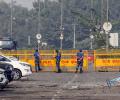
9 accused individuals have held white-collar job positions since 2017.

A loud sound, later identified as a bus tyre burst, caused panic in Delhi's Mahipalpur area, triggering concerns due to a recent explosion in the city.

Dr. Shaheen Shahid, arrested in connection with the Delhi blast, planned to recruit women for terrorist activities. NIA investigation reveals cash, gold, and foreign currency were recovered from her hostel room.

Members of the terror module under scanner for the deadly blast near the Red Fort, relied on an unusual yet effective method of communication to avoid detection -- through unsent emails kept as drafts.

Shaheen was taken to Faridabad to corroborate some leads the NIA learnt to have known during interrogation of other suspects and the seventh accused Soyab, a resident of Dhauj in Faridabad.

'Tourists from long-haul markets such as the US, UK, and Western Europe are especially sensitive to such news, and short-term cancellations or postponements of planned trips can be expected.'
Officials reveal details of a foiled Jaish-e-Mohammed terror plot involving a doctor who planned a bomb blast near the Red Fort, timed around the Babri Masjid demolition anniversary. Arrests and investigations uncovered the interstate network.
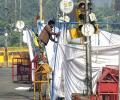
A major breakthrough has been achieved in the Red Fort car blast case, with intelligence agencies uncovering a Rs 20 lakh fund trail linked to three doctors, Umar, Muzammil, and Shaheen.
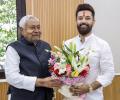
Following their landslide victory in the Bihar assembly polls, NDA leaders have begun discussions on forming a new government. Key coalition partners visited Chief Minister Nitish Kumar's residence, expressing support for his continued leadership. The article also touches on political developments within the RJD and reactions to the election results.
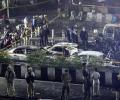
'The elimination of terrorists does not imply the neutralisation of terrorism. That terrorist ecosystem continues to thrive in Kashmir.'
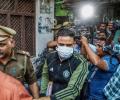
Radical Islamist networks are deliberately targeting Muslim youths embedded within the country's professional and academic ecosystems, leveraging their skills, mobility, and digital reach to quietly strengthen operational capabilities. This trend highlights a dangerous evolution in terror recruitment -- one that exploits ideological faultlines, online echo chambers and transnational radical Islamist influences to attract individuals who outwardly embody India's modern and aspirational narrative, points out Dr Kanchan Lakshman.
 © 2026 Rediff.com - Investor Information - Advertise with us - Disclaimer - Privacy Policy - Sitemap - Feedback - About us - Terms of use - Grievances