
The government should not go in for an 'aggressive fiscal consolidation' in the upcoming Budget as global risks have not abated, RBI Monetary Policy Committee (MPC) Member Ashima Goyal said on Wednesday. Goyal further said subsidies are expected to come down as food and energy inflation moderates. WPI inflation in food articles in November was 1.07 per cent against 8.33 per cent in the previous month.

India's economic growth is now 'extremely fragile' and needs all the support that it can get, as private consumption and capital investment are yet to pick up, RBI Monetary Policy Committee (MPC) member Jayanth R Varma said on Friday. Varma further said out of the four engines of growth for the economy, exports and government spending supported the Indian economy through the pandemic, but other engines need to pick up the baton now. " I like to think in terms of the four engines of growth for the economy: exports, government spending, capital investment and private consumption. "...while exports cannot be the main driver of growth because of the global slowdown, government spending is necessarily limited by fiscal constraints," he told PTI.

The Asian Development Bank (ADB) on Wednesday slashed India's GDP growth forecast for FY23 to 7 per cent from the earlier estimate of 7.2 per cent mainly on account of higher inflation and a tight monetary policy. India's economy grew 13.5 per cent year-on-year in the first quarter of 2022-23, reflecting strong growth in services, ADB said in its second supplement to Asian Development Outlook Report 2022 (ADO 2022). "However, GDP growth is revised down from ADO 2022's forecasts to 7 per cent for FY2022 (ending March 2023) and 7.2 per cent for FY2023 (ending March 2024) as price pressures are expected to adversely impact domestic consumption, and sluggish global demand and elevated oil prices will likely be a drag on net exports," ADB said.

On the Sensex chart, Yes Bank was the worst hit with 7.81 per cent decline. It was followed by Tata Steel, Vedanta, M&M, IndusInd Bank and Tata Motors -- shedding as much as 5.07 per cent.

The biggest risk to India's growth outlook is an escalation of geopolitical tensions, especially if these tensions spread to the Asian region, RBI Monetary Policy Committee (MPC) member Jayanth R Varma said on Wednesday. Varma, in an interview to PTI, said that inflation and inflationary expectations appear to be moderating and high inflation will certainly not become the 'norm' in the country. He is cautiously optimistic about the Indian economy as after the pandemic abated, consumption demand has begun to recover though the recovery is uneven across sectors and industries.
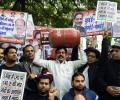
The rate of price rise for food articles stood at 11.51 per cent during January as against 2.41 per cent a month earlier, while for non-food articles it rose nearly three-fold to 7.8 per cent from 2.32 per cent in December, the data released by the ministry of commerce and industry on Friday showed.

In the case of Indian equities specifically, all eyes will now be on the next RBI monetary policy scheduled for September 29.

The 30-share Sensex ended down 113 points at 20,570 and the 50-share Nifty closed 44 points lower at 6,101.
Traders will now focus on the RBI's monetary policy review next week which will be key in helping get some clarity on the central bank's thoughts on the outlook for inflation and rates.

Armed with necessary macro and micro growth drivers, India is on its way to becoming the fastest growing major economy in the world, a finance ministry report said. Rapid vaccination and teeming festivities will push India's ongoing recovery resulting in narrowing of demand-supply mismatches and greater employment opportunities, as per the monthly Economic Review prepared by the ministry.

Banks should neither be timid nor adventurous while lending as the loans of today should not become NPAs of tomorrow, he said.
Finance Minister P Chidambaram said, "When we return in 2014, we will be more friendly."
Markets ended lower on Monday as investors turned cautious and booked profits ahead of the RBI monetary policy.

The broader NSE Nifty, after scaling the day's high of 10,279.85, slipped into the negative terrain to 10,111.30 before closing at 10,128.40, down by 116.60 points

Fresh dollar demand from importers and some banks on the back of smart rise in the US dollar ahead of RBI monetary policy meeting on Tuesday also weighed on the rupee, said forex dealers.

India's economy will do well once vaccination reaches a critical mass as pent up demand, global recovery and easy financial conditions will boost activities, RBI's Monetary Policy Committee (MPC) member Ashima Goyal said on Tuesday.
Ahead of RBI's monetary policy review, SBI on Monday expressed hope the apex bank will cut interest rates by 0.5 per cent and CRR by up to one per cent to boost sagging growth.

The rupee had lost 52 paise to close at 54.08 against the dollar on Tuesday on heavy month-end dollar demand from importers and corporates.

The rupee on Monday plunged by a hefty 52 paise to slip below 54-mark for the first time in five weeks on month-end dollar demand from importers and corporates, amid the much-awaited RBI monetary policy review on Tuesday.

The finance ministry has received about 100 applications for the post, which have been sent to the high-level panel that will select a suitable candidate for the post, sources said.

As COVID-19 infections spike in the country resulting in restrictions in various states and impacting the fragile recovery, many economists are expecting RBI to delay the policy normalisation move, which is expected in the February review. The country has reported a single-day rise of 58,097 new Covid-19 cases as of Wednesday morning--the highest in around 199 days -- of which 2,135 are Omicron cases and later in the day, the first confirmed Omicron-related death has also been reported. Maharashtra recorded the maximum number of 653 Omicron cases followed by Delhi at 464, Kerala 185, Rajasthan 174, Gujarat 154 and Tamil Nadu 121 cases, taking the total tally of cases to 3,50,18,358.
Shares of Anil Ambani-led Reliance Communications and Reliance Infrastructure gained five per cent each on expectation that rate cuts would help lower the interest cost burden of these companies.

The government on Monday said inflation continues to remain a concern, but exuded confidence that the RBI's monetary policy will lead to moderation in inflation numbers in the coming months.

IT shares hold on to gains while power, metals lag.

Moody's on Thursday said the new 'inflation targeting' mechanism is a "credit positive" move.

This Tuesday saw an upbeat in the money market.
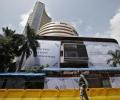
The 50-share NSE Nifty inched up 5.95 points, or 0.06 per cent, to 10,127.75 points.


India Inc on Friday said it is looking forward to a repo rate cut in future as cost of funds has to come down in coming times, and expects continuation of accommodative policy stance by the Reserve Bank of India (RBI). The RBI decided to leave the benchmark interest rate unchanged at 4 per cent but maintained an accommodative stance, as the economy faces the brunt of the second COVID-19 wave. Sanjay Aggarwal, president of PHD Chamber of Commerce and Industry, said the RBI has maintained an accommodative stance as long as necessary to revive and sustain growth on a durable basis and to mitigate impact of COVID-19, apart from an aim to keep inflation within the target.

ICICI Bank was the top gainer in the Sensex pack, rising around 4 per cent, followed by UltraTech Cement, Sun Pharma, Bharti Airtel, HUL, SBI, L&T, Axis Bank and IndusInd Bank. On the other hand, Reliance Industries, Bajaj Finserv, HCL Tech and HDFC were among the laggards.

The wholesale price-based inflation rose for the second consecutive month in February to 4.17 per cent, as food, fuel and power prices spiked. The WPI inflation was 2.03 per cent in January and 2.26 per cent in February last year. After witnessing months of softening of prices, the food articles in February saw 1.36 per cent inflation. In January it was (-) 2.80 per cent.

The Planning Commission on Tuesday said the Reserve Bank's decision to tighten the money supply will not have any impact on growth and the economy would do better than 8 per cent expansion rate projected by the central bank.

The RBI is likely to raise CRR, the portion of funds that banks have to keep with the regulator, by 50 basis points in its forthcoming monetary review next week and signal tight monetary measures, says Moody's.

Under the teaser rates scheme, home loans are offered at 8 per cent in the first year and will be fixed in the initial years and turn floating in the remaining years.

India's economic growth is estimated to have slowed down to 11-year low of 5 per cent during the current financial year ending March 2020.

Top losers in the Sensex pack were Hero MotoCorp, HCL Tech, TCS, Asian Paints, IndusInd Bank and Infosys, shedding up to 3.08 per cent.

With no rate cuts on the table, the other monetary policy alternative could be to reduce the width of the asymmetric policy corridor or increase in reverse repo rate when the pandemic subsides, they opined.

HDFC Bank was the top loser in the Sensex pack, falling 2.99 per cent, followed by Adani Ports at 2.87 per cent.

Firms seem to have adopted a wait-and-see approach on their plans until public policies become clearer upon the formation of a government.

Indian benchmark indices may witness bouts of volatility this week as traders roll over positions in the derivative segment on expiry of near-month contracts, say experts.
 © 2026 Rediff.com - Advertise with us - Disclaimer - Privacy Policy - Sitemap - Feedback - About us - Terms of use - Grievances